







Israeli hotel companies keep expanding abroad despite currency headwinds
Fattal is building a growing European portfolio through institutional partnerships, while Isrotel, Dan Hotels and Israel Canada are also increasing their overseas presence.
The strong shekel has flipped the script for Israeli hotel companies: overseas operations, once seen as a hedge against instability at home, have become a drag on earnings. Still, investors appear to view the impact as temporary and do not expect it to slow the companies’ expansion abroad.
Take Fattal. Currency losses cut NIS 274 million from its quarterly revenue and NIS 107 million from its EBITDAR (earnings before interest, taxes, depreciation, amortization and rent), forcing the company to lower its full-year forecast. Even so, its stock rose 6% following last week’s earnings release.
Strip out the currency effect, and Fattal actually had a strong quarter. The company, which operates 285 hotels, mostly in Europe, improved its operating performance despite a slight decline in occupancy outside Israel. It increased average daily revenue per room, essentially, the prices it charges, by 6%. In shekel terms, however, that increase became an 11% decline once the currency effect was taken into account. Fattal also opened 24 new hotels since June.
But when the performance of its European operations is converted into shekels, both revenue and EBITDAR are lower than a year earlier.
In euros, the currency in which Fattal operates its European business, revenue rose 7% to €232 million, while EBITDAR increased 9% to €94 million.
Dan Hotels and Isrotel, which also reported last week, had a different story to tell because both companies are focused mainly on Israel. Their comparison quarter was particularly weak: last year’s second quarter coincided with the first Israel-Iran war, which forced hotels to close and drove away the few foreign tourists who had begun returning.
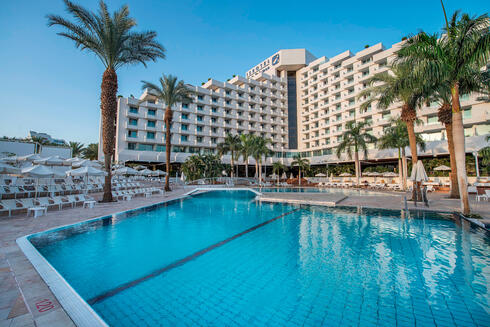
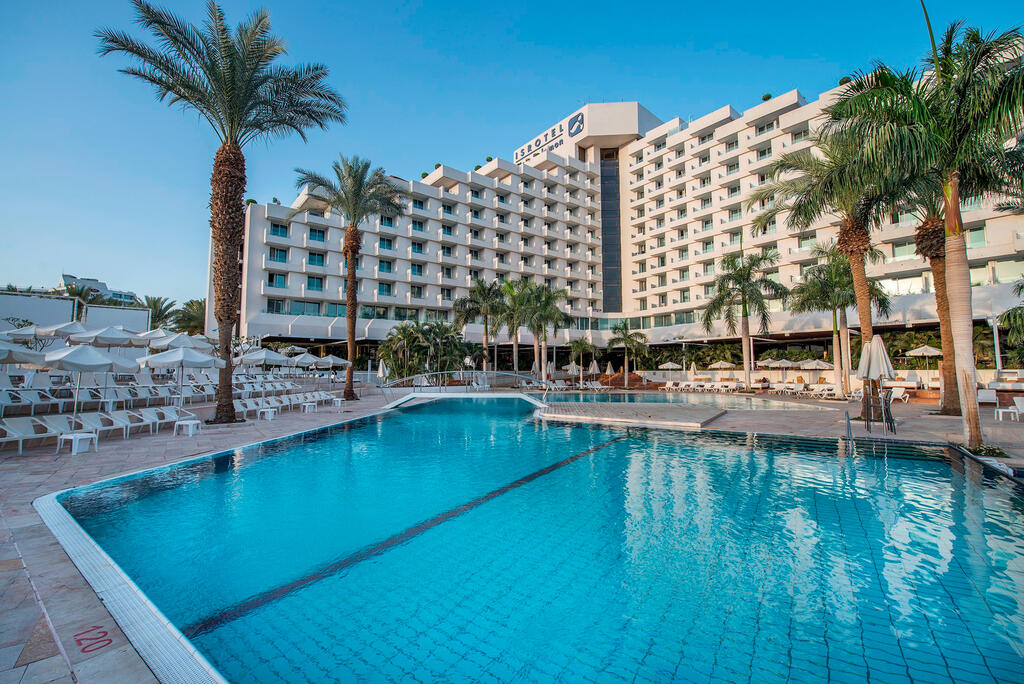
Against that low base, this year’s second quarter looked strong. Isrotel, which operates 26 hotels in Israel with about 5,200 rooms, reported an 11% increase in revenue to NIS 603 million and a 28% jump in EBITDAR to NIS 185 million.
Shai Ezer, head of research at More Investment House, says the difference largely comes down to where the companies operate.
“Most of Fattal’s activity is abroad, so its exposure to currency-exchange gaps is high. Isrotel, by contrast, is focused on Israel, and not only that, but it has a large number of resort hotels there that have enjoyed high demand from the Israeli consumer.”
Isrotel does not break out hotel-level or regional performance in its reports, but it disclosed in 2025 that its eight Eilat hotels alone generated 61% of its annual EBITDAR, a trend that is likely to have continued.
A second analyst put it more bluntly: “Closed skies are good, open skies are less good.”
The logic is straightforward. The war that began at the end of February and continued until early April kept many foreign airlines grounded through the second quarter, making it more difficult for Israelis to vacation abroad. Instead, more Israelis vacationed at home, benefiting Isrotel’s resort-heavy portfolio.
But that tailwind is unlikely to last, the analyst said.
“We will see less good results in the third quarter from Isrotel and also from the other companies in their Israel activity. The more options Israelis have to vacation abroad, the less good the results of hotels in Israel will be compared to those recorded before. Especially since the expected recovery in inbound tourism that would compensate for this is still far off.”
For Israeli hotel companies, the result is an unusual split. Companies concentrated overseas are being hit by the shekel’s strength when their foreign earnings are translated back into local currency, while companies concentrated in Israel have benefited from unusually strong domestic demand. But neither effect is necessarily permanent.
In Europe, the consensus is that the stronger shekel will not fundamentally change the companies’ expansion strategies.
“Activity in Europe is the main part of Fattal’s activity, and it has accumulated capabilities and opportunities to keep operating and developing there, with the help of the partnerships it initiated with institutional bodies,” Ezer said. “So even if exchange rates cut into revenue and profits for a certain period, that will only be a partial offset against the value that a company like Fattal can generate by adapting a new asset it acquires.”
Fattal has established three institutional partnerships over the past four years to finance hotel acquisitions in Europe. The first two, launched in 2022 and 2024, raised more than €900 million combined and were used to acquire 55 hotels. A third partnership, launched last month, has already raised €693 million and is expected to reach €800 million to €1 billion within weeks.
Fattal is leading the expansion, but other Israeli hotel companies are also building footholds overseas.
Isrotel has acquired two hotels in Rome that are now under renovation, as well as five properties in Greece, three of which are already operating. A source close to the company said the European expansion predates the war and Israel’s security situation and is part of a separate growth strategy rather than a reaction to instability at home.
Dan Hotels made a similar move last year, acquiring a 264-room hotel in Lower Manhattan. It also operates a hotel in India, alongside its 16 properties in Israel, and the Manhattan hotel accounted for much of the company’s improvement this quarter.
Many of Dan’s hotels are not well suited to Israeli vacationers, leaving the company more exposed when inbound tourism dries up.
Israel Canada Hotels is another Israeli player with a growing international footprint. The company went public last year and expanded further by acquiring part of the collapsed Brown Hotels chain. As of May, it held 26 hotels in Israel and another 13 in Greece and Cyprus.
In June, it made a larger move, acquiring a hotel in Berlin as well as the operating rights to five additional hotels in Germany, representing about 1,200 rooms in total. The deal will double its overseas room count to 2,400.
For the Israeli hotel industry, the stronger shekel is therefore creating a paradox. Foreign expansion can diversify companies away from the domestic market, but it also exposes their reported earnings to currency swings. At the same time, the domestic operators that have benefited from Israelis staying home could face a tougher environment as international travel normalizes.
For now, however, the currency effect appears to be viewed by investors as a temporary hit rather than a reason to rethink the industry’s push overseas.



