









Brain drain vs. boom: High-tech riches highlight Israel’s economic crossroads
The government faces the challenge of keeping talent while cash floods local markets.
“People don’t yet understand what the Wiz deal will do to the real estate market,” says the CEO of a trust and options management company. But you don’t need the Wiz deal, no matter how large, to see what the entry of tens of billions of shekels into the bank accounts of a few hundred thousand employees can do to the Israeli economy.
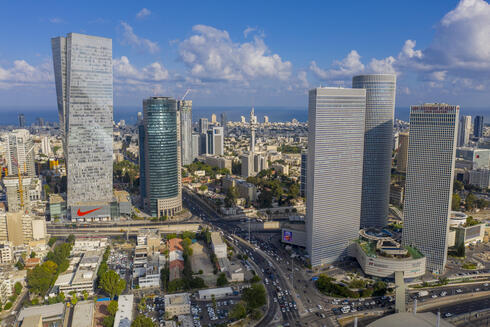
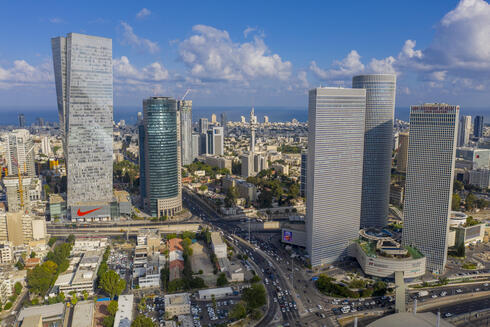
Today, it’s enough to walk around sales offices in luxury apartment towers in Tel Aviv, especially near the Sarona complex, to notice a relatively new, mostly young population. We can call them “cyber children”: men and women, usually under 40, who have gone beyond comfortable salaries, with millions of shekels now in their accounts.
Those who have observed them in sales offices report a completely different discourse than that of typical homebuyers. “I’ve seen guys who don’t even bother to shave every day, debating whether to buy just one apartment in a tower or take two and connect them, without batting an eyelid, like I’m thinking about what to order for lunch,” says one observer.
In Israel in 2026, you don’t need to be a tycoon, you just have to work at the right company at the right time to become a millionaire in shekels or dollars. Speaking of shekels versus dollars, the gap is shrinking as the shekel strengthens against the American currency, partly due to the massive amounts of money flowing into high-tech. All the tens of billions of shekels now in high-tech employees’ accounts were converted from dollars.
If this trend continues, along with the $15 billion raised by startups in 2025 and the ongoing expansion of multinational companies in Israel, led by Nvidia and Google, there is little reason why the shekel shouldn’t continue strengthening in 2026.
The real estate market, which currently seems frozen, may awaken, at least in central Israel, fueled by the typical high-tech demographic: men around 40, often young families who are still expanding. With an influx of cash that doesn’t even require a mortgage, they may quickly join the market as eager homebuyers. As interest rates continue to fall and stock markets remain volatile, turning to real estate will become increasingly attractive.
The exceptional amounts, even higher than in 2021, are also expected to impact private consumption and revive sectors such as the restaurant industry, which has struggled during the last two years of war. Large restaurant groups appear to recognize the returning demand from young high-tech men and women, and some are beginning the process of issuing shares on the Tel Aviv Stock Exchange.
When all these effects are considered, before even factoring in the high-tech sector’s contributions to exports and corporate tax, it is clear that one of the government’s main tasks after the 2026 elections will be to curb the brain drain. You don’t need the Central Bureau of Statistics to know that of the 69,000 Israelis who left the country in 2025, a large portion were high-tech workers. Not because they are less patriotic, but because relocation is logistically easier for them. Since the outbreak of the war, senior executives at major high-tech companies have noted an increase in relocation requests.
Just last week, Nadav Zafrir, former commander of Unit 8200 and now CEO of Check Point, said that the main threat to Israel’s high-tech sector and economy is not AI or any other technology, but brain drain.
Beyond the immediate economic impact of high-tech workers’ wealth, there is a deeper strategic significance. Today’s financially settled employees are tomorrow’s entrepreneurial class. Workers who have experienced success firsthand are more willing to start and establish companies. In this way, Israel’s “startup nation” can be preserved.



