











27 hours of battery life and local AI: Intel’s new processor and the Israeli development behind it
The Core Ultra Series 3, built on Intel’s 18A process, brings major gains in efficiency and on-device AI, with core design and integration led by teams in Israel.
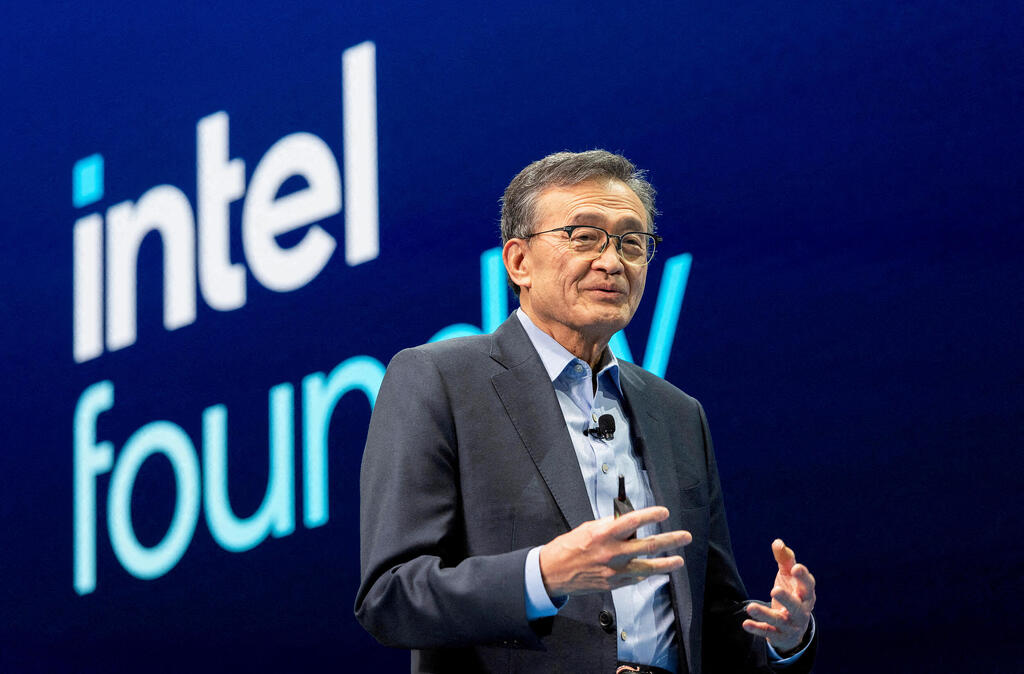
LAS VEGAS - “We are living in a moment where computing is being redefined. Artificial intelligence is reshaping every workflow, every industry, and every deviceת from the cloud to the edge,” said Lip-Bu Tan, Intel’s CEO, at the opening of the company’s event at CES 2026 in Las Vegas, where it unveiled a new processor generation.
Tan emphasized Intel’s progress against its manufacturing roadmap. “Over the past year, our teams have been pushing the boundaries of architecture and manufacturing,” he said. “I am pleased to announce that we have met our commitment to deliver the first 18A products by the end of 2025. In fact, we have delivered beyond expectations and are now in the midst of ramping up production of all three Core Ultra Series 3 packages.”
At the center of the announcement was the Intel Core Ultra Series 3 processor family, codenamed Panther Lake, developed with the involvement and leadership of Intel’s development centers in Israel. It is the company’s first processor manufactured using 18A technology, Intel’s most advanced process to date. The new processors, which are expected to go on sale this month and be integrated into more than 200 computer models from a wide range of manufacturers, promise up to 27 hours of battery life, a roughly 70% improvement in gaming performance, and a 60% boost in multitasking performance.
Jim Johnson, senior vice president at Intel’s Client Computing Group, said the new process allows engineers to “precisely control the electrical current” and deliver power from the back of the chip. This design enables laptops to reach up to 27 hours of battery life for tasks such as browsing and video playback, and in some cases to last several days in standby mode. The result, according to Intel, is a system that responds faster while running cooler, delivering a 15% improvement in performance per watt and more than a 30% increase in chip density.
Behind the announcements in Las Vegas lies extensive work carried out by Intel’s development centers in Israel. Itzik Silas, a senior vice president at Intel who leads the Client Products Program Office (CPPO), described the scope of the local contribution in an interview with Calcalist ahead of the launch. While the physical manufacturing of the 18A process takes place in the United States, Silas said that the core design work was done in Israel. “The core was made in Israel,” he said, adding that post-silicon testing, packaging, system integration, and final debugging were also managed locally.
The development process was marked by significant challenges, both technical and external. Silas said that early versions of the production process initially delivered performance well below target, forcing the team to make a management decision to proceed with what he described as “speculative execution,” continuing to production under the assumption that the issues would be resolved later, in order to avoid delaying the entire project.
The project also unfolded against the backdrop of the war. “The war started just before we were going into production,” Silas said. “Hundreds of people were called up to the reserves. We had to move some of the work to India for a while, but the main development and planning remained here. Despite the war, the missiles, and the alarms, we didn’t miss a single milestone.” He added that the Panther Lake program ultimately paved the way for adoption of the 18A process across the company.
One of the key innovations highlighted was the processor’s artificial intelligence capability. To explain the headline figure of 180 TOPS (trillion operations per second), Johnson compared it to “horsepower for the brain”: the higher the TOPS, the faster the system can “think.” The architecture distributes AI workloads across three components. The NPU handles continuous background tasks with minimal power consumption, such as blurring a background during a video call or running AI agents that manage schedules. The GPU takes on heavier workloads such as image generation and video editing, while the CPU orchestrates the overall process. This division of labor, Intel said, allows the system to run real-time intelligent agents during meetings while simultaneously handling demanding creative tasks, without freezing or rapidly draining the battery.
The keynote address was delivered by Aravind Srinivas, CEO and co-founder of Perplexity. Srinivas announced that the company will launch its Comet for Enterprise browser next month and laid out his vision for a shift from cloud-based to on-premises AI computing. “We believe that on-premises computing is only going to grow,” he said, citing four drivers: performance, by eliminating cloud latency; privacy and security, as organizations seek to keep sensitive data off third-party servers; economics, as cloud-based AI becomes increasingly expensive; and control, allowing organizations to retain ownership of their data. Intel and Perplexity are collaborating to enable these models to run directly on the new Core Ultra Series 3 processors.
In graphics, Intel unveiled a new integrated GPU, the Intel Arc B390. Dan Rogers, VP/GM PC Products at Intel, said the chip delivers a 50% improvement in graphics performance compared with the Lunar Lake generation. The key innovation is the first implementation of AI Frame Generation in an integrated graphics processor, enabling the creation of three AI-generated frames for every traditionally rendered frame. Jeff Skelton of Electronic Arts demonstrated the technology in collaboration with Intel on the next Battlefield title, which will incorporate XeSS 3.
Beyond laptops, Intel also formally announced its entry into the mobile gaming console market, with Panther Lake-based devices expected later this year.
Intel also highlighted applications in robotics. Until now, advanced robots typically required two separate processors, one for motor control and another for AI and computer vision. The new processors combine both functions on a single chip. Intel presented examples from customers including Circulus and Sensory AI, which reported improved computer vision performance and responsiveness, alongside lower power consumption compared with competing solutions.



