









"In biotechnology, it's billions of dollars, or zero"
Professor Yanay Ofran on the high-stakes race to develop AI-designed medicines for peanut allergies, cancer, and autoimmune diseases.
A young New Zealander, still a teenager, in fact, could make history. He probably doesn't even know how much hope is riding on him.
"He was the first person to receive our injection, about three weeks ago," explains Prof. Yanay Ofran. "More participants are gradually joining him, both in Australia and New Zealand."
The injection in question is designed to eliminate, or at least significantly reduce, peanut allergies. The treatment is administered two or three times over several weeks and introduces a molecule intended to teach the immune system not to recognize peanut proteins as a threat.
In fact, it is not yet a treatment but rather an experimental therapy, developed over eight years at Ukko Laboratories, one of Ofran's three companies.
"We worked on it for eight years. We tested our molecule in computer simulations, in test tubes, on human tissue, and in animal studies to ensure there was no harm or allergic reaction. Only then did we receive approval to begin human trials. This is real time, the moment of truth."
And this trial is being conducted in Australia and New Zealand?
"Yes, because regulation there is relatively streamlined. On both sides of the ocean, regulators want proof that the likelihood of harm is low and the potential benefit is significant. The difference lies in how they balance those two factors.
"The Australians place greater emphasis on potential benefit, while the Americans focus more heavily on potential harm. As a result, the process in Australia and New Zealand is more decentralized, faster, and less expensive. These are countries that actively want to bring innovative treatments to their citizens.
"It's also part of their business strategy, a way to attract companies from around the world to conduct clinical trials there. For example, if we spend $100 million there, we can receive up to $40 million in reimbursements. They have an interest, and we have an incentive.
"It is a better environment than the United States, and certainly better than Israel, which does not have a comparable regulatory and economic framework. It is no coincidence that Australia and China are among the global leaders in clinical trials today."
You are only in a Phase 1 clinical trial. When will you know whether the drug works?
"Right now, the participants, who were recruited through hospitals, are receiving the initial doses. Soon they will begin gradually consuming peanuts under medical supervision.
"We will collect data, and I believe that within about a year we will have meaningful statistics regarding both efficacy and side effects."
Are you stressed? Losing sleep at night?
"It's a long journey. Anyone who can't enjoy the process shouldn't enter this field. And anyone with sleep disorders should probably find another profession."
Are you already thinking about what happens if it succeeds?
"If it succeeds, and we have a drug that reaches the market, it could generate billions of dollars annually. Between 1% and 3% of the population suffers from peanut allergies.
"When I posted on LinkedIn that the trial had begun, I received dozens of inquiries from people in Israel alone who wanted to participate. Unfortunately, there is currently no trial in Israel, but people are desperate for a solution."
Will This Be a Revolution?
If it works, will it be a revolution?
"If we can prevent a life-threatening condition with two or three injections, it would absolutely be a revolution.
"Current allergy treatments require daily dosing, based on the assumption that the only way to reduce risk is through years of continual treatment, perhaps even lifelong treatment. Most people struggle to maintain that commitment.
"If our molecule works, even if it doesn't completely eliminate the allergy but removes the fear of death, it will fundamentally change how allergy treatment is approached.
"And regardless of the outcome, there are already several firsts here. First, Ukko18 is the world's first RNA-based therapy for food allergies to reach human clinical trials. It is designed to reprogram the immune system so that it no longer responds to peanuts with an allergic reaction, and it aims to do so with only two or three treatments rather than daily exposure.
"Second, the drug was designed with the help of AI using our proprietary platform. So every step forward represents a breakthrough in itself.
"And in a few months, we'll begin to learn whether the medicine actually works."
And if it doesn't work?
"Then we have nothing.
"When you invest in AI or cybersecurity, some companies become hugely successful, some achieve modest success, and some fail to return the investment. In biotechnology, outcomes are often binary: billions of dollars - or zero.
"But with the two molecules currently in clinical trials, we haven't failed yet. When something fails, you usually know relatively quickly. The odds of reaching this stage were about one in a thousand. Now we're waiting for the results."
Problems Are Being Redefined, and So Are Solutions
Ofran's financial outlook may be binary, but his intellectual approach is anything but.
It was shaped by the home in which he grew up and refined through an unconventional career path.
Ofran, 53, is the son of Avraham, a bank manager, and Mira, who holds a PhD in physics. On his father's side, he is the grandson of Moroccan rabbi Mordechai Zafrani. On his mother's side, he is the grandson of mathematician Dr. Greta Leibowitz and Prof. Yeshayahu Leibowitz, the scientist, philosopher, and one of the most influential intellectual figures in Israeli history.
His uncles worked in medicine, science, and law. His siblings pursued careers in medicine, psychology, religion, education, and social activism.
In short, Ofran grew up in a household where diverse fields of knowledge coexisted and intellectual debate was as commonplace as breakfast.
He earned bachelor's degrees in physics and biology with a minor in philosophy. From there he moved directly into doctoral studies, progressing through linguistics, neuroscience, and biophysics before specializing in computational systems biology. Along the way, he combined academic research with entrepreneurship.
Above all, he still thinks a bit like a philosopher.
This becomes clear when discussing his other major projects.
Imneskibart, for example, is already in a Phase 2 clinical trial as an AI-designed immunotherapy treatment for cancer.
In fact, it is the first cancer drug in the world based on an AI-designed molecule to be tested in humans.
The peanut-allergy therapy is similarly the first AI-designed molecule in its field to enter human trials.
Three additional drugs developed using the same methodology are expected to enter clinical testing within the next year: A targeted cancer therapy that identifies cancer cells and delivers chemotherapy directly to them, reducing damage to healthy tissue; A treatment for asthma and atopic dermatitis; A therapy targeting autoimmune diseases such as multiple sclerosis and colitis.
Between a peanut-allergy treatment and an immunotherapy cancer drug, which is more promising?
"Who do you love more, your father or your mother? Your oldest child or your youngest?
"These are two projects I care deeply about.
"We've already seen the cancer treatment help patients who had no remaining options. But I constantly remind the team that the road ahead is long, and there are countless ways to fail."
Both are products of AI. Theoretically, are we moving toward an era in which artificial intelligence will allow us to treat all diseases?
"Almost.
"But there is an interesting dynamic with disease.
"A hundred and fifty years ago, you could fall into a rose bush, develop an infection, and die. Then antibiotics arrived.
"Once infectious diseases became less deadly, heart disease emerged as a leading killer. When treatments for heart disease improved and awareness of nutrition and exercise increased, people lived longer and cancer became more prevalent.
"Now cancer treatments are improving. After that, neurodegenerative diseases will become an even greater challenge.
"In 10 to 15 years, there will be far better treatments for those diseases as well. Then other problems will emerge.
"The human body can fail in countless ways, which guarantees that we will always have something to work on.
"If you want job security, develop drugs."
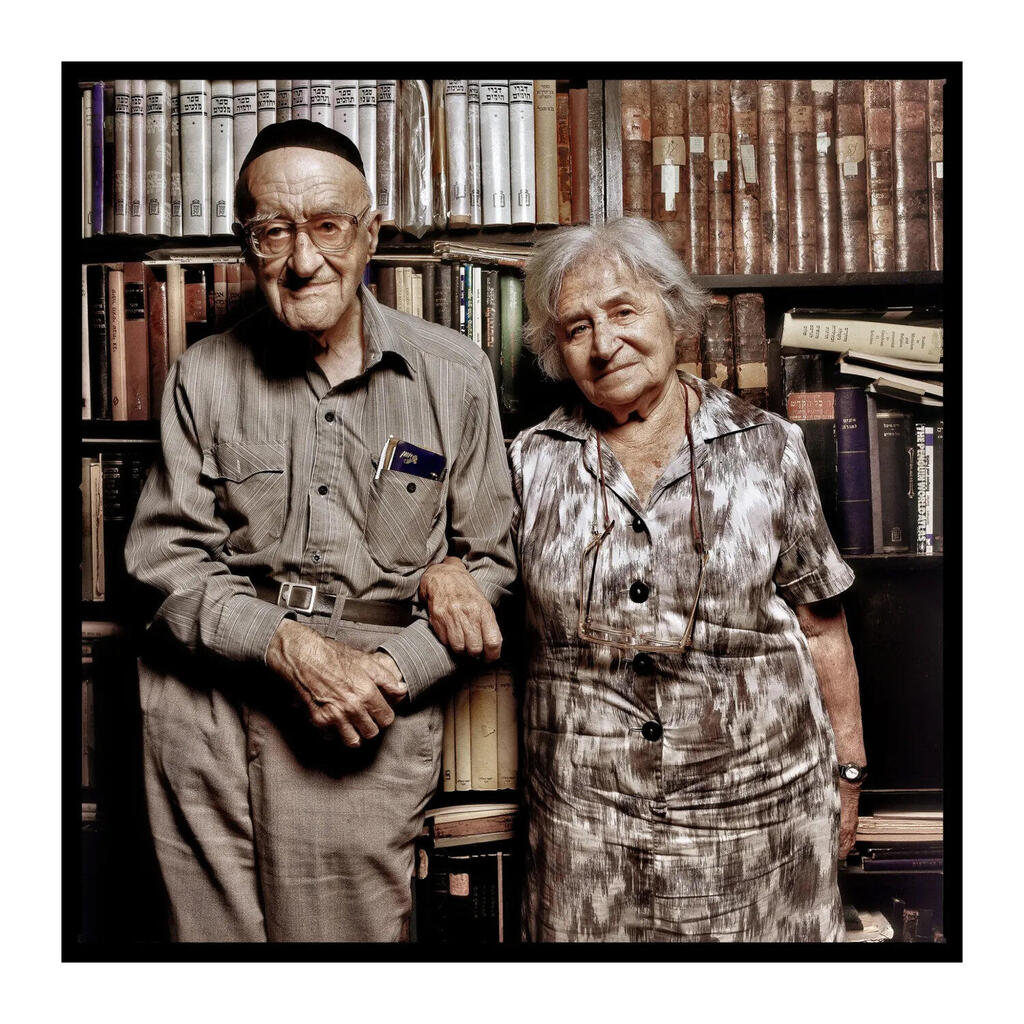
The Three Ingredients of Drug Development
What does it take to develop a drug?
"We live in an era in which both problems and solutions are being redefined.
"To develop a drug, you need three things, three fronts that must ultimately converge.
"The first is intelligence: knowing which protein, cell, or gene to target. You need a high-quality target bank. Without it, it's like launching an attack without a plan.
"Those targets are identified through biological research.
"In the second stage, artificial intelligence helps create precise and targeted weapons.
"In the third stage, you have to prove statistically that the drug works.
"That requires experiments in animals and humans, and enough human participants to generate meaningful results.
"Most drugs fail at this stage.
"And in any case, the entire process usually takes more than a decade and costs billions of dollars."
Isn't artificial intelligence supposed to shorten processes?
"In the end, it's a matter of statistics. AI assumes that you can learn principles from existing data that will also apply in the future. But there are 8 billion people in the world, and your data may not help you take care of the 8 billionth person. Even if we manage to identify principles that work for most people, there will always be something we haven't taken into account."
But it's a technology that is advancing at a breathtaking pace, sometimes surprising even its own developers. Are we approaching a point where it will allow us to understand the chemical formula for pain, or for love?
"We may be able to describe love in chemical terms, but we still won't understand the connection between those chemicals and the emotion we experience, the subjective mental experience. My grandfather used to illustrate this with a story: when he went to the dentist and said his tooth hurt, the dentist could see the infection in the root, but he couldn't know how much pain he was actually feeling. Physics cannot fully describe subjective experience, even with the help of powerful artificial intelligence."
You grew up in a home that was, in some ways, as far removed from artificial intelligence as possible, a family that seemed determined to conquer every field of knowledge at once, with a strong emphasis on science.
"I wouldn't say I grew up in a home that was biased toward science. I grew up in a home that deeply valued curiosity. It was something you felt in your skin."
What does that mean? How do you cultivate curiosity?
"We placed more emphasis on questions than on answers. When someone asked a question at the dinner table, you didn't just brush it aside. You opened a book, checked, argued, then opened a dictionary or an encyclopedia. That was our life before Google. Everything wasn't always easy, there were disagreements, but when a question came up, we tried to answer it. A good question excited everyone. And if there wasn't a question, well, that was unusual."
Give me an example.
"When I was 13 or 14, I noticed that many words relating to time are expressed through concepts of front and back, before and after. I became curious about the connection. We started looking into it and discovered that in ancient Hebrew, what lies 'before' you is actually the past, while what is 'behind' you is the future. In modern Hebrew, it's often perceived the other way around. After all, moving forward means advancing into the future. Ancient cultures viewed themselves as facing the past, because it was visible and known, while the future was behind them, unseen."
Are these kinds of questions what led you to linguistics, your first doctoral path?
"Yes. I began researching pragmatics, the branch of linguistics that studies how meaning is shaped by context. I was interested in understanding words not only through syntax and semantics, but also through their practical use in real-life situations. A sentence such as 'Yanay, your tie!' can have very different meanings depending on the context, whether I'm on my way to an important meeting or sitting down to a bowl of soup."
Why did you leave that field?
"Because I felt the questions in linguistics were fascinating, but the answers were disappointing. I wanted to work in a field where research could provide more concrete answers."
But you didn't move very far away from language.
"No. I switched to a PhD in neuroscience focused on handwriting. One of the central questions in neuroscience is where consciousness resides, and I thought studying handwriting might provide an interesting way to approach that question."
And you left that, too.
"Yes. I met Prof. Claude Ghez, one of the world's leading neuroscientists, a brilliant and very funny man. He told me that, in order to understand how the nervous system learns, plans, and executes complex movements, he had spent decades studying a specific movement made by cats. Then he said, 'I've been studying this for 40 years, supervised 70 students, and I still don't know how cats do it.' That was a wake-up call. I realized I wanted to work in a field where progress toward answers was more tangible, and eventually I found my way to biophysics."
Why biophysics, after all those detours?
"Because biophysics allows you to understand the connection between molecules and the phenomenon we call life. How molecules create disease, how the body functions as a distributed and highly sophisticated computing system in which every molecule knows what to do at the right time. It offers a way to understand how the system works, and why it breaks down. Those questions eventually led me to wonder whether it would be possible to design a molecule capable of dissolving cancerous tumors, for example. Even when you don't find the answer immediately, the research itself becomes a meaningful step toward it."
AI Reduces the Haystack and Increases the Number of Needles
After earning his doctorate at Columbia University and teaching there as well as at Tel Aviv University, Ofran joined Bar-Ilan University, where he still heads a laboratory today. Alongside his academic work, he published articles across a variety of fields and was one of the creators and presenters of the documentary series “Did Herzl Really Say That?” Over the past 20 years, he has also founded several companies.
Even before Ukko and its effort to combat peanut allergies, he founded Biolojic Design and its subsidiary Aulos Bioscience, which focus on cancer treatments and are responsible for a drug currently being tested in humans. The companies have cooperation agreements with pharmaceutical giants Merck, Teva, and Nektar Therapeutics on treatments for cancer, asthma, and multiple sclerosis, respectively.
Academia wasn't enough for you?
"No. I could have built a career simply by publishing papers on antibody design and designing antibodies with artificial intelligence. But I wanted those antibodies to actually work. And they do, they are already helping shrink tumors in human patients. In academia, I received government grants, but when I asked for funding to design molecules using AI, the answer was usually, 'It's a great idea, but it's too expensive. You won't be able to raise that kind of money through government grants.'
"I realized I needed to raise money from investors. We've raised more than $200 million for research. If you want to create something that reaches patients, you need a different framework. When you have an idea, you're essentially a peddler of ideas, only with more evidence behind them."
When did you start thinking about using AI?
"Fifteen years ago, maybe even earlier. That's what interested me, and there was also an element of luck. When you're testing new technologies, ideas, and approaches, having a good eye helps you be in the right place at the right time.
"It's like betting that Paris Saint-Germain will win the Champions League. There are hundreds of teams, but if you look at the players, the management, and the overall trajectory, you can see at the start of the season that PSG isn't a bad bet. The same applies in science. When you encounter a genuinely innovative approach and recognize its quality, you understand it isn't going to come down to a lucky penalty shootout."
What exactly is the rationale behind AI-designed medicines?
"Breakthrough drugs are rarely discovered by accident; they have to be designed. It's similar to the shift from Google to ChatGPT. Instead of throwing a billion molecules into a bucket, testing them one by one, and hoping to stumble across something useful, we try to design the bucket more intelligently so the odds of finding a successful treatment are much higher.
"In short, AI helps reduce the size of the haystack and increase the number of needles."
That may simplify the process, but drug development is still an extremely difficult and complicated field.
"Absolutely. In high-tech, two people who left the military yesterday and have an idea for a cybersecurity product can try to sell it to Google or Microsoft. If that doesn't work, they can upload it to an app store. If users love it, it could become the next Waze and be acquired for a billion dollars.
"Biology doesn't work like that. Someone can't simply say, 'I have an idea for curing cancer,' and then, if Pfizer or Merck aren't interested, go ahead and put it on pharmacy shelves."
What does that mean in practice?
"It means many excellent drugs have been abandoned. Sometimes funding ran out. Sometimes companies couldn't afford to expand clinical trials. Sometimes drugs were tested only on patients in very advanced stages of disease, after all existing treatment options had already failed.
"This is one of the central paradoxes of medicine. Approval for a trial is often granted only for patients whose prospects are already very poor. Then it's difficult to determine how much the treatment can help. It may also be riskier to administer an experimental drug in those circumstances, and sometimes the trial can't be completed. If a patient dies, the trial may stop, and it becomes difficult to determine whether the cause was the disease or the treatment itself."
What do you do about that?
"You design a trial that gives the drug the best possible chance to prove itself, so continued investment is justified. You need careful planning, you need to identify the right patients, and you need a bit of luck."
You have a drug in your hands that appears to work, and yet you can't give it to everyone who needs it.
"In medicine, you can't simply say, 'Sell it and let patients decide whether to take the risk.' Drugs must be approved. That requires expertise, oversight, and regulators who weigh risks against benefits.
"Sometimes decisions are made that, in hindsight, may not have been the right ones, and potentially valuable drugs are lost. There are companies that only succeeded in proving a drug works after several failed attempts.
"Today, we have a drug that has shown encouraging efficacy in eliminating tumors in advanced melanoma, kidney cancer, lung cancer, and several other cancers. But there still isn't enough information for approval. I cannot provide this treatment outside a clinical trial. It is available only through the hospitals participating in the study."
That can't be easy.
"No, but it's also unavoidable. If we don't follow the processת regulation, monitoring efficacy and toxicity over time, gathering statistical evidenceת we won't have any medicines at all. So yes, it's frustrating, but nobody has found a better system yet."
This Is Not the Story of a Scientist Whose Wife Died of Cancer
The dilemmas and pain associated with serious illness are not foreign to Ofran. His wife, Dr. Rana Samuels, a climate researcher, died in 2014.
"It sounds like the story of a scientist whose wife died of cancer and who then dedicated his life to curing the disease. But that's not the story," he says, rejecting attempts to draw a direct connection between his personal and professional lives. "I founded the company before my wife died. But yes, I may understand something about what families in that situation go through."
He lives in Tel Aviv with their four children, now aged 15, 18, 21, and 22.
"These children have a mother; she's just no longer alive. I always tell the HR teams at my companies not to use expressions like 'the Biolojic Design family' or 'the Ukko family.' Family is not work, and work is not family. They're not even in the same league.
"The only place where a person is truly irreplaceable is within their family. I'm irreplaceable only to my children. In society, you're never irreplaceable."
Asked about the legacy of his grandparents, Dr. Greta Leibowitz and Prof. Yeshayahu Leibowitz, Ofran says:
"They had a remarkably sharp view of reality, a view that wasn't captive to any tribe or ideology. That's especially striking today, when so much of how people see the world depends on which side they belong to.
"They had a connection to their community, of course, but truth was truth regardless of tribal affiliation. There's enormous power in that. When you ask someone a question and know their answer won't depend on loyalty to a camp, that's extraordinary.
"That's the difference between people seeking truth and people seeking to defend a position, an ideology, or a tribe. If what you consider true depends on your political position, then you're not really obligated to pursue good science, good research, or even good philosophy. If your interests change tomorrow, then your 'truth' changes as well."
You can understand the appeal of belonging.
"Of course. It's difficult to overcome our biases. We tend to identify with one side and ignore its mistakes, or oppose another side and fail to recognize where it may be right. We often see what we want to see rather than reality itself.
"But my grandfather could say the most unexpected thing without worrying whether it would be considered an own goal for his side."
In that context, it is impossible not to think of one of the most controversial phrases associated with Leibowitz, the term "Judeo-Nazis," which he used in warning about what he saw as the dangers of Israel's continued control over the territories.
"It was part of a rhetorical argument," Ofran says. "Everyone understood what my grandfather actually meant. Whether it was polite or impolite language was not, for him, part of the discussion about truth.
"You can tell the truth gently or bluntly, and you can tell lies gently or bluntly. In the end, it's largely a question of style. And my grandfather certainly had style - thank God."
First published: 16:52, 14.06.26



