










Analysis
Hormuz, Bab al-Mandab and Saudi Arabia’s pipeline are becoming one energy crisis
The war is putting pressure on three separate routes that connect Gulf oil to global markets. Even without a complete blockade, attacks and selective threats can raise insurance, shipping and energy costs while steadily draining already depleted inventories.
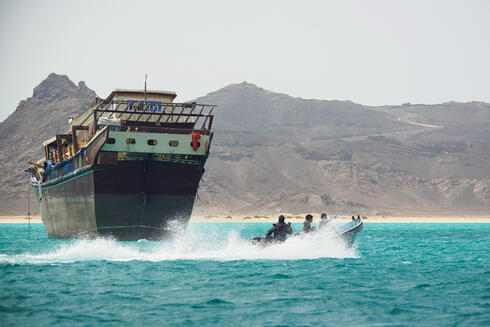
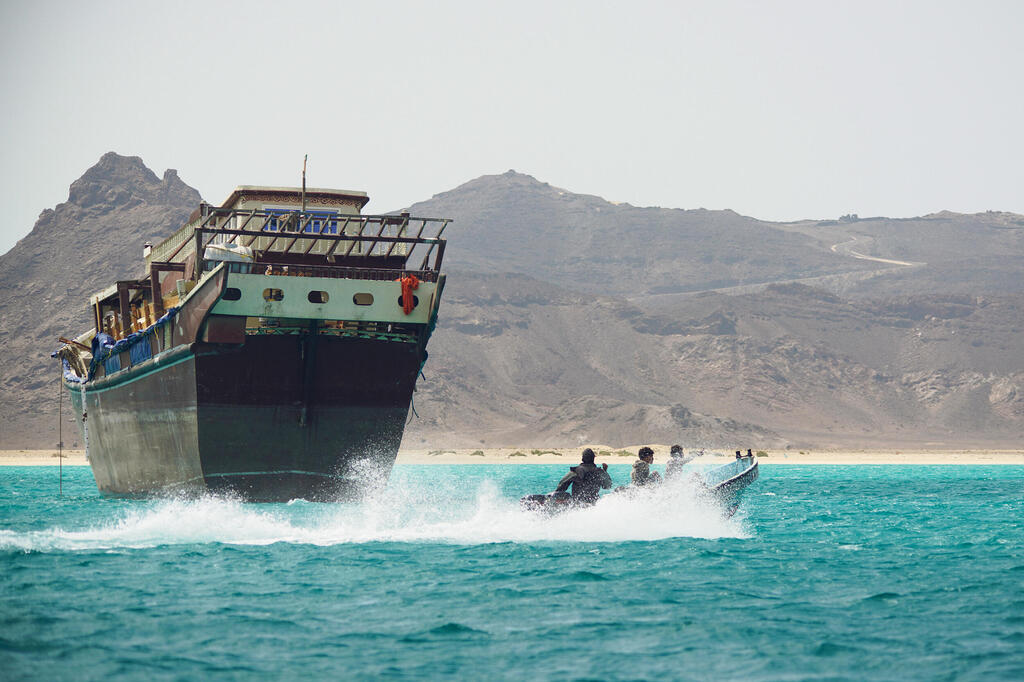
The Houthi momentum of recent days is changing the meaning of the war in Yemen for global energy markets. In a short period, the Houthis took control of the port city of Mokha, reached the area around Bab al-Mandab, and captured Mayun, Zuqar and other islands that had been under the control of forces affiliated with the Yemeni government. In effect, the Houthis have completed their takeover of Yemen’s western coast and the strait region.
This control does not automatically give them the ability to block every ship passing between Yemen and the Horn of Africa. But it brings missile arrays, drones, observation capabilities and small vessels closer to one of the world’s most sensitive trade routes.
It is the timing that makes the developments in Yemen particularly significant. Since the outbreak of the war with Iran, the Red Sea has become part of the backup system for energy exports from the Gulf. According to the U.S. Energy Information Administration (EIA), the volume of oil and petroleum products passing through the Bab al-Mandab Strait surged from 5.4 million barrels per day in the final quarter of 2025 to 8.1 million barrels per day in the second quarter of 2026. During the same period, traffic through the Strait of Hormuz collapsed from 21.6 million barrels per day to just 4.9 million.
The EIA clarified that the increase at Bab al-Mandab was largely the result of Saudi Arabia diverting exports via the East-West Pipeline to Yanbu on the Red Sea coast.
A new dependency has therefore emerged. For years, the East-West Pipeline served as Saudi Arabia’s insurance policy against potential disruptions in the Strait of Hormuz. The pipeline connects the Kingdom’s eastern oil hubs to its western coast, and in the first quarter of this year Aramco ramped up its capacity to a maximum of 7 million barrels per day. Amin Nasser, CEO of the Saudi oil giant, described it at the time as a “critical supply artery” that enables the Kingdom to cope with shipping constraints in the Strait of Hormuz.
Last Thursday, however, that insurance policy was also compromised. The Saudi Ministry of Energy announced that the pipeline had been attacked at several locations in the Riyadh and Al-Medina regions and that operations had been suspended as a precautionary measure. The Saudi Foreign Ministry said the drones had originated in Iraq. Baghdad confirmed that the launches took place from Maysan province, dismissed the local operations commander and launched an investigation. While the identity of those responsible has not been disclosed, Arab media outlets have attributed the attack to Iran-linked groups.
Saudi Arabia is therefore facing three simultaneous points of vulnerability: the Strait of Hormuz is constrained; the overland route designed to bypass it has been attacked; and at that route’s western terminus, the Bab al-Mandab Strait faces a Houthi threat that is far more immediate than in the past.

The problem was already evident in production figures before the attack on the pipeline. In a report published on Friday, the International Energy Agency (IEA) estimated Saudi oil production in August at just 5.97 million barrels per day, down from 8.24 million in July. The gap between actual output and the August target reached 4.45 million barrels per day. Saudi Arabia has sustainable production capacity estimated by the IEA at more than 12 million barrels per day. The figures therefore illustrate the growing disparity between theoretical production capacity and the ability to safely market and export oil during wartime.
Even a price of around $105 per barrel, the level at which Brent was trading when the IEA report was released, is not necessarily good news for Riyadh. Each barrel sold generates more revenue, but Saudi Arabia is producing and exporting far below its capacity. On top of that are the costs of defense, infrastructure repairs, insurance and shipping. The Saudi budget for 2026 was planned with a projected deficit of approximately $44 billion. As the government continues to fund its Vision 2030 initiatives over the long term, lost oil revenue could force difficult choices over project priorities and the pace of implementation.
The challenge for Saudi Arabia is therefore not simply how much oil it can produce, but how many barrels can actually reach the market. In recent decades, the oil market has treated “spare production capacity” as its primary buffer against crises. Current events are a reminder that spare capacity is of little use if export routes themselves become the bottleneck.
This is where the Iranian angle comes into play. There is no public evidence that Tehran ordered the Houthis to seize control of the Bab al-Mandab Strait, nor is there conclusive evidence that it ordered the attack on the Saudi pipeline from Iraqi territory. The Houthis pursue their own Yemeni interests, while Iraqi militias do not operate under a single unified command.
Nevertheless, the strategic outcome serves Iran’s interests. Tehran is under pressure over its oil exports and, according to the IEA, its production fell from 2.72 million barrels per day in July to 2.16 million in August. At the same time, its rival Saudi Arabia is struggling to make full use of the routes built specifically to circumvent the geographic advantage Iran holds at the Strait of Hormuz.
3 View gallery
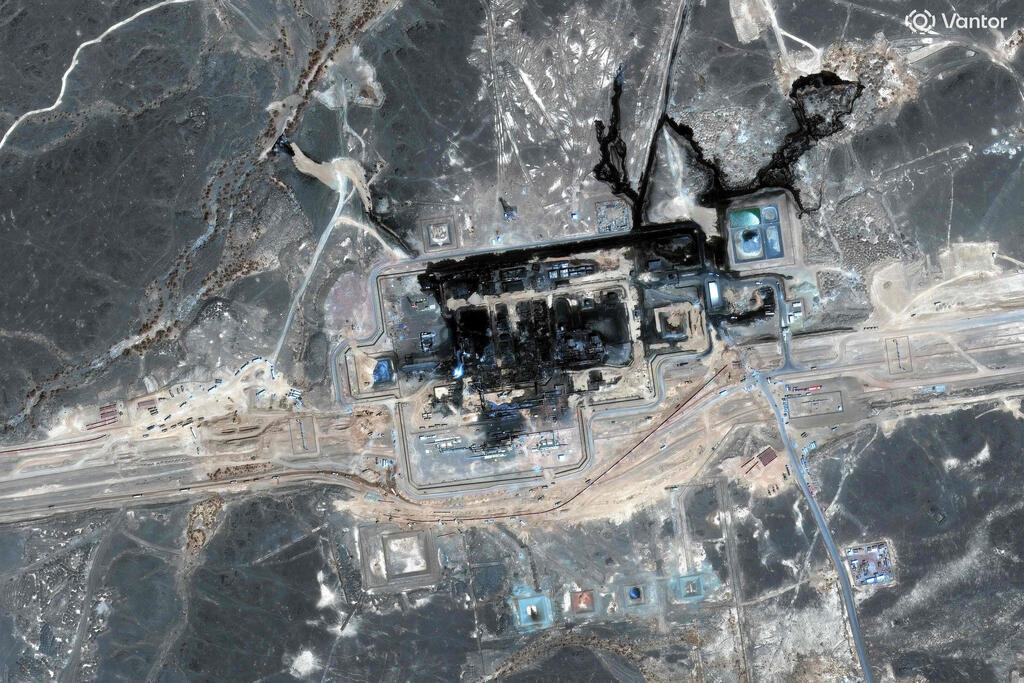
Houthi strike on the East-West oil pipeline in Saudi Arabia
(AFP/ Satellite image ©2026 Vantor)
A form of symmetry is emerging in the regional energy landscape. If Iran’s ability to export through Hormuz is compromised, the cost and risk of normal export operations for the Gulf states also rise. The key difference is that pressure on those rivals need not be exerted directly by the Iranian navy. It can be generated in Yemen, Iraq and at infrastructure sites hundreds of kilometers from the Persian Gulf.
The timing is particularly significant because Iran and Oman are currently negotiating a new framework for shipping through the Strait of Hormuz. Official Omani statements already refer to a temporary maritime corridor, mine clearance and ongoing talks on traffic management and a permanent arrangement. Over the weekend, Iranian President Masoud Pezeshkian linked the opening of the shipping route to an end to the blockade and U.S. attacks. Freedom of navigation is therefore becoming part of a broader political negotiation.
The situation at Bab al-Mandab strengthens Tehran’s bargaining position, but it also creates a risk. If the United States, Saudi Arabia and the Gulf states become convinced that the Strait of Hormuz, the Houthis and attacks originating from Iraq are components of a single system of pressure, a broader political basis for joint action against assets linked to the Iranian axis could emerge. The new crisis also makes it harder for Oman to portray its arrangement with Iran as one that stabilizes regional shipping when another critical maritime passage is under threat from a Tehran-aligned group.
The Houthis themselves are signaling that they understand the value of applying limited pressure. Following the seizure, their military spokesman declared that shipping was safe for all companies except Saudi vessels. An official from the Houthi government’s Ministry of Transport also claimed that 73 ships had passed through the strait over a two-day period.
This model of pressure may prove more effective than a physical closure. A total blockade of Bab al-Mandab would harm Europe, China, India and many other countries that the Houthis have little interest in turning into enemies. A selective threat creates uncertainty without necessarily halting all trade. Shipping and insurance companies must consider not only whether the strait is open, but whether a specific vessel, based on its owner, cargo and destination, could become a target.
The impact is felt even before a missile strikes a ship. Insurance premiums rise, crews demand different terms, inventories must be increased, and companies sometimes choose the longer route around the Cape of Good Hope. The market pays the price for the risk even when the goods ultimately reach their destination.
The IEA is already pointing to a market undergoing an exceptional depletion of inventories. Observed global inventories have fallen by 507 million barrels since February, including 95 million barrels in August alone. Total oil exports from the Gulf states in August stood at approximately 13 million barrels per day, nearly half their pre-war level. The situation is even more severe for diesel: net exports from the Gulf fell to 390,000 barrels per day, little more than a quarter of pre-war levels. In early September, U.S. diesel prices crossed a threshold equivalent to $200 per barrel.
This is where the crisis shifts from an oil-market event to an inflationary threat. Diesel powers trucking, agriculture, industry and shipping. When its price surges alongside rising transportation costs, those expenses are passed through supply chains. If the situation persists, it could also make it harder for central banks to continue with monetary easing based on expectations of falling inflation.
Impact on Israel: The economy can shift activity to Haifa and Ashdod
From Israel’s perspective, experience from the first wave of Houthi attacks offers some grounds for optimism. A Bank of Israel study found that despite an approximately 114% increase in the length of the shipping route between China and Israel, there was no significant decline in imports from Asia or significant increase in import prices during the first half of 2024. Maritime imports from Asia and Oceania totaled approximately $20 billion annually, about one-fifth of all civilian imports. The economy managed to adapt.
The current episode is different because the disruption to shipping coincides with a crisis involving oil and refined petroleum products. The Port of Eilat is already effectively paralyzed, and the Houthi takeover of the Yemeni side of the Bab al-Mandab Strait further reduces the likelihood of a swift return to normal shipping routes. Since the vast majority of Israeli cargo moves by sea, the economy can shift activity to Haifa and Ashdod, albeit at the cost of reduced logistical flexibility and greater reliance on Mediterranean routes.
EAPC, the Europe Asia Pipeline Company, is also part of the picture. The 254-kilometer, bi-directional Eilat-Ashkelon pipeline can transport oil between the Red Sea and the Mediterranean, with capacity of up to 60 million tons annually in the northward direction and up to 30 million tons in the reverse direction. As maritime access to Eilat becomes less reliable, some of the value of this “land bridge” is eroded. Israel can still receive oil through the Mediterranean, so a shortage is not an automatic outcome. The issue is instead the loss of strategic flexibility.
Israel also has an important advantage. About 73% of its electricity is generated from natural gas, most of it domestically produced. A surge in oil prices therefore does not translate directly into electricity prices as it does in countries that depend on imported fuels for power generation. Transportation, aviation and industry remain exposed to diesel, gasoline and jet fuel, however, meaning that a prolonged crisis in refined products would still reach Israeli consumers.
A particularly problematic scenario for Israel would be a recovery in international shipping while restrictions targeting Israel remain in place. The Houthis currently say the exception is Saudi vessels. But their previous pattern of attacks included damage to and threats against ships they identified as having ties to Israel. If that pattern returns, the world could gradually return to the Red Sea while the Port of Eilat and Israeli trade remain subject to a high risk premium. The international incentive to resolve the problem would then also be weaker.
Four scenarios lie ahead, from a rapid return to normalcy to a broad military response
In the relatively positive scenario, the East-West Pipeline quickly returns to full operation, the Houthis continue allowing most shipping to pass, and the Iranian-Omani arrangement gradually increases traffic through the Strait of Hormuz. In that case, oil prices could shed their crisis premium, although insurance and shipping costs would remain higher than usual.
A plausible and more troubling scenario is prolonged attrition. The Saudi pipeline operates but remains a target, transit through Hormuz remains restricted, and the Houthis maintain a selective threat at Bab al-Mandab. No single event would shut down the oil market, yet inventories would continue to decline and the cost of every barrel and shipment would remain elevated. Economically, such a crisis could prove more damaging than a brief, clear-cut blockade.
The severe scenario involves a deeper linkage between the various fronts: talks over Hormuz fail, attacks on Saudi infrastructure escalate, and Bab al-Mandab is effectively disrupted. Saudi Arabia might then possess theoretical production capacity of more than 12 million barrels per day while being able to bring only a fraction of that output to market. At that point, shortages of diesel and refined products could become even more acute than shortages of crude oil.
The fourth scenario is a broad military counter-response. Territorial control gives the Houthis leverage, but it also turns ports, warehouses, supply routes and islands into fixed, locatable targets. A Saudi or American attempt to alter the balance of territorial control could reduce the threat to the strait, but at the cost of a broader regional war and an intensified threat to Saudi infrastructure and Israel.
The week’s most significant development is therefore the stress being placed on the backup system built around the Gulf over decades. With the Strait of Hormuz compromised, Saudi Arabia activated the East-West Pipeline. That pipeline was then attacked, while the Houthis established a foothold near its western terminus, close to Bab al-Mandab. As the alternative route itself becomes part of the theater of war, oil prices are beginning to reflect a problem far more extensive than a temporary shortage of barrels: a decline in the reliability of the entire supply system.



