










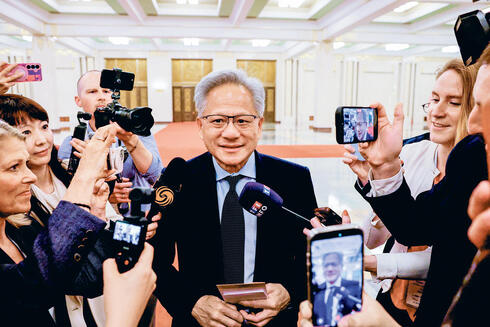
The Jensen Huang trade: One man's return sends Wall Street soaring
Nvidia's reinstated CEO helped spark a sharp rebound after a brutal sell-off erased the Nasdaq's gains for the year. But the board's reversal has left questions about the allegations against Huang, the company's national security exposure and the market's dependence on one executive.
The “Jensen Huang crash” will be remembered as one of the shortest, and potentially most expensive, market collapses in history. Few individuals have ever been worth so much to Wall Street. From now on, investments built on faith in the artificial intelligence revolution may be better described not as the “AI trade,” but as the “Jensen Huang trade.”
It remains difficult to make sense of the extraordinary events surrounding Nvidia and its CEO over the past two weeks. The bottom line, however, is clear: Jensen Huang has been reinstated as president and CEO of the AI chip giant. Less than two weeks after stepping down amid revelations of an affair with a woman suspected of having ties to Chinese intelligence, as well as a relationship with one of Nvidia’s vice presidents, Huang has been brought back in a dramatic reversal by the company’s board.
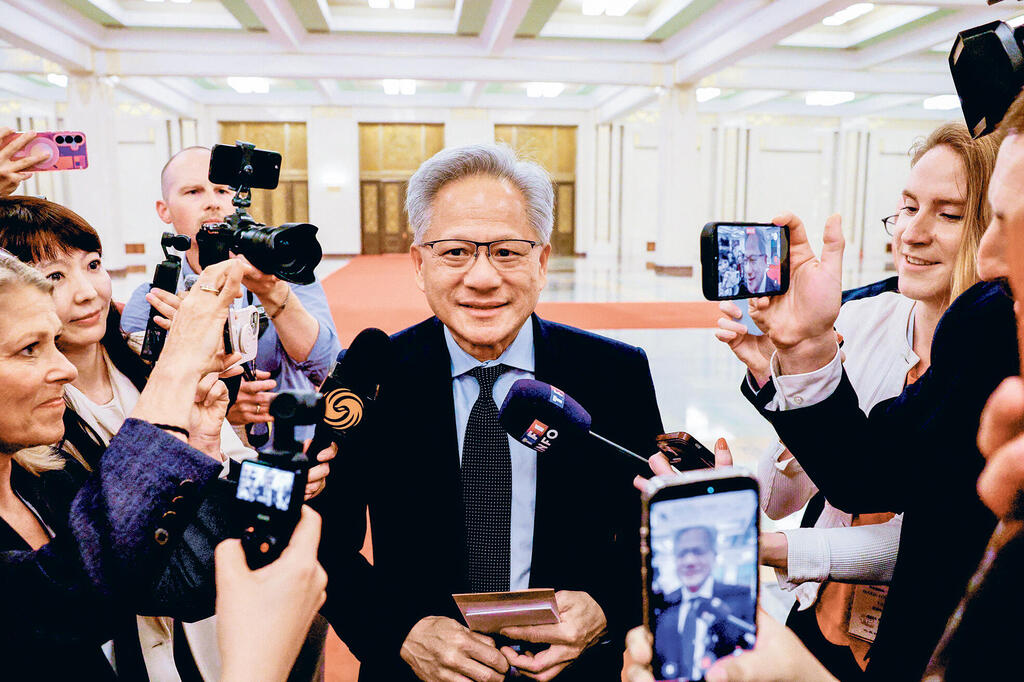
The directors voted unanimously to reinstate him, saying they had held a series of discussions and meetings with Huang and had become satisfied with his candor and ability to lead the company. Equally noteworthy was the board’s next statement: “The Board received input from senior levels of the United States government, and based on that input, the Board is confident that Mr. Huang’s reinstatement poses no national security risk.”
The statement is striking given the continuing questions surrounding the woman at the center of the affair and her alleged connections to Chinese intelligence. A report published Monday by The New York Times described links between her and a man identified as her husband and Chinese intelligence agencies. These allegations have not been established as fact. For his part, Huang said he was “honored to return to NVIDIA and lead one of the most consequential technology companies in the world at the beginning of a new industrial revolution.”
The board’s reversal came after President Donald Trump publicly called for Huang’s reinstatement on his social media platform, Truth Social. The decision also followed Friday’s Wall Street rout, which erased the Nasdaq’s gains for the year. Trump welcomed the board’s announcement, saying it had “made the right and appropriate decision” and that “the country needs Jensen’s leadership at NVIDIA to ensure the success and prosperity not only of the company itself, but of the American economy as well.” In an interview with CNBC, Trump went further, declaring: “Huang did nothing wrong.”
Huang’s return sent Nvidia shares soaring, with the stock rising by around 30% and restoring the company’s market value to approximately $4 trillion. The rally also lifted the broader market, with the Nasdaq gaining about 6.5% and the S&P 500 rising roughly 4.85%. Chipmakers and neocloud companies, among the hardest-hit stocks during the recent sell-off, recorded particularly strong gains.
The Tel Aviv Stock Exchange also benefited from the news, reversing earlier losses to move higher, led by sharp gains in chip stocks. Tower Semiconductor was among the biggest movers, climbing nearly 20%.
Huang’s return is also welcome news for the Israeli economy, which has become increasingly exposed to Nvidia as the company expands its local operations. Figures released by Nvidia last week have been interpreted as showing that its Israeli operations are generating revenue at an annual rate of approximately $80 billion, a scale unmatched by any other Israeli or foreign company operating in the country. The figure points to the growing weight of Nvidia in Israel’s economic activity. Israel’s economy grew by 8% in the third quarter, but when the “production abroad” category, which is understood to include a substantial contribution from Nvidia, is excluded, growth falls to around 4%.
Under Huang, an outspoken friend of Israel, Nvidia is also moving ahead with plans to build a major campus in northern Israel. His departure had raised questions about whether a successor would maintain the same commitment to the project or pursue it at the same pace. His return will also be welcome news for the Israel Tax Authority, as the company’s approximately 6,000 local employees have seen the value of their equity-based compensation fall sharply in recent weeks.
Despite the euphoria on Wall Street, major questions remain. Why did the affair and the alleged Chinese intelligence connection become public now, even though U.S. intelligence agencies had reportedly been aware of the matter for some time? Who had an interest in bringing the story to light two weeks ago, shortly after the U.S. midterm elections and just before Anthropic’s IPO? And who had the influence, and perhaps the ability, to help secure Huang’s return after such a short period, and without a public explanation of what had changed?
Other troubling issues have also surfaced, including Huang’s reported relationship with a subordinate, which could raise serious questions about corporate conduct, and concerns about his relationships with other employees. There are also questions about a reported investigation by the U.S. Securities and Exchange Commission into Nvidia’s accounting disclosures. Will these issues now be pushed aside, as though they never happened, because no one wants a Wall Street meltdown ahead of Thanksgiving and Christmas?
The biggest question, however, is whether Huang’s return will be enough to reverse the negative sentiment that has gripped Wall Street in recent weeks. How long can his reinstatement fuel a rally, and does it put an end-of-year recovery back on the table?
The recent downturn was not driven solely by uncertainty over Nvidia’s future, important as the company is to the market. Other concerns remain in the background: the high levels of debt and leverage among AI infrastructure companies; the prospect of stricter regulation of the industry when the newly elected Democratic-controlled Congress takes office in January; and the continuing risk of war with Iran. The market is also coming off three consecutive years of strong double-digit gains. After such a run, a correction may not be entirely unwelcome.



