










OpenAI ramps up Israel expansion with former AWS executive
Eliran Ben David joins the company as it introduces new AI tools to Israeli startups and recruits for a dedicated local startup partnerships role.
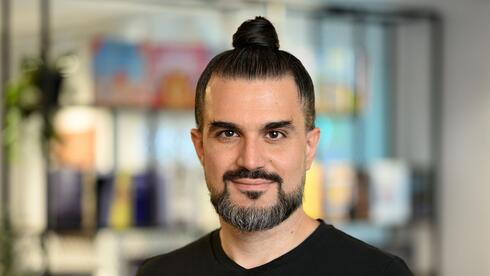
OpenAI has taken another step toward establishing a presence in Israel, appointing former AWS executive Eliran Ben David to help deepen its engagement with the country's startup ecosystem.
The company held a webinar earlier Wednesday introducing Israeli startups to OpenAI's latest artificial intelligence tools. As Calcalist revealed last week, his appointment marks the first step in OpenAI's effort to strengthen ties with Israel's technology sector, where many startups have gravitated toward the AI models and development tools of rival Anthropic.

At the same time, OpenAI is recruiting for a dedicated startup partnerships account manager in Israel, according to a job posting on its website. The position will be based out of the company's Paris office and will focus on building relationships with the local startup ecosystem.
Ben David's role is officially titled AWS Partnerships Director and is based in London, with responsibility for partnerships across the EMEA region. However, his primary focus is expected to be Israeli startups, reflecting the country's concentration of AI companies and its importance within the region.
Ben David's appointment, together with the new Israel-focused role, is the clearest indication yet that OpenAI intends to establish a stronger commercial presence in the country.
At today's event, OpenAI showcased several of its latest products, including Codex, ChatGPT Work, and the GPT-5.6 family of models.
Earlier this week, Calcalist also revealed that OpenAI signed a strategic partnership with Sheba Medical Center, making it the first hospital outside the United States to gain access to OpenAI Healthcare, the company's dedicated medical AI model.
OpenAI's decision to establish a commercial presence in Israel underscores the strategic importance it assigns to the country's technology sector. Although Israel has not produced its own frontier large language model, it has become one of the world's fastest adopters of generative AI, particularly among technology companies.
Recent data published by Anthropic showed Israel ranking first globally in per-capita usage of Claude among the working population, ahead of countries including the United States and Singapore. The findings highlighted both the depth of AI adoption in Israel and the speed with which local companies integrate new technologies.
Earlier this month, Calcalist also reported on a Bank of America study comparing countries across multiple AI indicators. While Israel ranked outside the top tier overall, held back primarily by relatively weak national infrastructure and limited government investment, it ranked much higher on private-sector metrics. According to LinkedIn data cited in the report, Israel ranks first globally in AI talent concentration and third worldwide in AI investment between 2013 and 2025, attracting approximately $19 billion.
Hundreds of Israeli startups are already building products around large language models, making the country an attractive market for AI providers. However, OpenAI faces strong competition. Amazon Web Services has a dominant cloud presence among Israeli startups, while Google's Gemini benefits from the company's extensive local operations.
Winning startup customers early could prove highly lucrative. As companies scale, their spending on AI models can grow substantially, much as cloud computing spending has over the past decade. A stronger presence in Israel could also provide OpenAI with broader enterprise adoption and additional feedback to improve its models.
OpenAI is also under growing competitive pressure from Anthropic. While ChatGPT remains the best-known consumer AI product, Anthropic has focused more aggressively on enterprise customers and international expansion, opening operations in markets including Germany, Japan and South Korea.
The result is an increasingly intense battle for corporate AI customers in markets such as Israel, where companies are among the world's fastest adopters of generative AI technologies.



