










Rafael’s Spyder enters Czech service as Prague considers more Israeli air defense systems
Four batteries have completed operational trials and replaced systems dating to the 1970s as Rafael expands Spyder’s capabilities against drones
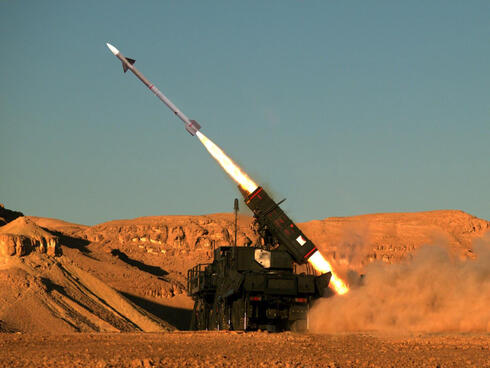
Rafael’s Spyder air defense system has entered operational service in the Czech Republic, completing the transition from a decades-old air defense fleet to an Israeli system designed to confront a much broader range of aerial threats.
The Czech military has completed operational trials of four Spyder batteries purchased from Israel and is now introducing them into service, Czech Defense Minister Jaromír Zůna said Saturday at NATO Days in Ostrava.

The deployment is also opening the possibility of a larger Rafael sale. Prime Minister Andrej Babiš said the Czech military is considering purchasing additional, newer-generation Spyder batteries.
The Czech Republic bought the four systems to replace air defense equipment dating from the 1970s. Deputy Chief of the General Staff Petr Čepelka said the Spyder is four to five times more capable than the systems it is replacing and can counter aircraft, helicopters, drones and cruise missiles.
That combination is increasingly important for Rafael as it develops Spyder beyond its traditional role. CTech reported in July that Rafael had demonstrated upgraded capabilities for the system against low-signature unmanned aerial vehicles, reflecting the growing challenge posed by drones to military forces and critical infrastructure.
The Czech decision comes as Spyder is becoming part of a broader European push to modernize air defenses. Earlier this month, Israel and Greece signed the roughly €3 billion “Achilles Shield” agreement, under which Rafael and Israel Aerospace Industries will establish a multilayered air defense network. Rafael’s Spyder and David’s Sling will form part of that network alongside IAI’s Barak MX.



