










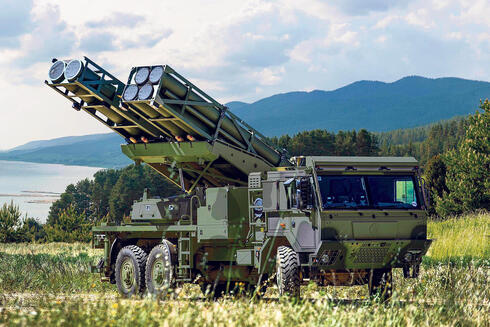
Israel’s Elbit to supply Azerbaijan with $235 million in rockets and launchers
The three-year contract covers EXTRA-MR rockets with a range of up to 80 kilometers and PULS artillery launchers. The deal adds to Azerbaijan’s extensive defense procurement from Israeli companies.
Elbit Systems has announced a $235 million deal to supply artillery launchers and rockets to an undisclosed European country. The customer was subsequently identified as Azerbaijan, one of Israel’s major arms buyers.
The contract covers Elbit’s EXTRA-MR medium-range rockets, which can strike targets at distances of up to 80 kilometers, as well as PULS rocket artillery launchers. Deliveries to the Azerbaijani military are scheduled over the next three years.

The agreement is being carried out under a government-to-government arrangement between Israel’s Ministry of Defense and its counterpart in Azerbaijan. Such agreements are coordinated by the governments involved and can serve broader diplomatic and strategic objectives alongside commercial interests.
Israel’s defense exports reached $19.2 billion in 2025. According to Ministry of Defense data, government-to-government agreements accounted for 52% of the total value of defense export deals.
Defense ties between Israeli companies and Azerbaijan have generated billions of dollars in business over the past decade, with many deals facilitated by Israel’s Ministry of Defense.
The transactions have included the Barak MX air defense system, LORA ballistic missiles, and various unmanned aerial vehicles (UAVs) and loitering munitions manufactured by Israel Aerospace Industries (IAI).
Elbit has also supplied Azerbaijan with UAVs, self-propelled guns and other artillery systems. Rafael, meanwhile, has equipped the Azerbaijani military with systems including its Spike anti-tank missiles.
Expanding Israel’s defense export base is a key objective for the Ministry of Defense in the coming years. The effort is intended not only to generate business for Israeli defense companies but also to strengthen diplomatic ties through industrial partnerships with foreign governments and companies. Some such arrangements involve transferring technical knowledge to enable local production of weaponry.