









HR The Next Leap
Minimus: "Today the most meaningful benefit is trust and flexibility"
Liron Prizner, Talent Acquisition and Human Resources Business Partner at Minimus, explains how the cybersecurity startup is managing recruitment and workforce wellbeing amid a prolonged state of emergency alongside universal industry trends like brain drain and quiet quitting, as part of CTech’s HR: The Next Leap series.
"Today, the most meaningful benefit we offer is trust and flexibility," says Liron Prizner, Talent Acquisition and Human Resources Business Partner at Minimus, an Israeli cybersecurity startup that specializes in minimal, secured container images. When it comes to managing recruitment processes during active and threatening war conditions, Prizner notes the situation necessitates "a high level of attentiveness, strong adaptability from all parties, and a commitment to transparency."
From active and looming war threats, to AI rapidly and constantly redefining what it means to be productive, running a company in Startup Nation brings with it its own category of challenges and rewards. HR: The Next Leap takes a glimpse into the heart of Startup Nation via the HR professionals shaping its culture. We survey the executives whose jobs are more demanding and more vital than ever, as they heed the future-proofing of their workforce, while simultaneously ensuring business continuity and employee wellbeing during relentlessly unprecedented times.
1 View gallery

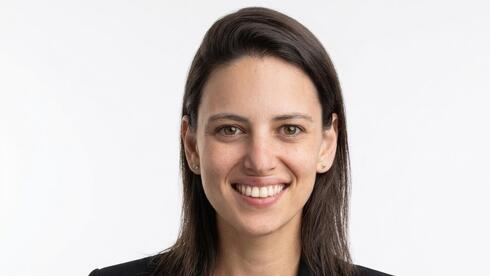
Liron Prizner, Talent Acquisition & Human Resources Business Partner, Minimus
(Photo: Minimus)
Of course, along with local challenges, Prizner and the entire HR cohort in Startup Nation are contending with the more universal conditions of people management in 2026 like talent retention drain and a growing apathy towards traditional "perks". "Top talent continues to have options, and we see that compensation and terms remain a two-sided discussion," she explains.
You can read the entire interview below.
Company Name: Minimus
Sector: Cyber
Founders: Ben Bernstein, Dima Stopel, and John Morello
Year of Founding: 2022
Investment stage: Seed
Total investment to date: $51M
Investors: YLVentures, Mayfield
Current number of employees: 60
Open positions: 3
Website: https://www.minimus.io/
Social Media: LinkedIn
In March 2026, as the market has officially shifted into an 'employer's market,' how have your screening criteria changed, and do candidates - including senior-level ones - still hold any leverage in negotiating salaries and terms?
While the market has indeed shifted toward an employer-driven environment, we have not significantly raised our screening bar artificially, but rather refined it placing stronger emphasis on impact, ownership, and adaptability. We continue to focus on experienced candidates with relevant academic backgrounds and applicable professional experience. That said, strong candidates especially at senior levels still hold meaningful leverage. Top talent continues to have options, and we see that compensation and terms remain a two-sided discussion, particularly for niche or high-impact roles.
How have/are you managing operational continuity and recruitment while the economy navigates the emergency state triggered by the conflict with Iran? With the threat of escalation looming at any moment, how are you and have you been handling everything from interviews interrupted by sirens to managing teams thinned by massive, ongoing reserve duty?
We approach candidates with a high degree of flexibility and understanding, recognizing that these are not normal times. Many candidates have been serving in reserve duty or staying home due to the lack of educational frameworks for their children. Interviews are indeed sometimes interrupted by sirens or other unexpected situations.
Managing recruitment processes under these conditions requires empathy, a high level of attentiveness, strong adaptability from all parties, and a commitment to transparency. At the beginning of the war, we initially tried to postpone interviews until the situation stabilized, but over time we realized this is an ongoing reality. As a result, we began (and continue) to conduct technical stages of the hiring process via Zoom.
Despite the challenging circumstances, we successfully hired three new employees fully remotely, and even enabled one of them to visit the office after making a final decision and signing the agreement.
A small number of our employees are currently on reserve duty, and thanks to our R&D leadership team who, fortunately (or unfortunately), are experienced in managing through situations like this we have been able to maintain development productivity and preserve team motivation.
On the bottom line, we continuously adjust workloads and expectations to support team members on reserve duty, while prioritizing business-critical roles in recruitment.
Beyond the role of empowering employees, which roles has AI eliminated over the past year, what percentage of your workforce was reskilled to avoid being phased out, and how has this impacted entry-level hiring?
At this stage, the impact of AI on our organization is minimal. It has not replaced any employees, and no one has been required to reskill in order to avoid redundancy. We use AI as a tool to help us work more efficiently and effectively, not as a substitute for people.
In the near future, we plan to begin hiring junior candidates with relevant academic degrees and experience in open-source projects. Familiarity with AI tools is definitely a significant advantage for faster integration into our product development processes.
Against the backdrop of the unstable security and political climate, are you seeing an increase in relocation requests or 'quiet quitting' by top-tier talent moving abroad, and what is the most proactive step you are taking to retain them in Israel?
Our employees have not expressed a desire to relocate due to the war. There have been some requests to work temporarily outside of Israel, which we have accommodated.
From a recruitment perspective, we have not seen a significant increase in top candidates actively seeking to leave Israel due to the current situation.
We are not taking specific proactive measures to retain talent in Israel, beyond offering the flexibility to work remotely for limited periods when needed. It is important for us to keep our R&D and product activities based in Israel.
In an era where stability has replaced flashy perks, how are you addressing the deep mental burnout of employees torn between the professional and security fronts, and what is the most critical benefit you offer today in place of the bonuses that have vanished?
Employee wellbeing is a top priority for us, especially given the current reality. We provided a daily allowance of 500 NIS for babysitting, and offered employees a budget of 300 NIS to purchase equipment that supports a comfortable work-from-home setup during the height of the war.
Our office remained open for those who wish to refresh, socialize, or work in closer proximity to a safe room. In addition, our G&A team regularly checks in with employees via phone and Zoom to ensure everyone is safe and has the support they need.
We are committed to fostering an environment where employees feel understood and supported, both personally and professionally. Today, the most meaningful “benefit” we offer is trust and flexibility.



