









Tnuva revives IPO plans at a valuation of over $4 billion
The food giant has begun preparing a new prospectus, targeting a listing in the first half of 2027. The proposed valuation would exceed the NIS 10 billion sought in its previous attempt, which was shelved in 2026.
Tnuva is renewing preparations for an initial public offering (IPO). Calcalist has learned that the company has begun drafting a new prospectus in recent weeks, with the aim of completing the offering in the first half of 2027.
The law firm Meitar is preparing the prospectus, and the company is expected to begin a series of meetings with leading underwriters in the coming weeks. Although the board of directors has not yet made a formal decision, management has launched preparations in coordination with the Chinese shareholders and the kibbutzim. The shareholders may also seek to sell part of their holdings as part of the offering, an issue that has been a source of disagreement in the past, particularly over how many shares each party would be allowed to sell.
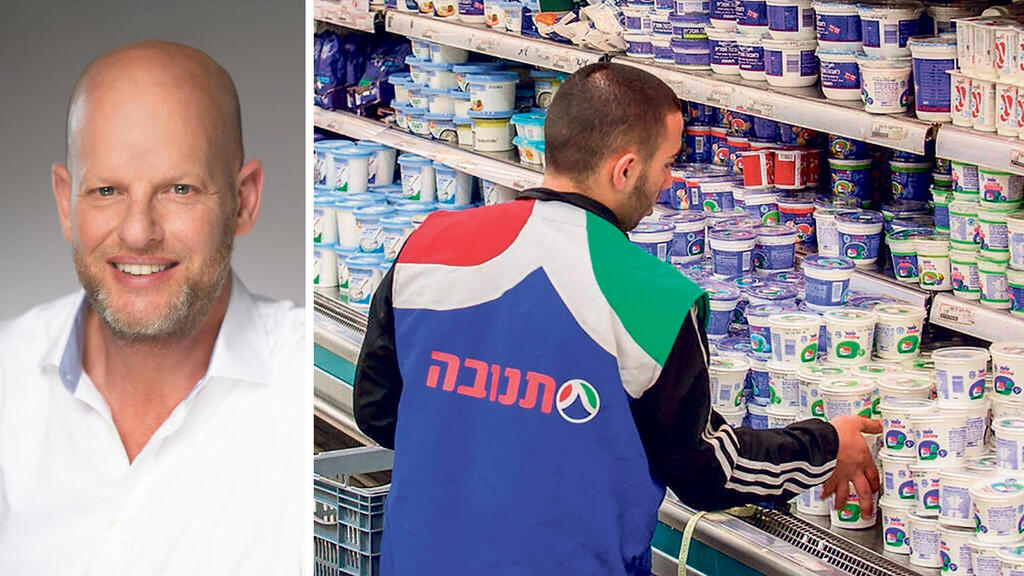
Tnuva, which is owned by China's Bright Food (76%) and the kibbutz purchasing organizations (24%), is expected to seek a valuation of approximately NIS 13 billion ($4.1B). That would be higher than the roughly NIS 10 billion valuation sought in preparations for a planned IPO in 2025. The increase reflects improved business performance, as well as the company's recent entry into the dietary supplements market.
In April 2026, it was reported that Tnuva, managed by Gadi Cunia and chaired by Haim Gabrieli, had halted its IPO process, citing changes in the business environment and reforms in the dairy market.
The company did not respond to a Calcalist inquiry about its renewed IPO preparations.
Bright Food acquired a controlling stake in Tnuva in 2015 for NIS 8.6 billion. In mid-2025, Tnuva began preparing a prospectus for an offering that could include a secondary sale of shares and value the company at nearly NIS 10 billion. The process was halted about a year later, when the company's 206 shareholders decided to focus on implementing an investment plan.
The plan includes building a new logistics center in Netivot, relocating the Mama Of plant from Kiryat Shmona to the site of Tnuva subsidiary Sunfrost in Migdal HaEmek, and installing an additional milk-processing line at the company's dairy facility in Rehovot. The projects represent a combined investment of NIS 600 million.
Related articles:
- Tnuva Chairman: "We have no choice but to excel in Israel. It is existential"
- Tnuva Chairman: "The business sector has significant potential to bolster national strength"
- Tnuva Chairman: "The war highlighted Israel's national security Achilles heel, but it has also underscored the critical importance of food security"
About a month ago, Tnuva entered the dietary supplements market with the launch of HOLIS, a brand built around microbiome research. Its initial product line focuses on probiotics and includes researched ingredients and specialized formulas aimed at a range of health and nutritional needs. The company also plans to incorporate ingredients used in supplements into its food products. The launch includes 11 products across nine categories, priced between NIS 60 and NIS 190 per unit.
The new business complements Tnuva's established operations, led by its dairy division, which processes approximately one billion liters of milk a year. The company also sells plant-based dairy alternatives under the Alternative brand, frozen meat products under the Mama Of and Adom Adom brands, and frozen vegetables under the Sunfrost brand.
The war has also contributed to changes in household consumption patterns, including increased consumption of food products as more people spend time at home. Tnuva has benefited from this trend, with revenue rising steadily to nearly NIS 10 billion. Its EBITDA (earnings before interest, taxes, depreciation and amortization) increased to approximately NIS 1.22 billion, compared with NIS 1.15 billion in 2025, when revenue stood at NIS 8 billion.
A wave of IPOs in the sector
The increase in food consumption has coincided with a wave of IPOs by companies in the sector. Among them is Gad, a dairy and cheese producer that went public in September 2025 at a valuation of NIS 725 million. Israel's fourth-largest dairy company, owned by Ezra Cohen and the Green Lantern fund, raised NIS 280 million in the offering and is now trading at a market capitalization of NIS 1.15 billion. Gad sells cheese in Israel and the United States but does not operate in the fluid milk market.
Another company to go public was Baladi, which operates in the meat sector. Controlled by Erez Dahabani, the company completed an IPO at a valuation of NIS 750 million, raising NIS 150 million. Its market value has since climbed to more than NIS 2 billion.
Sugat, which operates in salt, rice and other food categories and is controlled by the Fortissimo fund, also went public. In December 2025, it raised NIS 360 million at a valuation of NIS 850 million. Its market value has since increased to approximately NIS 1.15 billion.
Tnuva's competitor Strauss also has a significant international presence, particularly in Brazil's coffee market. The recent re-election of a left-wing government in Brazil has weighed on the company's valuation. Strauss is currently valued at approximately NIS 13 billion on the stock market, down from a peak of NIS 17 billion reached a few months ago.
Despite the recent wave of food-sector IPOs, market conditions have become less favorable. Declines in the markets amid the election period, together with weakness in the United States, have weighed on valuations. At present, the infrastructure company Barazani appears to be the only major company preparing to launch an IPO in the coming weeks at a valuation of more than NIS 2 billion.



