










Mind the Tech NY
From agri robots to AI surgery tools: Israel’s Dream Team heads to New York
Twelve Israeli startups will present at the Mind the Tech Week New York 2026 conference, delayed after the Israel-Iran conflict. The delegation will meet investors and corporate partners, showcasing technologies ranging from automated flight compensation to embedded tax software and secure digital voting systems.
A smart tax platform embedded in apps, an artificial intelligence system for flight compensation reimbursement, animal protein production inside plants, an autonomous operating system for tactical communications, and an artificial intelligence-based surgical copilot, these are some of the areas in which the 12 startups selected to participate in the Dream Team delegation to the Mind the Tech Week New York 2026 conference operate. The delegation, a joint initiative of Calcalist, Showcase IL, and LeumiTech, works to identify early-stage Israeli startups and create direct connections with investors, corporations, and strategic partners in major global technology hubs, as part of the annual conference in New York.
The Mind the Tech conference by Calcalist and Bank Leumi, which will be held in New York from May 11–13, 2026, is one of the most significant summits for the Israeli and American high-tech industries. This year, the conference will focus on strengthening the strategic connection between the Israeli ecosystem and the global market, with an emphasis on breakthrough innovation, business resilience, and the creation of new investment opportunities. Among other things, the conference will address the impact of artificial intelligence on finance and energy, defense technologies, cyber at a global scale, and digital transformation in healthcare and government systems. In addition, panels will be held on the future of investment on Wall Street, crypto, and the growth paths of “scale-up” companies in a changing economic environment.
5 View gallery

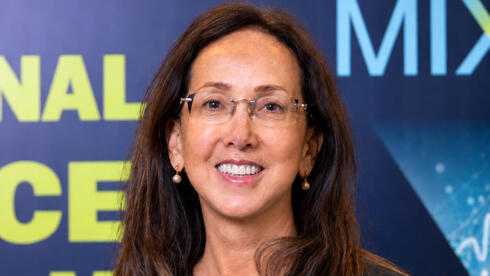
Leadership Board members (from right) Maya Eisen Zafrir, Yafit Keret , Hilla Ovil Brenner
The conference, which was postponed from March to May following the war with Iran, is taking place against the backdrop of a new security reality and its implications for the global economy and markets. Within this context, the Dream Team delegation aims to showcase not only technological innovation, but also the resilience of Israeli high-tech and its ability to continue operating and growing even in challenging conditions.
These are the 12 startups that will join the New York 2026 Dream Team: April (fintech), Gyro (fintech/regtech), Catch (artificial intelligence), Guardian7 (defense), Edventure.il (educational technology), Finally Foods (agritech/foodtech), Modelyo (cyber), Shopeaks (AI-based commerce infrastructure), Pink Star Technologies (AI and health), AgriPass Robotics (agritech), Sequent Tech (deep tech), and TrackiMed (medtech/healthtech).
The professional backing given to the selected companies is reinforced by the list of investors expected to participate in the conference events. Participants include Josh Wolfe, co-founder of Lux Capital, a $5 billion fund focused on investments in deep tech and security; Shardul Shah of Index Ventures, who was the first investor in Wiz; and Amanda Herson of Founder Collective, a fund that has invested in companies such as Uber in their early stages.
“We are coming to New York in a period of change and uncertainty, investors and entrepreneurs are now recalibrating at a rapid pace. It is more important than ever to listen to sentiment and new nuances in the questions of investors and potential customers,” said Maya Eisen Zafrir, CEO of LeumiTech, to members of the Dream Team for New York. “In such an environment, it is important to show control over the business plan and the use of fundraising capital, and to demonstrate the milestones you can achieve in the growth journey you present.”

According to Eisen Zafrir, regarding the foreign exchange environment affecting entrepreneurs who raise investments in dollars while paying employees and expenses in shekels, the recommendation is to present a budget based on realistic working assumptions and to address, among other things, exchange rate volatility. “You must show potential investors that you know how to manage financial risk, including instruments to reduce foreign exchange exposure. Show that you understand the impact of market conditions, that you have base and stress scenarios, and that you can clearly explain how each decision connects to the numbers. Transparency, financial discipline, and early alignment of expectations can help you succeed,” she said.
Behind the “Dream Team” project over the past year has been Hilla Ovil-Brenner, founder and CEO of Showcase IL. “I am proud to accompany the 12 exceptional companies selected by leading funds and industry executives to join the upcoming delegation to New York to meet investors, customers, and partners,” said Ovil-Brenner at the bootcamp. “In these times of uncertainty in our region, the decision to continue promoting technological entrepreneurship is more important than ever. The Dream Team New York 2026 delegation is the result of a true partnership between people and organizations who believe in the power of Israeli innovation. The opportunity to invest in entrepreneurs and open doors for them internationally is not just about promoting the delegation, it is an expression of confidence in the future of Israeli high-tech.”
The Dream Team selection process began with applications from more than 150 Israeli startups. From these, 23 companies advanced to the final pitch stage, representing fields such as artificial intelligence, medtech, sustainability, and security. During the intensive evaluation day, the judges ranked the companies based on five criteria: market opportunity, team quality, level of innovation, traction and growth, and expansion potential.
The delegation’s activities were supported by the Leadership Board, a group of high-tech and venture capital executives, legal advisors, and financial professionals tasked with preparing the startups for meetings and opening doors in the United States. Committee members include Maya Eisen Zafrir, CEO of LeumiTech; Justin Borus, founder of Ibex Investors; Yafit Keret, CEO of ERB Proximo; and Amir Elichai, founder and CEO of Carbyne, which completed a $625 million exit a few months ago. For the delegation, this is also a full-circle moment: early in its journey, when the company operated under the name Reporty, Carbyne participated as a young startup in the Calcalist conference in London, gaining significant exposure to investors.
At the New York conference, the 12 selected companies will present on the main stage in front of investors, corporations, and industry executives. As part of the format, members of the Leadership Board will accompany the presentations and provide real-time feedback on strategy, business model, and presentation style, with the goal of refining messaging and preparing startups for follow-on meetings and fundraising.
Yafit Keret elaborated on the committee’s role: “Supporting entrepreneurs is not just a job for us, it’s a mission. We are proud to be part of the group leading the Dream Team to the stage in New York. The merger between Proximo and ERB strengthens our ability to support them at every stage, from the local ecosystem to international expansion.”
After being selected, the 12 companies participated in a concentrated bootcamp held at the Google for Startups campus, aimed at providing practical guidance on working with customers and investors in the U.S. market. During a full-day program, entrepreneurs attended workshops on pitching, presentation building, refining business models, and addressing challenges such as international taxation, hiring in the U.S., and adapting to the local business environment. One panel focused on fundraising and doing business in the U.S., investor expectations, and differences between the East and West Coasts. Participants emphasized that investors today look for execution and revenue alongside technology, and that artificial intelligence has changed company evaluation metrics.
Here are the startups selected:
April
Sector: Fintech
Total raised: $80 million
Round of funding: B
Number of employees: 70
April is developing a smart tax platform designed to modernize the tax filing experience in the United States. The company has created a new category called “Embedded Tax,” which enables the integration of tax automation directly into financial apps, banks, and payroll platforms. The system is powered by a proprietary AI engine and a graph-based algorithmic model that translates complex regulations into a streamlined workflow, significantly reducing filing time.
The platform provides real-time optimization and continuous electronic filing for millions of taxpayers, turning tax reporting from an annual burden into an ongoing financial advantage. In the coming months, the company will focus on selling its software to financial institutions in the United States in a B2B2C model, with an emphasis on growth in the wealth management sector, where adoption is already underway.
Gyro
Sector: Fintech & RegTech
Total Funding: $1.2M
Round: Seed
Number of Employees: 6
Gyro is developing an AI-based system that enables instant reimbursement of airline compensation for passengers and organizations. The system transforms the traditional claims process, which typically takes 4-8 months, into a platform that delivers near-instant payouts within 60 seconds by automating the legal analysis of aviation regulations such as EU261 and DOT rules.
The B2C solution scans users’ email histories for eligible flights over the past three years, while the B2B product helps companies recover funds from disrupted business travel through integrations with travel platforms such as Navan and corporate credit card systems. The business model is success-based, with the company charging a 40% fee on recovered funds in the B2B segment. Over the next 18 months, Gyro will focus on sales to CFOs and procurement managers in organizations with significant travel expenditure.
5 View gallery

MTT NY 2026 Dream Team (from right): Daniel Marcus (April) Dafna Gabbay (Finally Foods), Nir Goldstein (Guardian7) Jonathan Attias (Gyro)
Catch
Sector: Artificial Intelligence
Total Funding: $5.8M
Round: Seed
Number of Employees: 15
Catch is developing an AI-powered in-store retail media platform designed to replace traditional physical retail marketing. Its system is a multi-agent AI platform that plans, produces, distributes, and measures the entire in-store marketing lifecycle, delivering highly personalized experiences at every customer touchpoint. The solution is already deployed in leading retail chains and demonstrates strong return on ad spend (ROAS).
The company’s go-to-market strategy focuses on partnerships with major retail infrastructure providers such as Toshiba and Zebra, enabling rapid deployment without requiring capital expenditure or complex integration from retailers. The business model includes per-device licensing fees alongside revenue sharing from media monetization.
Guardian7
Sector: Defense-tech
Total Funding: $2M
Round: Seed
Number of Employees: 10
Guardian7 is developing an autonomous tactical communications operating system for military and rescue forces. The platform creates resilient, high-bandwidth connectivity in real time by synchronizing and managing multiple communication channels simultaneously. Its core software layer, the Cognitive Adaptive Layer, transforms fragmented networks into adaptive infrastructure capable of supporting reliable data and video transmission in complex environments.
In the next 12-18 months, the company will focus on selling its communications systems to U.S. Special Operations Command (SOCOM) and the U.S. Border Patrol. The business model is based on paid pilot deployments that transition into annual software licensing contracts, priced at approximately $10,000 per system per year.
5 View gallery

MTT NY 2026 Dream Team (from right): Sivan Sadan (Pink Star), Shlomi Dayan (Catch), Liron Cohen Yanay (AgriPass) Daniel Abitbul (Shopeaks)
Edventure.il
Sector: Edtech
Total Funding: $410,000
Round: Pre-seed
Number of Employees: 10
Edventure.il is developing an AI-based teaching platform that enables personalized learning for every student. The system combines real-time student diagnostics, data-driven lesson planning, and a smart AI tutor (Edwin) into a unified platform for teachers, students, and schools. It translates student data into actionable insights, improving engagement, academic performance, and operational efficiency, while offering a scalable alternative to private tutoring and fragmented education tools.
The company aims to reach approximately $3.5 million in annual recurring revenue (ARR) by the end of 2026, focusing on B2B sales to schools and local authorities in Israel and the United States, at an average price of about $90 per student per year.
Finally Foods
Sector: Agritech & Foodtech
Total raised: $2.6 million
Round: Seed
Number of employees: 6
Finally Foods is a female-led molecular agriculture startup growing animal proteins inside plants using artificial intelligence. It is Evogene’s first AI-driven product, enabling field trials within just 10 months.
The company produces casein, the main milk protein responsible for texture, melting, and foaming, inside potatoes. Founded in March 2024 with backing from the Strauss Group, the company holds an exclusive license to the technology. Its go-to-market strategy focuses on selling casein as an ingredient in B2B transactions to industrial food companies.
The company has already signed a prepaid supply agreement with CBC Group (Tara/Coca-Cola Israel), initially pricing its product in line with animal-based casein, with plans to deliver cost advantages over time.
Shopeaks
Sector: AI-based commerce infrastructure
Total raised: $2.5 million
Round of funding: Seed
Number of employees: 8
Shopeaks develops a real-time AI commerce infrastructure layer that dynamically creates personalized online stores for each customer. Unlike static e-commerce platforms, its system adapts content, offers, and product displays in real time based on user intent and behavioral signals.
The technology connects all marketing channels through a unified “commercial fingerprint,” increasing conversion rates from social traffic by 3–5x and raising average order value by approximately 30% for global fashion and lifestyle brands.
Over the next 18 months, the company will focus on B2B sales to e-commerce brands in fashion and retail, aiming to reach millions in annual revenue through direct enterprise sales, partnerships, and influencer-driven distribution.
Pink Star Technologies
Sector: Artificial Intelligence and Healthcare
Total Funding: $500,000
Round of Funding: Pre-seed
Number of Employees: 3
Pink Star Technologies is developing an AI-based decision support system for the analysis of breast MRI scans. Built in collaboration with Sheba Medical Center and trained on unique clinical datasets, the system assists radiologists in improving breast cancer detection while reducing false positives and unnecessary invasive procedures.
The product is currently in development. Over the next 12-18 months, the company will focus on clinical pilots in the United States, building reference sites and partnerships with radiology centers, and securing FDA approval, a critical milestone for commercialization.
5 View gallery

MTT NY 2026 Dream Team (from right): Eran Heller (Edventure), Inbar Oz (TrackiMed), Benny Meir (Modelyo), Shai Bargil (Sequent)
AgriPass Robotics
Sector: Agritech
Total raised: $7.5 million
Round of funding: Series A
Number of employees: 9
AgriPass Robotics addresses the shortage of agricultural labor through autonomous weed control technology. The company has developed RHIC, an AI-powered weeding robot that replicates human decision-making to perform precision soil cultivation and selective weeding in real time, without the use of herbicides. The system currently achieves 80–85% weed removal efficiency in commercial environments and is deployed in Europe and the United States.
The company has signed orders worth approximately $400,000. Over the next 18 months, it is targeting mid-sized vegetable farms and organic growers, with hardware priced at around $150,000 per unit plus maintenance. Alongside direct sales, AgriPass is pursuing a Robot-as-a-Service (RaaS) model to support future scaling via distributors and OEM partners.
Sequent Tech
Sector: Deep Tech
Total raised: $3.1 million
Round: Seed
Number of employees: 15
Sequent Tech develops a secure, verifiable online voting platform for governments, municipalities, and public organizations. The system modernizes election processes by providing a secure, cost-efficient alternative to traditional voting systems such as mail-in ballots, while meeting strict international security standards.
The company aims to reach up to $6 million in annual recurring revenue (ARR) within 12-18 months. Its growth strategy focuses on the United States and Canada (municipalities, unions, and universities), as well as expansion into Europe through local partners in Spain and Germany. Pricing is based on a per-voter model ranging from $1.20 to $2.50.
TrackiMed
Sector: Medtech and Healthtech
Total Funding: $250,000
Round: Pre-seed
Number of Employees: 4
TrackiMed has developed Tracki, an AI-based surgical co-pilot system designed to improve operational efficiency and reduce errors in operating rooms. The platform operates in real time, combining visual and voice intelligence to automate manual processes, streamline surgical documentation, and reduce human error. Its use can save up to 45 minutes per surgery and potentially reduce operational losses by up to $3 million annually per operating room.
In the near term, the company is focused on clinical pilots with U.S. healthcare systems, followed by broader deployment through a SaaS model with per–operating-room licensing.
Modelyo
Sector: Cyber
Total Funding: $16M
Round: Post-seed
Number of Employees: 30
Modelyo is a cloud-based cybersecurity platform that enables organizations to run sensitive core systems in fully encrypted and verifiable environments. The company is redefining cloud infrastructure for financial institutions and government entities by using secure GPU-based computing that allows critical workloads, including AI and large language models, to run without exposing underlying data.
Its architecture relies on cryptographic proofs rather than trust in infrastructure operators, significantly reducing security risks while maintaining performance and cost efficiency.



