










VC Survey 2026
“Innovation and resilience are not separate attributes of the Israeli tech ecosystem, they are structurally linked”
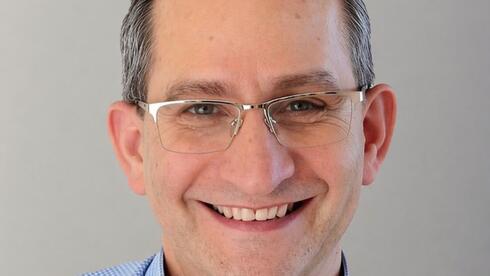
Elle Taitou Spruch, senior investment associate at Planven, joined CTech for its 2026 VC Survey.
Elle Taitou Spruch, senior investment associate at Planven.
(Video: Orel Cohen)


“What global Limited Partners are recognizing in 2026 is that innovation and resilience are not separate attributes of the Israeli tech ecosystem, they are structurally linked. Israel was never just an "innovation story." Its defining advantage has always been the ability to build, scale, and exit companies under constant constraint: geopolitical, macroeconomic, and operational. What's changed is that the data now proves this resilience at scale,” said Elle Taitou Spruch, senior investment associate at Planven.
Asked whether the Israeli tech asset class is undergoing a rebranding in the eyes of global investors in 2026, she offered key data points to back up her argument.
“Recent performance underscores this clearly: $80B in M&A exits in 2025 -a record year, led by global acquirers such as Google, Palo Alto Networks, ServiceNow, Xero, Munich Re and others, validating sustained international demand for Israeli technology. Mega-rounds increasingly led by international capital, with companies like Eon, Cyera, Cato Networks, and Coralogix attracting hundreds of millions from global investors. This is not a rebrand. It's the same narrative, now validated by scale, maturity, and hard performance data.”
“When we speak to LPs about the eco system in Israel, we emphasize what matters most: the entrepreneurs behind these companies. Israeli founders embody resilience not just at the macro ecosystem level, but at the individual level. These are people who combine world-class technical skills with a resilient mindset- founders who are wired to adapt and built to withstand pressure. That combination of elite skill and mental fortitude is what consistently delivers outsized returns, regardless of what's happening externally.”
Following the turbulence of recent years and the stabilization of 2025, the Israeli tech ecosystem is entering a new era: The Next Leap. Taitou Spruch joined CTech to share insights for its VC Survey 2026.

You can read the entire interview below.
Fund ID
Fund Name: Planven
Total Assets Under Management: $300M
Partners/Managers: Giovanni Canetta Roeder, Eran Westman, Rosario Bifulco, Marc Greuter
Notable Portfolio Companies: Creator IQ, Ibex Medical Analytics, Seraphic Security, TechSee, Monogoto
Notable Exits: Via, public in NYSE (September 2025); Nozomi Networks, acquired by Mitsubishi for $1B (September 2025); CatchWorks acquired by Medtronic
The Agentic Leap: As we transition from 'Copilots' to autonomous 'Agents,' which specific vertical will be the first to fully trust AI with independent decision-making?
The real question isn't which industry goes autonomous first, it's which decisions can be trusted first. It's not like an entire vertical suddenly flips a switch and becomes autonomous. It's that specific tasks within that vertical slide from supervised to autonomous based on how quickly the AI can learn and how much risk we can tolerate.
The verticals crossing to autonomy first aren't the "smartest" ones - they're the ones with the tightest feedback loops. Customer support, dev ops, coding workflows, these are domains where AI can run thousands of iterations and learn what actually works in production. The shift isn't binary. Even within customer support, some decisions will go fully autonomous while others stay supervised. The functions that cross over first share four traits: high volume, clear success metrics, fast feedback loops, and manageable downside (mistakes are recoverable, not catastrophic.)
The Sovereign Leap: Have the geopolitical lessons of recent years pushed Israeli startups to build independent, 'sovereign' tech stacks to reduce reliance on global platforms?
Israel didn't choose sovereignty as a strategy, it was forced into it. Given the geopolitical reality, Israeli startups have no alternative but to build resilient, independent technology stacks. Over the past few years, this necessity has accelerated a fundamental shift: from relying on global platforms to designing systems that can operate autonomously, securely, and at scale, even under uncertainty.
What makes this possible isn't just technology. It's the ecosystem. Israel's advantage is a rare combination: world-class talent, deep technical thinking, and a problem-solving culture shaped by real constraints. This is reinforced by a strong local capital base, seed investors and early-stage backers who understand long cycles, invest through volatility, and keep the ecosystem competitive globally.
On top of that, there's a maturity layer that's hard to replicate: experienced operators, vertical-specific domain experts, and a growing cohort of repeat founders. Many of these founders are choosing to build their next companies, category leaders, with R&D anchored in Israel, leveraging the country's unmatched human capital while scaling globally from day one. The result is a self-reinforcing ecosystem that's both independent and globally integrated. And now, we're seeing more countries, especially in Europe, recognizing how critical technological sovereignty has become. They're looking to Israel not just for innovation, but as a model: how do you build an ecosystem strong enough to reduce dependency on external platforms while staying globally competitive? In that sense, "sovereign tech" in Israel isn't a defensive posture - it's a structural advantage. And it's one that others are now racing to replicate.
The Next Engine: Cybersecurity has been Israel's primary export engine for a decade. Which domain is best positioned to take the lead by 2030?
AI is transforming every sector, including cybersecurity, but in a way that actually strengthens Israel’s long-term edge. AI doesn’t just automate tasks; it learns to optimize. From an attacker’s perspective, that dramatically lowers the cost, speed, and sophistication required to launch attacks. At the same time, AI systems themselves are uneven - extremely capable in some areas, fragile in others, which creates entirely new and often non-intuitive security failure modes.
We’re also seeing software creation become radically cheaper and faster. When anyone can generate code, workflows, and autonomous agents, the attack surface expands exponentially. In that world, security isn’t optional - it becomes foundational.
So by 2030, I don’t think we’ll say “cyber is over and X replaced it.” What changes is the shape of cybersecurity. It moves from reactive tools to deeply embedded, AI-native, infrastructure-level systems that protect data, identity, and decision-making itself. This evolution plays directly to Israel’s strengths: adversarial thinking, system-level engineering, and building under real-world pressure. So by 2030, cybersecurity won’t disappear as an export engine - it will become the invisible layer underpinning every critical system. And I believe Israel will remain one of the most influential hubs shaping that future.
Related articles:
Finally, what are 2-3 startups that, in your opinion, are likely to make a leap forward in 2026?
Ibex medical analytics (Portfolio company) - Ibex has been building AI for cancer diagnostics. Their AI-powered diagnostic solutions help pathologists ensure better cancer care for patients around the world, and I believe 2026 is when everything converges: regulatory approval, clinical validation, and commercial scale. It's a healthcare company with battle-tested AI, solving a problem that directly impacts cancer survival rates. The infrastructure is built. The validation is done, and we believe 2026 is the inflection point.
Seraphic Security (Portfolio company. Acquired by CrowdStrike) - A strong bet for 2026 because the browser has become the new enterprise perimeter. With hybrid work, SaaS adoption, and unmanaged devices now standard, phishing and data leakage increasingly happen at the browser level. Seraphic secures where work actually happens - without forcing companies to redesign their infrastructure - which is exactly what CISOs are prioritizing going into 2026.



