










With Iron Beam not yet operational, Israel seeks answers to Hezbollah drone challenge
New systems still unproven as Hezbollah expands fiber-optic attacks.
The rapid expansion of the explosive drone threat deployed by Hezbollah against IDF forces in southern Lebanon is exposing internal debates and shifting responsibilities within Israel’s defense establishment, and raising questions about why the military was not better prepared, despite warnings that the danger had been understood years earlier.
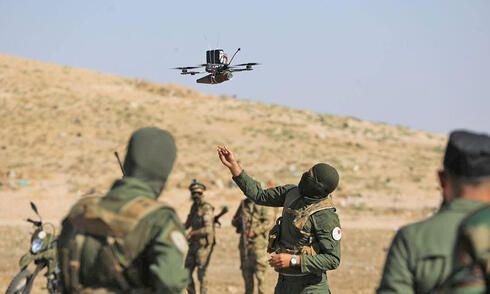
Even before Hezbollah integrated fiber-optic–controlled explosive drones into its attacks on Israeli maneuvering forces, similar systems had already demonstrated their effectiveness in the war between Russia and Ukraine. Resistant to electronic jamming and disruption, the drones were widely identified by defense analysts as a looming threat to modern armie, including the IDF.
1 View gallery
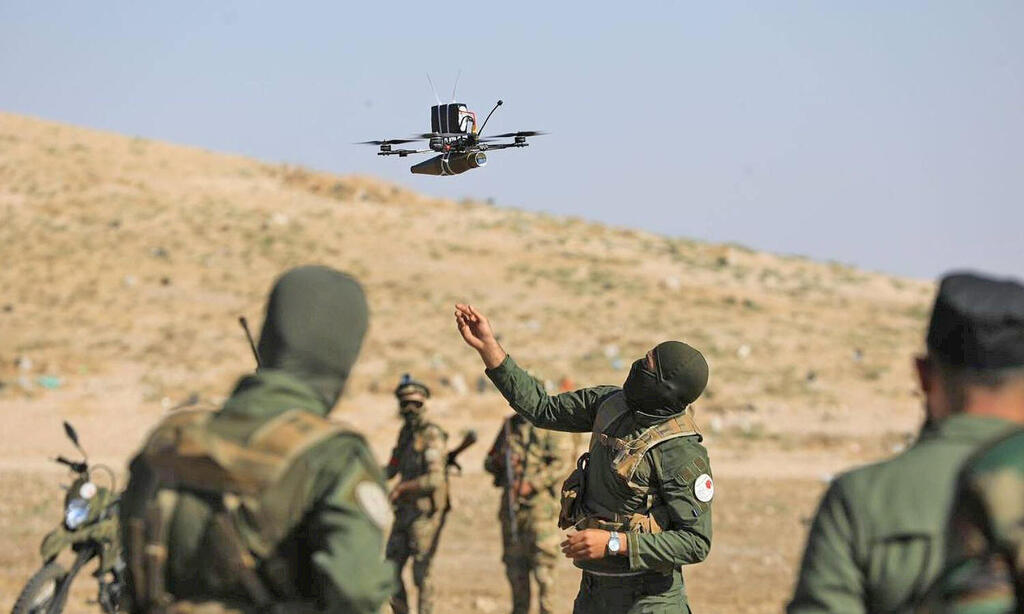
Ukrainian forces operating a fiber-optic drone.
(Photo: Aya Kharbotile/Ministry of Defense)
Experts who assessed the emerging risk warned that it was only a matter of time before such systems became a serious operational challenge for Israel across multiple fronts.
Just three weeks ago, the Defense Ministry’s Directorate of Defense Research & Development (DDR&D) issued an urgent request for information from defense companies on potential solutions to counter fiber-optic drones.
Headed by Dr. Danny Gold, DDR&D asked industry players to submit proposals within a week, covering three operational scenarios: protection of maneuvering forces (including systems mounted on armored vehicles or carried by infantry), rapid-deployment perimeter defense systems, and protection of fixed positions and infrastructure.
The speed of the request surprised several senior defense industry figures.
“Has someone just woken up here?” one senior official told Calcalist bitterly. “For nearly two years we’ve been submitting proposals and investing resources into counter-drone systems, and nothing happened.”
According to defense industry officials, the field of ground-based air defense has long been neglected. “We arrived at a point where explosive drones are killing and injuring soldiers, and no one woke up in time,” one said.
Within the IDF and broader security establishment, one of the main concerns is that Hezbollah’s relative success could lead other terrorist organizations, including in Judea and Samaria, to adopt similar tactics, potentially launching swarms of low-cost drones toward strategic targets such as Ben-Gurion Airport and population centers.
The appeal lies in their simplicity of operation, low cost (only a few hundred dollars per unit), and accessibility via online marketplaces.
Officials cite a long list of reasons for the lack of preparedness: budget constraints, “situational surprise,” competing operational priorities, institutional bias in development processes, and the dominance of Air Force-led procurement priorities over ground forces.
Senior officers note that ground forces operating outside Israel are responsible for low-altitude aerial threats, but did not sufficiently anticipate sustained IDF deployments inside Lebanese territory or along a 50-kilometer buffer zone.
“We are simply not prepared, and that is a failure,” a senior official admitted. “It’s not one body, it’s all of them together. But resources are limited, and prioritization is difficult.”
Defense companies say they have repeatedly demonstrated counter-drone technologies, including:
- interceptor drones that physically collide with hostile UAVs or capture them using nets
- ground-based precision firing systems
- electro-optical detection systems for drones that evade radar
“We showed effective solutions, including the ability to down fast-moving drones with a single shot,” said one industry executive. “But the impression was that DDR&D was relying heavily on Rafael’s laser system.”
The “Iron Beam” expectation gap
Rafael delivered its laser-based system, known as “Iron Beam” (also referred to as “Or Eitan”), to the IDF last December after significant expectations that it would revolutionize interception of rockets, mortars, UAVs, and drones.
Its main advantage is the low cost per interception compared to missile-based systems. However, five months after delivery, it has still not been fully operational, even as fighting in the north intensifies and aerial threats continue.
The system’s effective range is limited to around 10 kilometers, and questions remain about its suitability for mobile deployment alongside maneuvering forces in southern Lebanon.
Defense officials caution against overestimating the system’s immediate impact. Even in optimal conditions, full operational capability is still being developed.
At the same time, industry-developed solutions have also struggled in testing, particularly against fiber-optic drones that do not rely on traditional wireless control.
Some officials believe no single company will provide a complete solution. Instead, they expect a multi-layered system combining several technologies, including data fusion platforms capable of integrating battlefield intelligence into a unified threat picture.
Criticism of the defense establishment echoes earlier failures during the October 7 war, when drones struck multiple Israeli targets, including military bases and civilian infrastructure.
Incidents included a deadly strike on a Golani Brigade training base, an attack near the prime minister’s residence in Caesarea, and explosions in Tel Aviv, Eilat, and Ramon Airport.
Since then, interception rates have improved significantly, with officials estimating success rates of around 95%. However, this applies mainly to conventional drones, not fiber-optic variants.
Alongside Iron Beam, Israel is also developing additional energy-based systems aimed at addressing fiber-optic drone threats and other emerging battlefield challenges. These systems remain classified and are not expected to be operational in the near future.
In the meantime, Israel is relying on a combination of interim measures: protective netting for bases and vehicles, expanded use of electro-optical sensors for early detection, improved operational discipline, and existing counter-drone systems such as Smart Shooter’s “Smash,” which enhances ground-based targeting of aerial threats.
The Defense Ministry has also issued procurement orders worth tens of millions of shekels to accelerate deployment of these systems, with additional contracts expected.



