










Israel and U.S. test new ways to stop drones after battlefield defenses come under pressure
The joint campaign brought together around 20 systems and military end users from both countries.
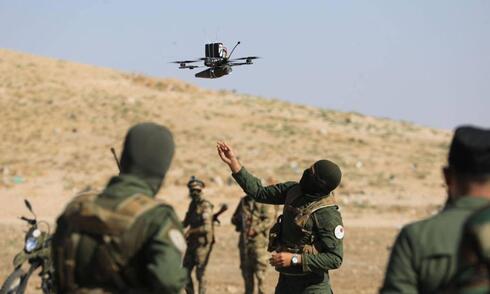
Israel and the United States have conducted a joint trial of approximately 20 systems designed to detect and intercept hostile drones, bringing together military organizations and defense companies from both countries for an evaluation campaign held in Israel for the first time. The exercise reflects the growing urgency of finding ways to counter unmanned aircraft, which have become a persistent challenge for militaries and are increasingly difficult to stop with conventional air-defense systems.
The campaign, called Black Sands, was jointly led by Israel's Directorate of Defense Research and Development (DDR&D), known as MAFAT, and several U.S. defense organizations. Participants included the U.S. Central Command (CENTCOM), Special Operations Command Central (SOCCENT), the Office of Naval Research, the Capabilities Development and Innovation office and Joint Interagency Task Force 401. The IDF Ground Forces and Israeli Air Force also took part, alongside Israeli and American defense companies.
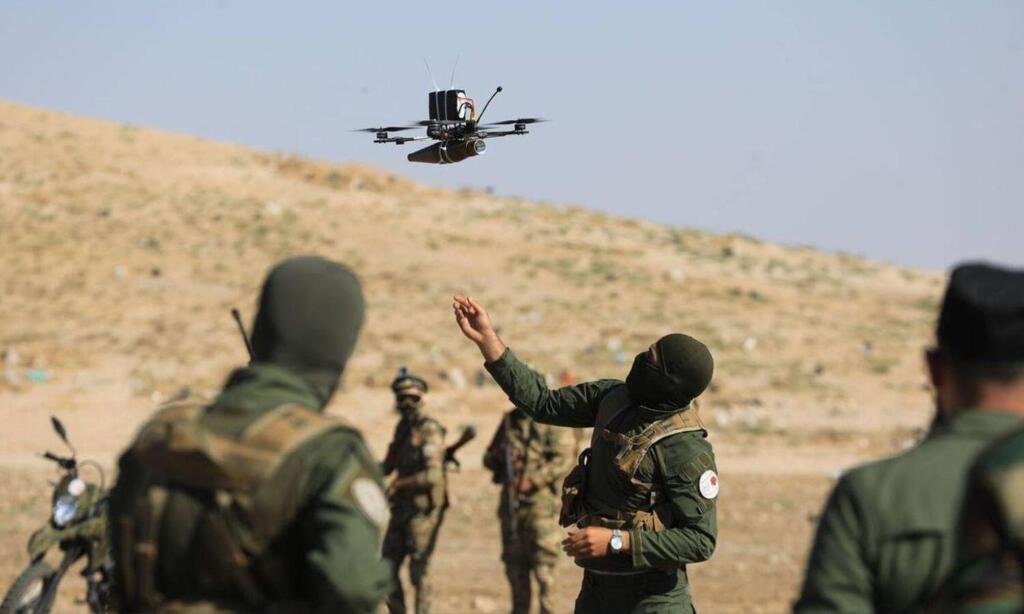
The systems were evaluated against different types of unmanned aerial vehicle threats in scenarios intended to reproduce operational challenges facing both countries. The assessment focused on how well the technologies matched the needs of military forces, with Israeli and American end users participating directly in the trials.
The announcement did not identify the participating companies or systems, disclose the results of the evaluations, or say whether any of the technologies would advance to procurement or operational deployment. It also did not specify the number or types of drones used in the tests.
The campaign comes as the military challenge posed by relatively inexpensive drones continues to expose gaps in conventional air defenses. Small, low-flying aircraft can be difficult to detect and track, while explosive-laden drones and those controlled through fiber-optic cables have created additional problems for forces operating on the battlefield.
Israel has been grappling with these challenges in its confrontation with Hezbollah in Lebanon. The defense establishment has increasingly turned to a combination of technologies, including detection systems, electronic warfare, interceptor drones and other kinetic solutions, rather than relying on a single system.
That search has also drawn international companies into the Israeli market. American defense technology company Anduril, for example, has been seeking to establish a presence in Israel with systems designed to detect, identify, jam and intercept drones. Israeli companies including Israel Aerospace Industries, Rafael, Elbit, TSG, Ondas and others have also presented or developed counter-drone technologies.
The U.S. has its own expanding counter-drone procurement effort. In September, Israeli company Smart Shooter secured a U.S. government contract with a ceiling of up to $150 million for its rifle-mounted SMASH fire-control systems, intended to help troops engage drones. The agreement was awarded through Joint Interagency Task Force 401, one of the organizations involved in the Black Sands campaign.



