










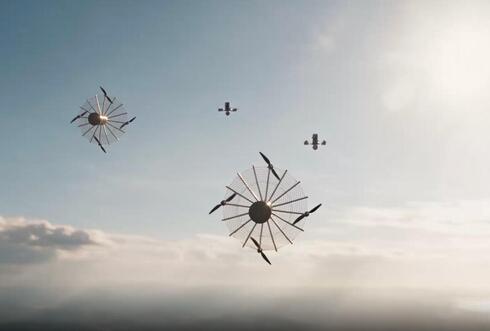
IAI unveils interceptor drones designed to take down hostile aircraft without explosives
The new HawkGuard system combines radar, electro-optical sensors and AI-enabled command and control to detect and track threats before using interceptor drones to destroy them through direct impact. IAI says the system has completed a series of successful tests but has not disclosed detailed performance figures.
Israel Aerospace Industries is adding another component to its counter-drone portfolio, unveiling a system that uses interceptor drones to physically destroy hostile aerial targets without explosive warheads. Called HawkGuard, the system is designed to give military forces another way to counter small drones and other low-altitude threats, as the defense industry looks for alternatives to relying on conventional missiles and electronic warfare alone.
The unveiling, announced Monday at the Association of the United States Army’s annual exhibition in Washington, comes a day after IAI presented POINT@AIR, a mobile radar system carried by an aerostat that is designed to detect and track aerial, maritime and ground targets from an elevated position.
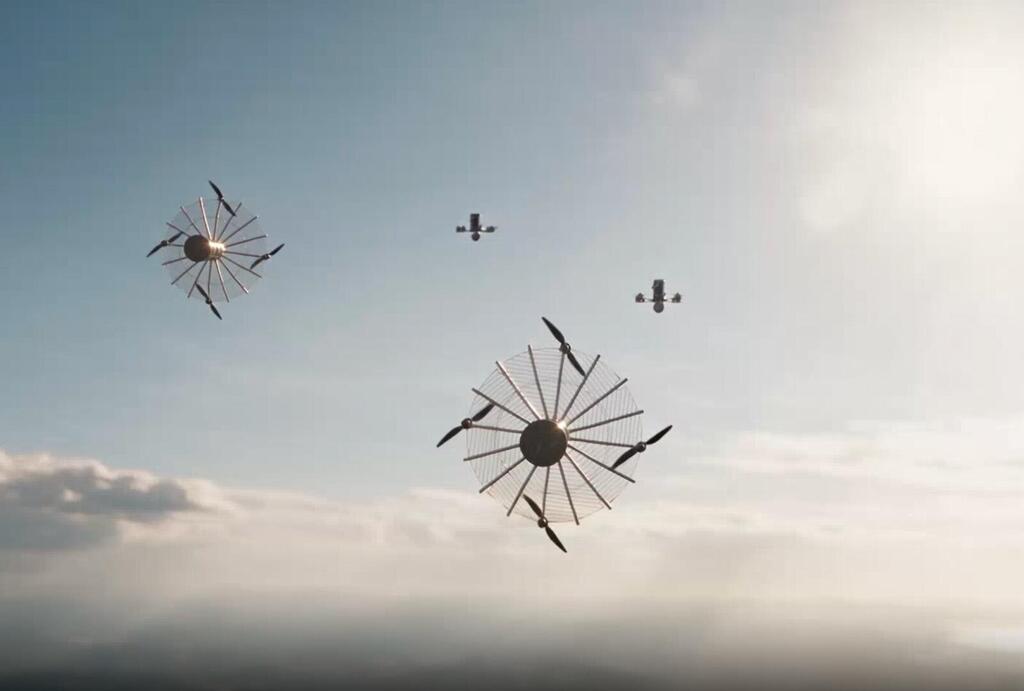
HawkGuard combines radar and electro-optical sensors with artificial intelligence-enabled command and control. Its interceptor drones are designed to neutralize hostile aircraft through direct physical impact, rather than an explosive warhead. According to IAI, that approach offers another interception option while avoiding the blast and secondary effects associated with conventional explosive interceptors.
The company says HawkGuard has completed a series of tests demonstrating its ability to detect, track and neutralize different drone threats. It has not disclosed the specific targets used in the tests, the system’s interception range, its operational performance or whether it has secured customers.
HawkGuard is designed to be modular and compact enough for deployment on armored and other mobile platforms, as well as at fixed installations, strategic infrastructure and offshore facilities. That range of potential applications reflects the expanding challenge of defending not only military formations, but also infrastructure and other assets that can be threatened by relatively small unmanned aircraft.
The system will form part of IAI’s broader counter-unmanned aircraft systems architecture, which combines detection, identification, command and control, electronic warfare and interception. The idea is to coordinate different sensors and defensive tools according to the mission, rather than depend on a single technology to deal with every threat.
“Today’s aerial threat environment demands solutions that can adapt quickly to the threat, the mission and the operational setting,” said Dror Bar, CEO of ELTA Systems and executive vice president at IAI. He described HawkGuard as an additional tool within a layered defense system.
The challenge is not simply detecting drones, but choosing how to stop them. Conventional interceptors can involve explosive effects, while electronic warfare systems seek to disrupt a drone’s navigation or communications rather than physically destroy it. HawkGuard adds another option, using a separate drone to collide with the target. The announcement does not establish how its cost, effectiveness or performance compares with other approaches.
IAI has been developing other responses to the growing range of aerial threats. In July, the company unveiled Hypnosis, a system designed to disrupt satellite navigation and neutralize threats that depend on it, with a focus on coordinated drone swarms. That system relies on electronic warfare, while HawkGuard introduces a kinetic interception capability.
The company’s latest launches also come as other Israeli defense technology companies pursue counter-drone systems for military and infrastructure protection. Smart Shooter, for example, recently received a U.S. government contract with a ceiling of up to $150 million for its SMASH counter-drone fire-control systems. That agreement is a maximum ordering ceiling, not a guaranteed purchase, but it demonstrates the attention the U.S. military is giving to systems designed to counter small drones.



