







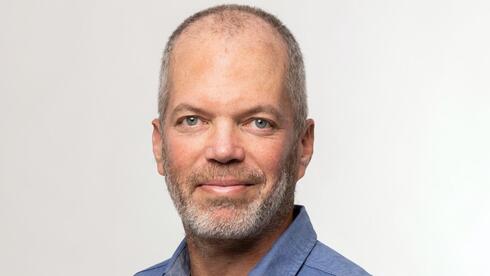



She sold her startup to Salesforce. Then she had four kids and started another one.
Efrat Rapoport's June AI just raised $20 million in pre-seed funding from Marc Benioff, Michael Dell, and George Kurtz.
In 2019, Efrat Rapoport, 36, sold Bonobo AI, a startup she co-founded, to Salesforce, the software giant known for its customer relationship management (CRM) systems. She subsequently served as head of the company’s Israeli R&D center, overseeing a workforce of 700 from 2022 to 2024. She has now embarked on another entrepreneurial venture with the same partners: June AI. Founded in late 2025, the company announced a $20 million pre-Seed funding round last month.
The round is unusually large for such an early-stage company. It was led by Time Ventures, the private investment fund of Salesforce founder Marc Benioff, with participation from Michael Dell, founder of Dell, and George Kurtz, founder of CrowdStrike, alongside other industry leaders.
What makes Rapoport’s story particularly remarkable is the speed and intensity of her career, which has unfolded alongside the birth of four children in the span of five years. She is building her new startup while raising children ranging from four months to five and a half years old. The youngest has his own room at the office and has already accompanied her on two business trips.
“I outsource everything that isn’t quality time with the kids, so I don’t want to say, ‘Anyone can do this,’” she says.

What does your new startup, June AI, do?
“Basically, any sufficiently large company implements enterprise systems that everyone uses, such as customer management, inventory management and the like. There are six or seven major systems globally that everyone relies on. Implementing them and getting them up and running can sometimes cost more than purchasing the platform itself.
“Say you buy a Salesforce system for a million dollars. Implementing it and making it operational might cost $6 million. When such companies want to adopt AI, it doesn’t happen instantly because these systems require organizational adjustments and customization.
“We use AI agents to execute these changes, enabling faster and more effective system implementation. In essence, we facilitate successful AI adoption. We conduct a deep scan of the systems to identify where AI should be integrated, pinpointing specific process improvements. We have a ‘recipe’ for this, along with AI agents capable of executing it.”
You’ve secured investment from Marc Benioff, Michael Dell and George Kurtz. How did that come about?
“Marc Benioff knows us from our first startup, Bonobo AI, which Salesforce acquired in 2019. There is a foundation of trust, and he is deeply familiar with this space.
“That startup involved a dedicated call-transcription engine we built. With today’s technology, that’s obviously a solved problem, but the model we trained cut transcription costs from a dollar to a single cent, and today it can be done for even less.
“I stayed in touch with Marc even after we left Salesforce. When we started kicking the idea around, I asked for his thoughts, and he said, ‘I want to lead the round.’
“He is an extraordinary person, as are Michael Dell and George Kurtz, amazing entrepreneurs who built massive companies from small, garage-based businesses and turned them into some of the world’s largest corporations. Exceptional people.
“But raising capital isn’t the ultimate goal. There isn’t much time to stop and say, ‘How wonderful, well done.’ You have to keep working.”
Where will June AI be in five or 10 years?
“Being a creator is a lot like being an author who wants millions of people to read their books, or a musician who wants people to hear their music. We want this to reach millions of people, for what we built from a casual idea to transform the way businesses operate.
“The dream is to reach the masses, to become the new standard for how companies integrate AI into their organizations.”
The offer to become head of Salesforce’s R&D center in Israel was unexpected, even to Rapoport.
“I was offered the role of R&D center head when I had one child and was eight months pregnant, just about to give birth.
“A giant corporation with 70,000 employees and two strategic development centers, one in Israel and one in India, I viewed that role as a Zionist mission. I had decided from the start that I would hold the position for only two years, and when that time was up, I announced I was leaving.
“I finished the job with two children and six months pregnant, then took a year off, unsure of where I was headed next. I didn’t set out with the intention of founding a startup, but over time, the feeling grew that launching another startup was exactly what I wanted to do.”
You’re a mother to four young children and a startup. How do you juggle it all?
“My eldest is five and a half, my son is four, my daughter is two, and the baby is four months old. Managing the schedule is incredibly difficult. My children are in daycare and school, and during the three or four hours between the end of their day and bedtime, I make a tremendous effort to be truly present with them.
“Once they go to sleep, I continue working late into the night. I’ve given up luxuries like Netflix.
“At the company’s offices, I have a baby room equipped with a nursing chair, a play gym, a play mat, a changing table and a fridge for pumped milk, everything he has in his room at home. He’s been with me almost everywhere since the day he was born.
“The baby has already accompanied me on business trips abroad. At Salesforce, I had maternity leave; at a startup, I don’t. But there’s something lovely about it: the office is a second home for the baby. He has a fridge with his things, and the employees help put him to sleep.
“I was taking work calls during the very first week, and two weeks after the birth, he was with me at the office. He’s with me in a baby carrier all the time. The funding process happened before he was even born, and the investors sent him gifts.
“He’s my fourth child. I don’t know if I could have done this with my first. But I have a lot of help, from my parents and my partner, and I’ve outsourced everything that isn’t time spent with the kids.
“I don’t cook, do laundry or even grocery shop. So I don’t want to say ‘anyone can do it.’ I’m in a position where I can afford this.
“It always comes down to a decision I make: what’s best for the child and what’s best for the company. I know it’s unusual. My kids love coming to the office; it’s a blast for them. One of them isn’t allowed to come right now, until further notice, because of how he behaved last time.
“The people here have been working with me since my first startup, since we were in our twenties, so the atmosphere is pleasant, and it works.”
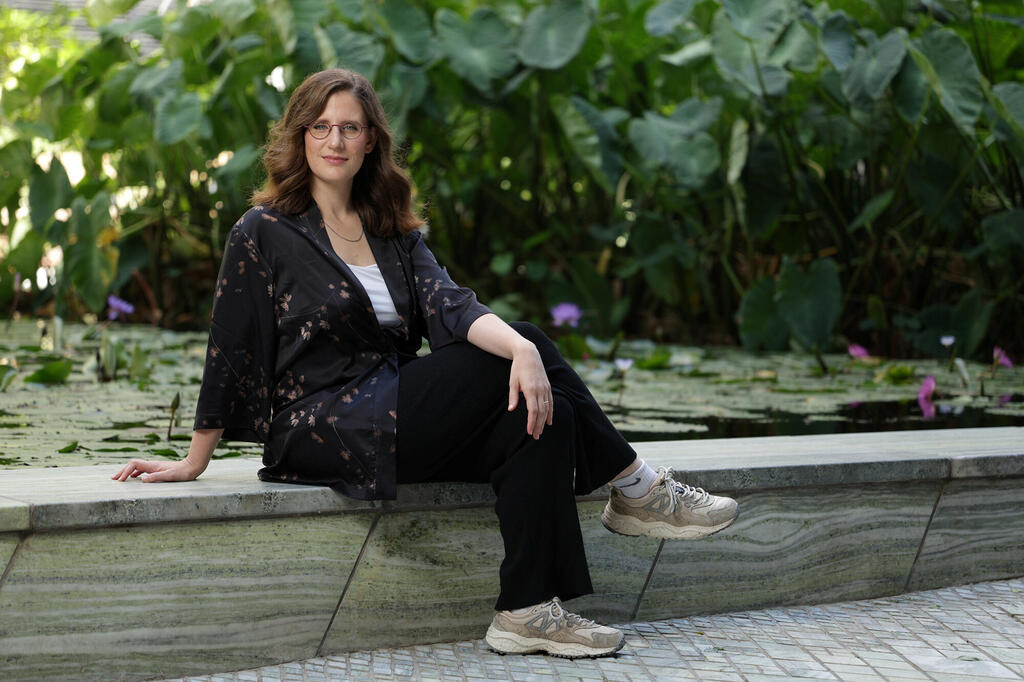
A startup is also like a baby that demands a lot of attention.
“It’s creative work, and you have to nourish it with things outside of work itself. There are things I don’t always get around to.
“On the other hand, there’s a dynamic where the busier you are, the more you actually get done. I also have backup from my partners: we know how to hand things off and cover for one another. We’ve been a team for a decade, and that makes this kind of arrangement possible.
“It requires organizing your time and prioritizing correctly; it doesn’t just happen on the fly. Just as my partner and I make sure each of us has one-on-one time with every child, everything here requires planning, too.
“In a startup, surprises happen constantly, so it demands both preparation and flexibility.”
How do you nourish your creative side?
“It started with a songwriting workshop I signed up for. I began taking vocal training, writing songs and accompanying myself on the keyboard. I had to find musicians and, at some point, get up on stage.
“It’s a very entrepreneurial process. I sing and write music. I have two albums on Spotify, and a few months ago, I performed material I’d written.
“Music comes in phases for me; sometimes, it’s even essential for solving business problems. I need that creative outlet. It frees my mind from whatever I’m stuck on and takes my thoughts in entirely new directions.”
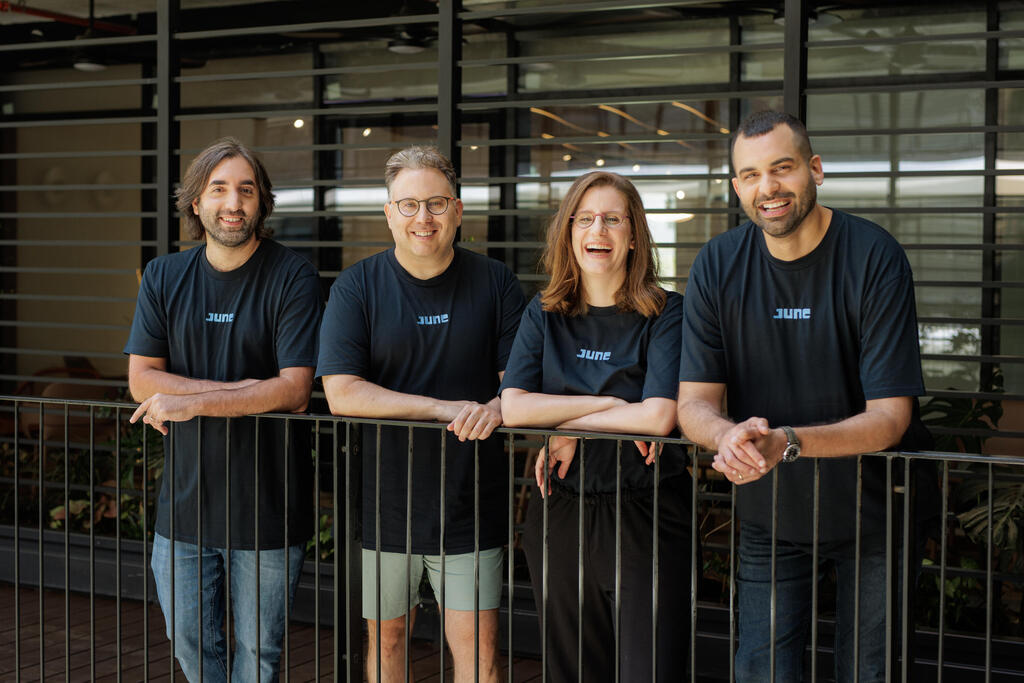
The quartet that has worked together since their first startup, Rapoport, Idan Tsitiat (CTO), Barak Goldstein (president), and Ohad Hen (chief architect), came together by chance. The four developed software to analyze text and voice for customer service purposes and, in 2019, sold Bonobo AI to Salesforce for approximately $50 million, according to reports. They have continued working together ever since.
Prior to that, Rapoport served in a technological unit within the IDF’s Unit 8200 and studied in Tel Aviv University’s Interdisciplinary Program for Outstanding Students. From there, she moved directly into a master’s degree program in computational neurobiology.
As a hobby, she studies languages, including German, Japanese, Greek and Chinese, and recently began learning Korean as well. She met her partner, Ron Held, also an alumnus of an IDF intelligence technology unit, during their military service.
“He holds a master’s degree in mathematics, is an author and works in high-tech. We are both multidisciplinary, just in different fields.”
You were acquired in 2019. How did you so quickly get offered the role of managing Salesforce Israel’s development center?
“I was surprised when they offered me the management role, too. We weren’t your typical Salesforce employees. We did whatever it took to make the acquisition a success and pushed to ensure the right decisions were made regarding the product, so even though it’s a massive organization, I was a known quantity.
“Salesforce acquires many companies, but they get to know all the entrepreneurs involved in those acquisitions. I think they wanted someone with an entrepreneurial mindset, someone who thinks outside the box, isn’t afraid to speak up and is mission-oriented. They saw that I had done exactly that at the startup, and that worked in my favor.”
“As for time management and workload, Netflix can wait. Not having Netflix at this stage of my life frees up a lot of hours every week.”
What does managing the Salesforce development center in Israel, with its 700 employees, actually entail?
“My management style is very different from what is typically expected. There is the classic, masculine model of management, and then there’s me. I’m something else.
“My approach is more team-oriented: collaborative and consultative, rather than a top-down figure issuing orders. It’s not my style.
“Managing the development center involves, on one hand, management and product development, while on the other, it touches on sales and customers. Then there’s government relations, media, HR and representing Israel to the U.S., and throw the war into the mix, too.
“Ultimately, it was a role that demanded diplomatic skills more than anything else. To do it well, you have to surround yourself with people who complement your own strengths, and that’s true for any management role.”
Can you explain the scarcity of female CEOs and entrepreneurs?
“I’ve been in the field for a decade, and there were even fewer women when I started. Balancing everything is truly no small feat. There are more female founders, but still not enough female CEOs.
“Why is the gender gap so wide? In my opinion, it starts with technical studies and the military’s tech units. I served in Unit 8200, a highly technical unit, and there were very few women compared with men. You see it happening at the early stages.”
How did the four of you come together?
“Idan and Ohad had known each other since their army service. I was a student in the Lautman Interdisciplinary Program at Tel Aviv University and had started a fair-trade clothing business.
“I manufactured clothes in China and India for online sales and sold them at market stalls on weekends. That’s how I was exposed to the world of slavery, exploitation and child labor.
“I saw that there was nothing related to fair trade in Israel, and I wanted to put those values into practice. For this venture, I was introduced to Barak, an impact entrepreneur, who in turn connected me with Idan and Ohad.
“We brainstormed together until we hit upon our first startup idea. Idan and Ohad arrived with a technological prototype; we ran a pilot installation with a client, saw that it worked and realized we had successfully closed the loop.
“We’ve worked together ever since, even during the sale to Salesforce. Each of us has a specific area of expertise, and we know how to help, complement and back each other up.”
How did you decide to do it all over again with a second startup?
“We worked with numerous clients while at Salesforce and observed the challenges and issues involved in implementing large-scale systems within organizations. We identified the core of the problem.
“It was clear to us that this was a solid idea, that we were the right team to solve the problem and that we possessed the specific background needed. We had been working with agents and language models before it was even ‘cool.’ We came from one of the world’s largest and most significant companies and had witnessed firsthand what the problem looks like when major corporations try to adopt these solutions.
“We loved the idea of June AI, and we really wanted to keep working together and launch another startup. We were all on the same page.
“That first sale was a life-changing experience that gave us a certain level of financial freedom, but the entrepreneurial bug was still there. The urge to create doesn’t go away just because a company gets sold.
“The need to build a product that reaches as many users as possible is like an artist’s need to reach as many people as possible with their music. It doesn’t end with the exit.”
What’s harder: managing Salesforce Israel or launching a second startup while raising four children aged zero to five?
“A startup is a rollercoaster. The highs are incredibly high, and the lows are incredibly low. It takes resilience to weather the turbulence.
“A day can start amazingly and end terribly, with plenty of ups and downs in between. In the corporate world, it’s nothing like that. It’s much more stable.
“Both environments suit me. I did well at Salesforce, but I chose to be an entrepreneur again, so I knew what I was getting into. In a corporation, the entrepreneurial spirit finds a different outlet.
“But in terms of time management, Netflix can wait. The fact that I don’t watch Netflix at this stage of my life frees up a huge number of hours every week.”



