










Massive blast at Israeli missile plant sparks alarm amid fears of renewed war with Iran
Residents of Beit Shemesh feared another attack before defense firm Tomer said the explosion was a planned test.
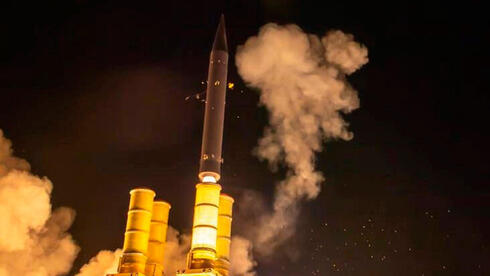
Residents of Beit Shemesh were jolted late Saturday night by a massive explosion and fireball that lit up the sky over the city, reigniting fears in a community already traumatized by the war with Iran.
The blast, which occurred around 11:30 p.m., was later confirmed by the state-owned defense company Tomer to have been part of a “pre-planned experiment.” But the absence of any prior public warning left many residents alarmed, particularly in a city that only months ago suffered one of the deadliest Iranian missile strikes of the recent conflict.
Videos circulating online showed a large flash followed by a shockwave that reverberated across the Jerusalem hills. Residents reported windows shaking and described scenes that many initially believed signaled another missile attack.
The incident comes at a particularly tense moment. Israel and the United States are reportedly preparing contingency plans for renewed strikes on Iran should negotiations fail to produce a lasting settlement after the war that erupted at the end of February. Although a temporary ceasefire was reached in early April, the broader confrontation remains unresolved, with Iran continuing its blockade of the Strait of Hormuz and the U.S. maintaining restrictions on Iranian ports.
In a brief statement issued after the explosion, Tomer said the blast was “a pre-planned experiment that was carried out according to plan.” An unnamed company source confirmed to Israel’s Kan public broadcaster that the explosion had been controlled, though no explanation was provided for why the test was conducted so late at night.
According to a report by Channel 12, the test reportedly involved rocket propellants, including systems capable of ranges stretching thousands of kilometers, though the report cited no named sources.
The blast also drew renewed attention to Tomer itself, one of Israel’s least publicly visible yet strategically important defense companies. Formerly part of Israel Military Industries before being separated during IMI’s privatization and sale to Elbit Systems in 2018, Tomer was kept under state ownership to preserve Israel’s control over critical rocket propulsion technologies.
The company develops and manufactures propulsion systems for some of Israel’s most sensitive weapons programs, including engines used in Israel Aerospace Industries’ Arrow missile defense system and Barak MX interceptors, as well as artillery rockets produced by Elbit Systems.
Five months ago, Tomer disclosed that it would for the first time begin paying the state a full 50% dividend on profits, reflecting a sharp increase in business activity following the outbreak of the October 7 war. The company reported annual sales of approximately NIS 550 million ($173 million) and has significantly expanded production capacity amid surging demand from both the Israeli military and foreign customers.
Since the beginning of the regional conflict, Tomer has expanded its workforce by roughly 250 employees, bringing total staffing to around 800 people. The company is led by CEO Mordi Ben Ami and chaired by Roni Moreno.
The latest explosion was not the first such incident linked to the facility. According to Kan, a similarly large blast occurred at the site in 2021, which the company also described at the time as a planned test that ended without injuries or unexpected consequences.



