










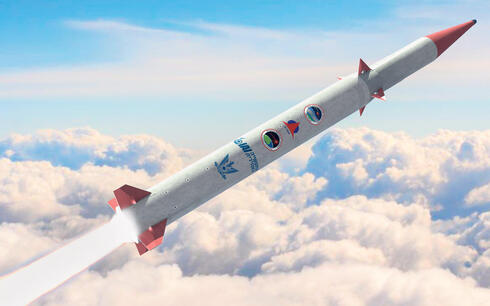
Israel’s secret missile engine supplier is doing so well it’s now paying dividends
Booming demand has turned a classified defense unit into a growing source of state revenue.
For the first time, government-owned defense company Tomer will pay the state a 50% dividend on its profits, Calcalist has learned.
Tomer is engaged in the development and production of engines for missiles and rockets used by Israel Aerospace Industries (IAI) and Elbit Systems. It previously operated as an internal division of Israel Military Industries (IMI). When IMI was privatized and sold to Elbit Systems at the end of 2018, its rocket propulsion activities were spun out in order to keep those strategic capabilities in state hands.
Last year, Tomer recorded sales of approximately NIS 550 million (approximately $173 million). As a government-owned company, it is required to transfer half of its net profit to the state. The dividend approved in recent days by its board of directors, chaired by Roni Moreno, amounts to NIS 18.5 million ($5.8M). Since its establishment, however, the Government Companies Authority has collected dividends from Tomer at a rate of just 10%, under an exclusivity arrangement that protected the company during its first five years of operation.
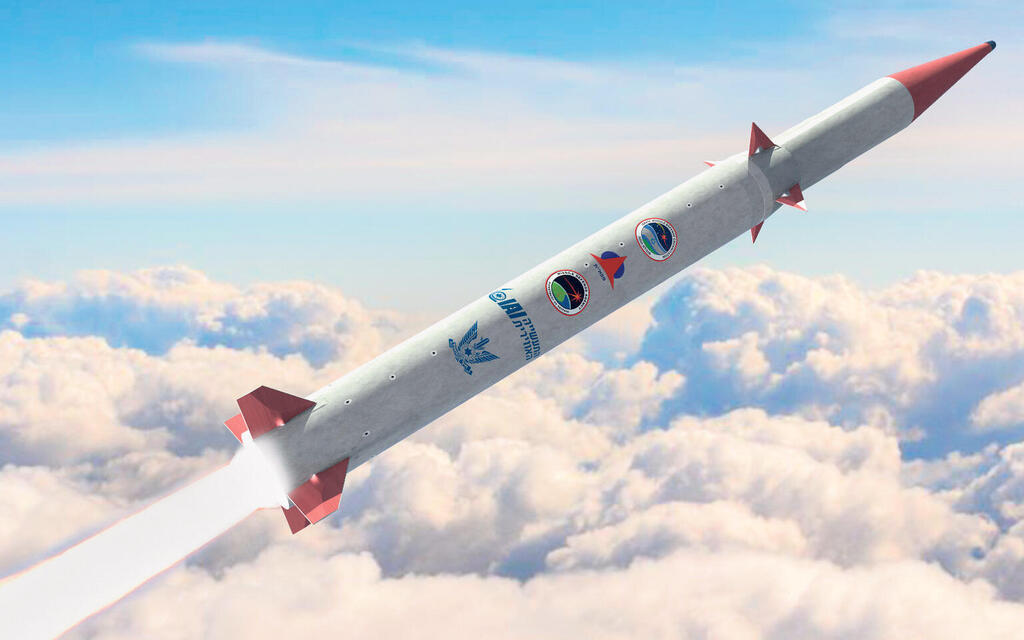
Most of Tomer’s activities are considered strategic and classified. The company employs around 800 people and is managed by Mordi Ben Ami. Since the outbreak of the October 7 war, Tomer has expanded its workforce by approximately 250 employees, driven by a sharp rise in demand for its products. These include propulsion systems for IAI’s Arrow and Barak MX air defense missiles, as well as artillery rockets produced by Elbit Systems with ranges of 30 to 300 kilometers.
Sustained high demand for weapons, from the IDF as well as from foreign militaries, has led Tomer to expand its production capacity over the past two years. Estimates indicate that the company’s sales volume will continue to grow in 2025. Its performance in coming years is also expected to benefit from IAI’s second Arrow missile deal with Germany, agreed about a week and a half ago and valued at approximately $3.1 billion.
Another government-owned defense company, Rafael, also approved a dividend to the state from its 2024 profits in recent days. Earlier this week, Rafael delivered the first Iron Beam laser system for intercepting rockets and UAVs to the IDF. In 2024, Rafael posted sales of NIS 17.8 billion ($5.6B) and net profit of around NIS 950 million ($300M). Its board of directors, chaired by Yuval Steinitz, approved a dividend of NIS 263 million ($83M) to the state. Rafael’s dividend represents less than 50% of its profits, due to past agreements reached between the company and the government.
Meanwhile, the board of directors of Israel Aerospace Industries is scheduled to convene today to discuss, among other matters, the distribution of a dividend to the state. In 2024, IAI reported sales of $6.1 billion and net profit of nearly $500 million. According to estimates, it is expected to transfer roughly $250 million to the state for last year’s profits.
The Government Companis Authority, headed by Roi Kahlon, has in recent years sought to expand dividend collection from state-owned defense companies. The companies, however, have strongly opposed such moves, arguing that they must invest hundreds of millions of shekels in factory protection and in the development of the next generation of Israeli weapons systems.



