










“Iran is attempting an inflationary attack on the American consumer, raising fuel prices to create political pressure to end the war”
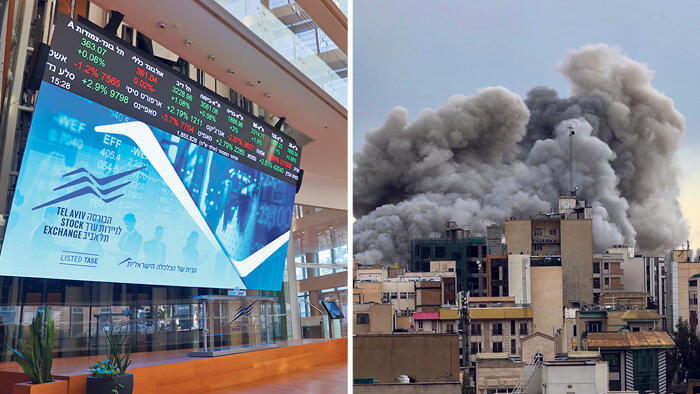
After an early surge following the start of Operation Roaring Lion, Israeli markets retreat amid global energy fears.
The first trading day following the launch of Operation Roaring Lion was greeted with strong enthusiasm on the Tel Aviv Stock Exchange, as the TA-125 index surged 4.75%. However, over the past week, that optimism has clearly faded. The Israeli stock market has recorded noticeable declines and is now trading around its level on the eve of the war.
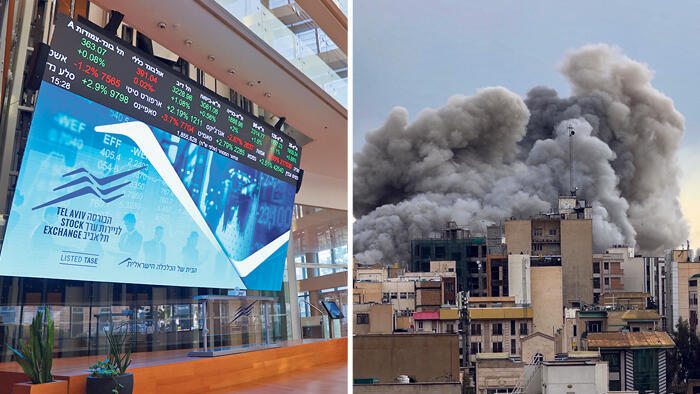
Is the shift due to growing expectations that the war between Israel and the United States against Iran will last longer than initially anticipated, potentially eroding the Israeli economy? Or is the decline mainly driven by the war’s broader impact on global energy markets, including the surge in oil prices to more than $100 per barrel?
Tamir Hershkovich, Chief Investment Officer at Ayalon Insurance, told Calcalist that he divides the week’s market activity into two phases. “The first part was the beginning of the war, and the second began when markets started talking about a global energy crisis,” he said.
“What happened during the first two days of the war was primarily an Israeli event, one that significantly reduced Israel’s risk profile,” Hershkovich explained. “In almost any scenario, it is reasonable to assume that Israel’s strategic situation will improve after this war. Whether there is a change of government in Iran or not, we are dealing with a significantly weakened Iranian entity. Iran’s economy, military and nuclear ambitions have been severely damaged. The country will first need to rebuild itself, not to mention its ability to support proxies that threatened Israel, such as Hezbollah.”
According to Hershkovich, the situation changed when the conflict began to influence global markets, particularly through rising oil prices. “In addition, Israel’s strike on Iranian oil infrastructure added fuel to the fire,” he said. “As a result, stocks declined sharply.”
Still, Hershkovich notes that Israeli investors often look first at currency markets rather than equities.
“The first thing an investment manager in Israel checks when opening the trading system is the shekel-dollar exchange rate. Unlike the stock market, currency markets are harder to manipulate. The shekel remains very strong and is trading at 3.13 shekels per dollar.”
Rami Dror, CEO of Value Advanced Investments, believes the recent declines do not signal a broader shift in market sentiment.
“I don’t think this represents a change in trend,” Dror said. “It’s more likely a correction following the sharp increases in the Israeli stock market, especially when global markets were falling.”
According to Dror, significant capital has flowed into Israeli equities in recent months, making some degree of correction natural, particularly during a period of ongoing missile attacks.
“The economy is under pressure while the stock market has been rising. The surprising thing is that the market is functioning at all,” he said. “A correction of around one and a half percent is not dramatic given the current reality. Much of the pressure is linked to oil prices.”
Avishai Karavani, an investment manager at Poalim, suggested looking at the market from a broader perspective.
“We are not seeing massive sell-offs in the capital market,” Karavani said. “On the contrary, we are seeing continued interest from investors. Among our clients, some are even increasing their equity exposure, partly driven by FOMO, the fear of missing out.”
Karavani said the fear is not entirely irrational, given investors’ experience with the market rally that followed previous military operations involving Iran.
He also downplayed concerns about oil prices.
“Oil is currently the most important factor influencing the global economy,” he said. “However, investors and global markets are largely accepting President Trump’s assessment that the war will not last long.”
The rise in oil prices has raised questions about whether it could derail global expectations for interest rate cuts in Western economies.
Karavani believes the impact may be temporary. “If the war ends sooner than expected, expectations for rate cuts will quickly return,” he said. “If inflation rises because of higher oil prices, it will be harder for central banks to cut rates. The sooner the war ends, the sooner we return to that scenario.”
Hershkovich also urged caution. “Let’s wait until the end of the month and see where oil prices settle, because that will determine fuel prices,” he said.
He argued that the United States ultimately has the greatest influence on oil markets. “Trump is trying to calm the energy sector because it’s one of the few areas where Iran can exert pressure. Iran is essentially attempting an inflationary attack on the American consumer, raising fuel prices to create political pressure in the U.S. to end the war.”
In such uncertain times, where should investors look?
Hershkovich points to Israel’s defense sector.
“Think about what the Abraham Accords could look like after this war,” he said. “It is hard to imagine they will not expand. Countries such as the UAE and Saudi Arabia will likely seek advanced defense systems, air defense, radar, and other capabilities. The United States may supply these systems, but it could also tie them to expanding the Abraham Accords.”
He also sees opportunities in sectors tied to the Israeli consumer, including banking and insurance, while remaining cautious about residential real estate stocks.
Dror believes valuations in the Israeli market are already stretched.
“There’s no doubt that prices are high, and it’s difficult to justify them,” he said. “At some point there will be a correction, perhaps even a significant one. I just don’t know when.”
He added that there are very few bargains left among Israeli public companies, though he singled out Altshuler Shaham as one potential opportunity.
“The company manages more than 120 billion shekels in assets, yet its market value is lower than some of its peers,” he said.
Dror remains positive on financial and defense stocks, but skeptical about real estate. “There is a large inventory of unsold apartments, and the sector may remain under pressure for a long time.”
Karavani, however, remains more optimistic.
“In my view, the Tel Aviv Stock Exchange is still attractive,” he said. “If the war with Iran ends positively, foreign investment will likely return to the Israeli market. Lower interest rates would also support growth across sectors, particularly real estate. Overall, I lean toward optimism rather than pessimism.”



