










Tel Aviv stocks and shekel rally despite escalation with Iran
Investors defy geopolitical turmoil as the dollar weakens locally but rises worldwide.
Two days into a war with Iran, Israel’s financial markets are sending a signal few would have predicted.
Instead of retreating in the face of geopolitical escalation, the Tel Aviv Stock Exchange is surging and the shekel is strengthening sharply against the dollar, even as the greenback rises globally as a traditional safe-haven asset.
1 View gallery
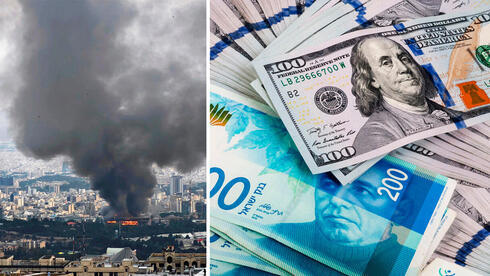
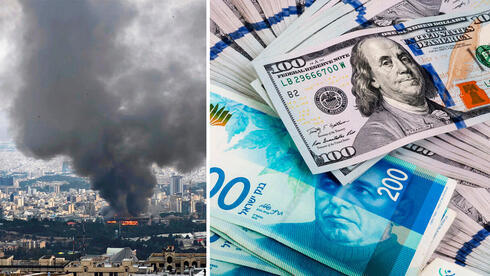
Teheran burning alongside shekels and dollars.
(Stringer/ Getty Images, Shutterstock)
The benchmark TA-35 index climbed 3.8%, while the broader TA-125 advanced roughly 4%, marking a powerful vote of confidence from investors at the very moment the country entered active hostilities.
In the currency market, the reaction was equally striking. The dollar fell 2% locally and is trading at around 3.07 shekels. The euro declined 2.5% to 3.61 shekels. The move reflects strong buying of the Israeli currency by foreign exchange investors in the first market response to the Israeli-American attack on Iran.
What makes the shift more notable is the global backdrop. Internationally, the dollar is strengthening, precisely the opposite of what is happening in Israel. The dollar index, which measures the U.S. currency against a basket of major peers, rose 0.7% to 98.2. The euro fell 0.7% to around $1.17, and the British pound slipped 0.8% to below $1.34.
Alex Zabezhinsky, chief economist at Meitav, cautioned against assuming that war necessarily weakens the Israeli currency. Drawing on the previous round of fighting with Iran, he noted that each day of war increased direct costs by 1.7 billion shekels, totaling about 20 billion shekels over 12 days. In addition, GDP losses reached approximately 0.8 billion shekels per day.
Yet despite those costs, the shekel ultimately strengthened. It initially weakened by 1.8% on the opening day of that conflict, June 13, but by the end of the war had appreciated by roughly 4% against the dollar.
“It is not at all certain that the shekel will lose value during the war,” Zabezhinsky said, while emphasizing that current conditions differ from the previous episode. “It is important to remember that today’s price levels are significantly different from that period.”



