









“Cooperation for 15 years”: The case for Europe as a long-term alternative to the US
As Washington wavers, Europe and its DACH region are evolving as an attractive alternative for Israeli founders, with industry vets gathering in Tel Aviv to tout partnerships built on shared security and commercial interests. Of course, tapping into the market demands more than great tech.
"It will take a lot more than just one leader in the US to break that strong transatlantic relationship," says Sirko Papperitz, Head of Strategy for European defense and security technology company HENSOLDT.
For Startup Nation going global, the United States has long been the default launchpad. In fact, according to data obtained by Calcalist, only about half of the new startups founded in 2025 were registered in Israel, with the other half incorporated in the United States.
1 View gallery
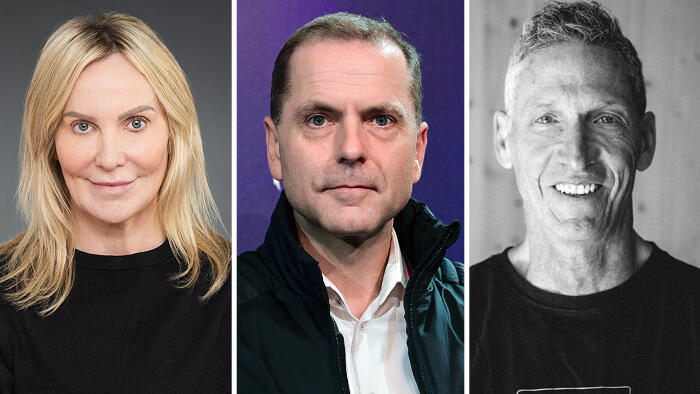
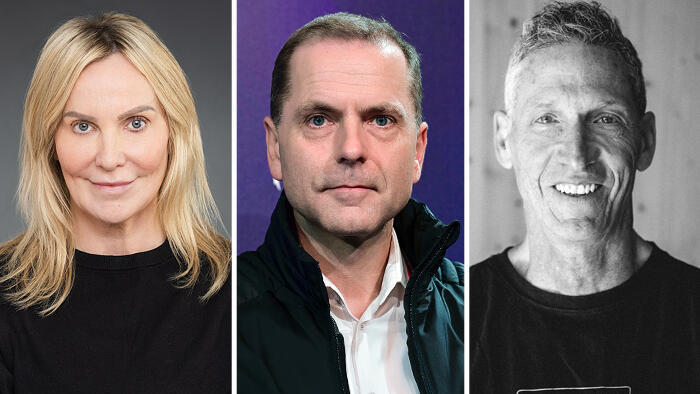
Andrea Frahm, Sirko Papperitz, Gilli Cegla.
(Credit: Bernhardt Link, Omer Messinger, Tomane.)
Yet, in the wake of the US midterm elections, as Israel’s future standing with Washington faces growing uncertainty, it raises the question of whether Israeli founders should be more receptive to alternative means to the global frontier. Europe, and specifically the DACH region of Germany, Austria, and Switzerland, is one such oft-dismissed option that could present the long-term stability and funding solutions Startup Nation requires.
A recent analysis of roughly 280 Israeli cap tables found that only about 7% of these companies have an independent European VC backing them, with 86% of large seed rounds seeing zero European participation.
Though Papperitz concedes that compared to the US, "we will not be able to compete in terms of money, it's as simple as this," he believes that Europe offers an advantage to its American counterpart in the nature of its partnerships.
"You find a long-term stable market there," he notes. "Once you are in the programs in Europe, you have a long-lasting foundation for your business."
"The loyalty of the customer and the partnerships are way deeper. So even in monetary terms, it pays off more,” adds Gilli Cegla, Founder and Managing Director of Israel-based entrepreneurial consulting firm Novawind.
"European culture, working with Europe, is based on relationships," he continues. "Once you're in… we're talking cooperation for five, 10, 15 years. While with the US, you're in for two or three years, then you're kicked out."
Cegla spearheads the EuroDays initiative in Tel Aviv, a recent gathering aimed at promoting the Israel-DACH partnership. Speaking alongside Cegla and Papperitz at the event, Andrea Frahm, CEO of the Israel Office and Co-Head of the Strategic Unit Security and Resilience Research at the Helmholtz Association of German Research Centres, believes that for Israeli startups looking to expand to new customers, "It’s just the logical consequence to work with Europe."
Europe, says Frahm, is “like the garden or the front yard of Israel because it's so close… and you have several countries. It's a huge continent."
One of the primary arguments for a strengthening of ties between the two regions comes as national security concerns intensify globally. The aftermath of the US midterm elections, marked by President Trump’s sudden announcement to slash Israel’s defense funding, has further exposed the vulnerabilities surrounding Israel's heavy reliance on the US.
“I'm a believer in the US and Europe,” Papperitz states. Despite the political volatility of the last few years, he believes “there is still a common sense of values of the free world, and I think this is something we need to defend.”
Still, for Israel and the DACH region, he affirms: "With the Chinese-US threat right now… we need to further invest in this relationship."
Particularly, he notes, Germany’s DefenseTech sector is playing catch-up. Given the country’s history, Papperitz explains, Germany has "been distancing ourselves" from the sector. However, he continues, "with the geopolitical situation, we do have to step up in this area.”
"We need to do what Israel has done in the last years, in the last decades, in an accelerated mode, so there is no time to wait.”
Nonetheless, for a fast-moving tech ecosystem like Israel's, the regulatory maze that has come to be synonymous with Europe's tech sector stands as one of the greatest bottlenecks threatening the progress of the relationship.
For Europe and the DACH region, addressing the red tape means "benefits for both investors, also startup founders,” Frahm explains. “And they have to. We're in the process of really developing this."
However, Papperitz argues that on the ground, regulation doesn’t pose the threat to innovation that outsiders assume. "I don't see that, and I would not want to give this message because it's completely opposite," he contends. "Where there is technology, there is a place for it in Europe."
“We do not have the right technology for everything, especially in what we see happening in Ukraine right now," Papperitz continues. With such sector shortages, namely concerning defense, he explains, "What we are seeing right now is that there is readiness to go with 80/20 solutions because there is a need to fill the gaps we have."
Cegla also dismisses the stigma around insurmountable rigid European regulation, calling the narrative a “cliché.”
“Regulation exists everywhere. If I'm a medical or health company, I have the FDA and so forth,” he explains. "If you don't comply, sorry, then you're out of the game.”
Whether or not regulation is the roadblock it is perceived to be, the speakers do agree that for Israelis expanding into Europe and the DACH region, as with any market entry, there is a cultural gap to bridge. “Israelis want to make business, so they just come and they're very persistent, they get the facts on the table,” says Frahm. “This is something Germans are not used to. They take longer, and they want this more kind of structured approach.”
“You have good technology, you have something in your hands which is a jewel,” adds Papperitz. “You will not be able to sell it straight through the wall.”
"You need a translator to the German or to the Austrian government. Just going straight through, it's perceived in a way that does not support the business,” he says. Founders will need, Papperitz continues, “someone who takes your hand and bridges the cultural gap as well."
“The essence is really for the startups,” says Cegla. “Learn the culture, learn the rules of the game, regulation included. Do your homework and come prepared.”
“You cannot, as a small Israeli startup, go and sell to the German military. Forget it. It will not fly,” he explains. “You need to partner. You need to work with the prime, you need to work with the mid-tier.”
“If you come with a T-shirt and shorts to a meeting or if you say that you host private users' data on a server somewhere in the US, you're dead on arrival.”
On the other hand, it would also stand to question whether Israel’s current global standing is a deterrent for European clients. "Let's say our global positioning on the political and perception side is not good," Cegla admits. "On the professional side, on the industry side, people understand what Israeli tech has to offer and appreciate it," he maintains, with the caveat that "as long as there are no politics involved, all is good."
While the speakers advise relying on a cultural mediator, as founders would in any new market, their takeaway is that the payoff in Europe far exceeds the cost of entry: a viable, strategic alternative to the US, rooted in shared concerns and built for the long term. All three speakers share a consensus that the Israel-Europe relationship will deepen in the coming years, with Israeli products ultimately being manufactured on European soil.
"My vision is that we're looking at new types of partnerships. It's no longer buy and sell of technology, but it's rather building joint products, joint companies, so I would see Israel opening subsidiaries in Europe," predicts Cegla.
"We're more keen on having those partnerships where we connect, where we do pilots and obviously M&A as well," says Frahm. For the Helmholtz Association, for example, she notes: "What we're looking at is really to have high-level partnership where we may bring together researchers, industries, and then startup companies from Israel."
Ultimately, Papperitz believes the next year will bring about "more concrete partnerships with Israeli startups."
"The time is now to do it," he asserts. "There is a readiness on the customer side. There is readiness on the industry side."



