










Israel has spent years preparing to end U.S. military aid. Now the bill is coming due
Trump’s remarks about ending the $3.8 billion annual assistance package reflect a direction Israel has been moving toward for years. But with the defense budget already facing a multibillion-shekel shortfall and the prospect of another war with Iran, the transition could prove costly.
U.S. President Donald Trump’s remarks to Fox News that he had reached an understanding with Prime Minister Benjamin Netanyahu months ago to end the $3.8 billion in annual American security assistance should come as little surprise to Israelis. For years, Israel has been moving in precisely this direction. It should hardly be shocked to find itself approaching the destination it has been heading toward.
Netanyahu has repeatedly linked the eventual end of U.S. aid to the goal of strengthening Israel’s independence. That aspiration has aligned with Trump’s reluctance to spend billions of American taxpayers’ dollars on the security of distant countries, even allies, as well as with the erosion of public support for Israel in the United States. Another factor has been Netanyahu’s and his office’s neglect of relations with the Democratic Party, at a time when Democrats are seeking to make gains in the midterm elections taking place today.
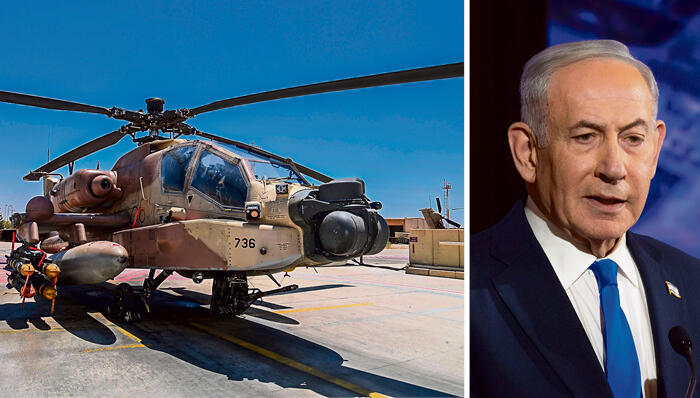
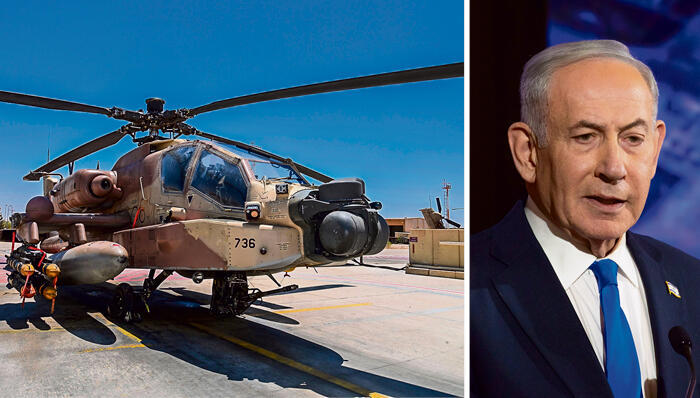
The annual $3.3 billion in military financing enables Israel’s Ministry of Defense to fund purchases from the American defense industry, including fighter jets, aerial refueling aircraft, helicopters, and various transport and off-road vehicles for the IDF. An additional $500 million in U.S. funding goes toward developing, producing and strengthening Israel’s air defense capabilities against its adversaries.
The current multi-year security assistance agreement took effect in 2019 and is due to expire toward the end of 2028. Signed during the final months of former President Barack Obama’s administration, it is the most generous security assistance package the United States has ever provided to Israel.
In early 2025, the Subcommittee on Defense Doctrine and Force Buildup, part of the Knesset Foreign Affairs and Defense Committee and chaired by Likud MK Amit Halevi, held intensive discussions on precisely this issue: reducing Israel’s dependence on American aid. Under Halevi’s leadership, the subcommittee sought to develop an alternative to the existing assistance framework, one that would preserve Israel’s access to advanced American weapons while giving it greater freedom of action in the Middle East.
Representatives of Israel’s defense industries, who are familiar with the complexities of the U.S. assistance agreement and were invited to one of the subcommittee’s sessions, were considerably less enthusiastic about the proposal than the lawmakers themselves. According to Avishay Ben Sasson-Gordis of the Institute for National Security Studies (INSS), ending U.S. aid would require significant adjustments to Israel’s budget. These could include increasing domestic defense spending, postponing or scaling back less urgent procurement and development projects, and introducing measures to improve operational efficiency.
The challenge is particularly acute given the current state of Israel’s defense budget. The defense establishment has yet to determine how it will close out 2026, with senior officials complaining of a shortfall of tens of billions of shekels that the Finance Ministry has so far been unable to find. At the same time, the prospect of another war with Iran looms, potentially adding tens of billions of shekels in further costs. Ending American assistance under these circumstances would place an additional burden on a defense budget already under considerable strain.



