










Former NATO commander Cavoli: The U.S. can no longer help in every conflict, and allies must build their own capabilities
At IPM 2026, Gen. (Ret.) Christopher Cavoli, now a partner at Valor Equity Partners, said Ukraine exposed the limits of the Western defense industrial base, and laid out the four capabilities U.S. allies need to build.
For decades, the U.S. and its allies built their militaries around small numbers of exquisite, expensive weapons. According to Gen. (Ret.) Christopher Cavoli, the former NATO Supreme Allied Commander Europe, that model has run into a simple problem of arithmetic. “If it takes a $2 million missile to shoot down a $20,000 drone, we’re in an unsustainable position,” he said.
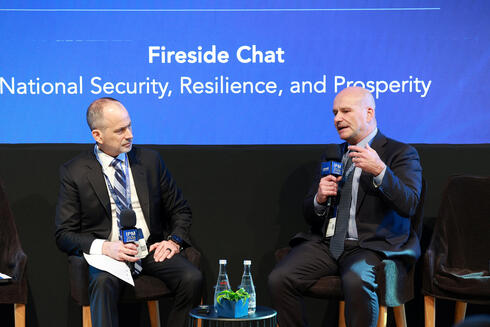
Cavoli, now a Partner at Valor Equity Partners, spoke in a fireside chat with Juan Sabater, Valor’s Partner and Co-President, at the Israel Private Markets Summit (IPM), the main annual conference of the institutional capital market for alternative investments, which was held this week at the Peres Center for Peace and Innovation in Tel Aviv.
1 View gallery
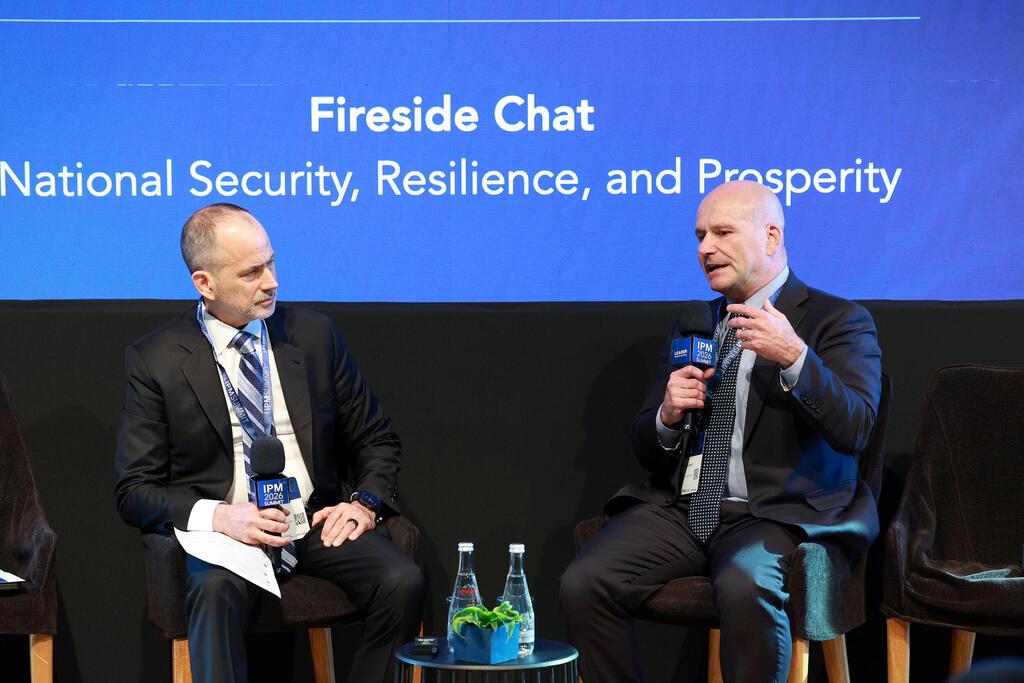
(left to right): Juan Sabater, Partner and Co-President, Valor Equity Partners; Christopher Cavoli, Partner, Valor Equity Partners and Former EUCOM Commander and Supreme Allied Commander Europe.
(Photo: Orel Cohen)
Cavoli, who also commanded U.S. European Command and served as the U.S. military’s point person for assisting Ukraine, described three trends shaping the threat picture. First, “traditional adversaries remain our adversaries but are increasingly working together,” with Iran, Russia, China and North Korea now cooperating on the battlefield, including North Korean soldiers fighting in Ukraine. “This is a level of coordination that we hadn’t previously seen,” he said.
Second, cheap commercial technology has let previously limited countries and groups strike at long range with precision, which he said has turned “the cost curve against us and our allies.” Third, the institutions and agreements that once managed friction between states have lost authority, leaving countries “feeling more on their own” and needing to be self-sufficient in defense.
Ukraine, he said, exposed how unready the Western industrial base was. Weapons designed after the Cold War were capable but hard to manufacture, expensive and held in small quantities. “Modern war, large-scale war, consumes those munitions and those armaments far more quickly than we were ready to produce them,” Cavoli said. When NATO leaders decided to rearm, the plans he drew up as Supreme Allied Commander became “the shopping list for what NATO needs,” and they ran into the same lack of industrial capacity.
The fix, he said, is a different relationship between governments and suppliers. Under the old cost-plus model, militaries wrote highly specific requirements and companies demanded the government share the risk. Now companies study modern warfare, build a product first and pitch it, in effect saying: “Let’s try it out and let’s iterate with it, perfect it and then sell it to you.” Exquisite systems will still have their place, he said, but most of the affordable mass militaries need can be built this way.
That is the thesis behind Valor’s national security fund, where Cavoli sits on the investment committee. Sabater said Valor is best known for helping companies build factories and scale production, and pointed to the firm’s long history with SpaceX, where Valor founder Antonio Gracias sits on the board. Valor’s portfolio includes U-Force, a drone maker founded in Ukraine that incorporated in the UK to get around Ukrainian export restrictions and turned to Valor because, as Cavoli put it, “they were in a capex intensive business.” The company is expanding from production sites in Ukraine, Portugal and Poland into the U.S.
To limit the risk of depending on a single customer, Valor looks for companies with genuine dual-use products, sales beyond the Pentagon and, in its new fund, exposure to other countries’ defense budgets, including Israel’s. “We think all of these things attach our company’s futures to various budgets rather than just a single budget,” Cavoli said. Sabater added that allies are essential: “Without allies you cannot succeed because you need to have scale.”
Cavoli said the U.S. has long designed its military to handle one major regional conflict at a time and is now “structurally in a position where we will not be able to help in every conflict out there.” Allies will need to build up four capabilities the U.S. has typically provided: end-to-end intelligence systems including space-based collection, deep precision strike and targeting, command and control systems that work across allies, and more abundant ballistic missile defense.
How much time is left depends on the threat. Cavoli said Russia could rebuild its ground forces and turn toward Europe within four to six years, and is already laying the groundwork through a sabotage campaign. China, he said, is harder to call. Israel has no such window.
“The Israeli threat is today, yesterday, [and] tomorrow, to be quite clear,” he said.



