










Wall Street’s AI trade faces its biggest test yet
Investors are confronting a combination of political uncertainty, mounting infrastructure costs and questions about whether the enormous sums being poured into AI can generate adequate returns. Last week’s $1 trillion sell-off has put the sector’s momentum under pressure.
The “AI trade,” Wall Street’s hottest investment thesis, has been losing momentum for more than a month. In October, investors began focusing on the high costs and mounting debt of the companies driving the AI revolution. A lackluster earnings season for Big Tech added to their concerns. Now, markets are confronting another source of uncertainty: a major political shift in Washington, where Democrats are set to control both chambers of Congress from January.
Last Thursday was one of the worst days on record for technology stocks, with the Nasdaq Composite plunging 5.5%. Declines of that magnitude were last seen after President Donald Trump’s tariff announcements in April 2025 and, before that, at the start of the Covid-19 pandemic. In a single session, companies associated with the AI boom lost a combined $1 trillion in market value. Nvidia fell 9%, while SanDisk, whose shares had surged over the past year, plunged 22%. AMD dropped 17%, and the semiconductor-heavy SOX index shed 12%. Both the SOX and the Nasdaq have entered correction territory, having fallen more than 10% from their recent peaks.
The market recovered some ground on Friday, but the rebound did little to dispel the uncertainty hanging over investors as a new week began.
1. Alongside familiar concerns about valuations, debt and the cost of the AI boom, a new source of anxiety has emerged: the prospect of tighter regulation under a Democratic-controlled Congress. Investors are particularly focused on Gina Hinojosa, a Texas Democrat who campaigned on curbing the rapid expansion of data centers in the state.
The political challenge is straightforward. Americans want the United States to remain at the forefront of the AI race, but they are increasingly concerned about the impact of data centers on electricity prices and local communities. They may support the technology in principle while resisting the construction of massive facilities in their own backyards.
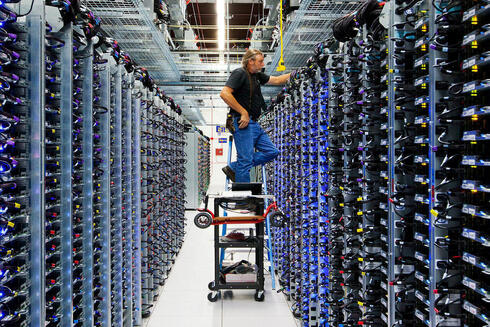
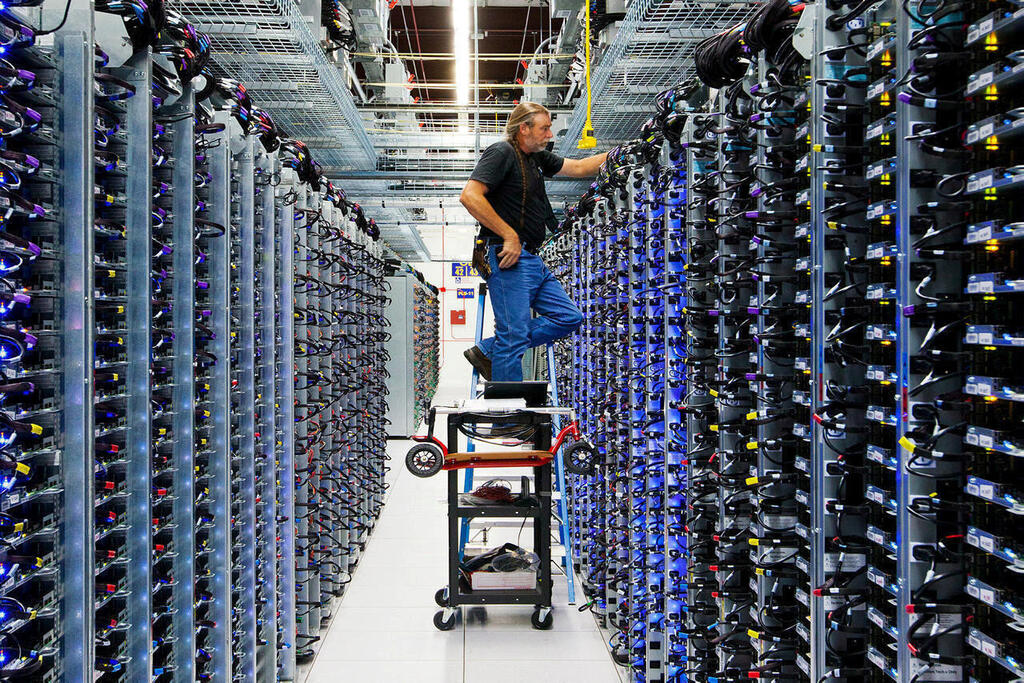
Since the AI boom gathered pace in early 2024, hundreds of data center projects have been approved across the United States. More than 500 are currently under construction, with over 1,000 others planned. Virginia, Texas, Ohio and California have emerged as the states with the largest concentrations of data centers. Opposition from local residents has already forced the cancellation or suspension of 46 projects, representing a combined planned investment of $170 billion across 20 different countries.
2. It is not clear, however, that the latest sell-off in AI stocks reflects the full extent of the political risk. Since her election, Hinojosa has said that projects already approved will be allowed to proceed, while future developments will face regulatory review. That could make new projects more expensive and complicated, but it does not necessarily mean they will be blocked.
Political commentators in the United States have also pointed out that many prominent figures in the technology and AI industries are major Democratic donors. That could make lawmakers reluctant to undermine an industry that has become an important source of investment and economic growth. President Trump, meanwhile, retains the power to veto legislation, while the need to compete with China in AI remains one of the few issues capable of attracting bipartisan support, particularly as support for Israel has effectively fallen off that list.
Democratic lawmakers would also have little incentive to pursue policies that cause their constituents’ retirement savings to lose value. According to Wall Street estimates, the initial wave of selling was driven largely by hedge funds seeking to lock in gains and reduce their exposure to risk. Their moves, however, helped trigger a broader retreat by individual investors. U.S. data-tracking firms reported that the exodus of retail investors from the stock market last Thursday was the largest since the market crash in March 2020, at the start of the Covid-19 pandemic.
Historical market performance offers some reassurance to investors willing to withstand such turbulence. The Nasdaq has tended to recover and deliver positive returns over time following sharp sell-offs, while professional investors often use periods of panic to buy assets at lower prices.
There is also a more immediate argument against abandoning the AI trade altogether. A comparison of valuations across AI-related stocks shows that their forward price-to-earnings multiples have fallen from September levels. That does not necessarily make the shares cheap, but it does highlight one of the market’s enduring paradoxes: investors are often most comfortable buying when prices are rising and valuations are stretched, yet become reluctant to buy when assets appear to be on sale.
3. History also suggests that Wall Street tends to perform better when neither party controls both chambers of Congress. An analysis of S&P 500 returns dating back to 1953 shows an average gain of 14.5% during periods of divided government, compared with 11% when Republicans controlled both chambers and 6.7% when Democrats held both houses.
The election results are nevertheless likely to make life more difficult for technology executives and AI entrepreneurs. The consequences may be felt less through an outright halt to data center construction than through more congressional hearings, closer scrutiny of infrastructure projects and tougher competition for public resources.
Once the initial shock of the election results fades, investors are likely to return to the more fundamental questions surrounding the AI boom: how much it will cost to build the infrastructure behind it, and whether the business models emerging today can generate sufficient returns to justify the investment.
Goldman Sachs recently estimated that spending on AI infrastructure could reach $7.6 trillion between 2026 and 2031, with much of that investment going toward data centers and energy. With U.S. inflation showing little sign of easing and interest rates expected to rise, the financial burden of the AI buildout may ultimately matter more to investors than the political shift in Washington.
4. The coming weeks are likely to remain volatile, with the next major market tests expected toward the end of November. Nvidia is scheduled to report its results on November 17, an event widely viewed as a key barometer of demand for AI infrastructure. Around the same time, AI model developer Anthropic is reportedly preparing for a historic IPO. The company is said to be seeking a valuation of $2 trillion, although it may ultimately have to settle for closer to $1.5 trillion.
According to reports published over the weekend, its main rival, OpenAI, has also had to moderate its valuation expectations for a private funding round currently in progress. The company is reportedly targeting $1.25 trillion, down from the $1.4 trillion it had initially envisioned.
For Wall Street, the most immediate downside risks, aside from a war with Iran, would be a disappointing forecast from Nvidia or a delay to Anthropic’s IPO. If neither materializes, last week’s losses could once again become an opportunity for experienced investors to buy into the market while fear is driving other shareholders to the exits.