










Israeli airstrike destroys secret bunker beneath Khamenei’s Tehran compound
Military says the fortified command center was built as a wartime refuge for Iran’s supreme leader.
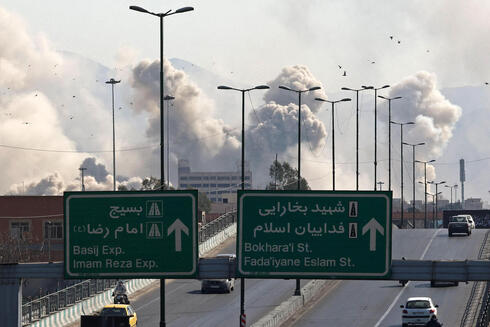
In one of the most dramatic strikes of the conflict so far, the Israeli Air Force targeted and destroyed an underground bunker beneath Iran’s leadership compound in Tehran, a site the Israeli military says had been built as a wartime command center for Iran’s former supreme leader, Ali Khamenei.
According to the Israel Defense Forces, roughly 50 fighter jets dropped around 100 bombs on the facility early Friday, striking a heavily fortified structure buried beneath what the military described as Iran’s “leadership complex,” a sprawling area stretching across multiple streets in the capital.
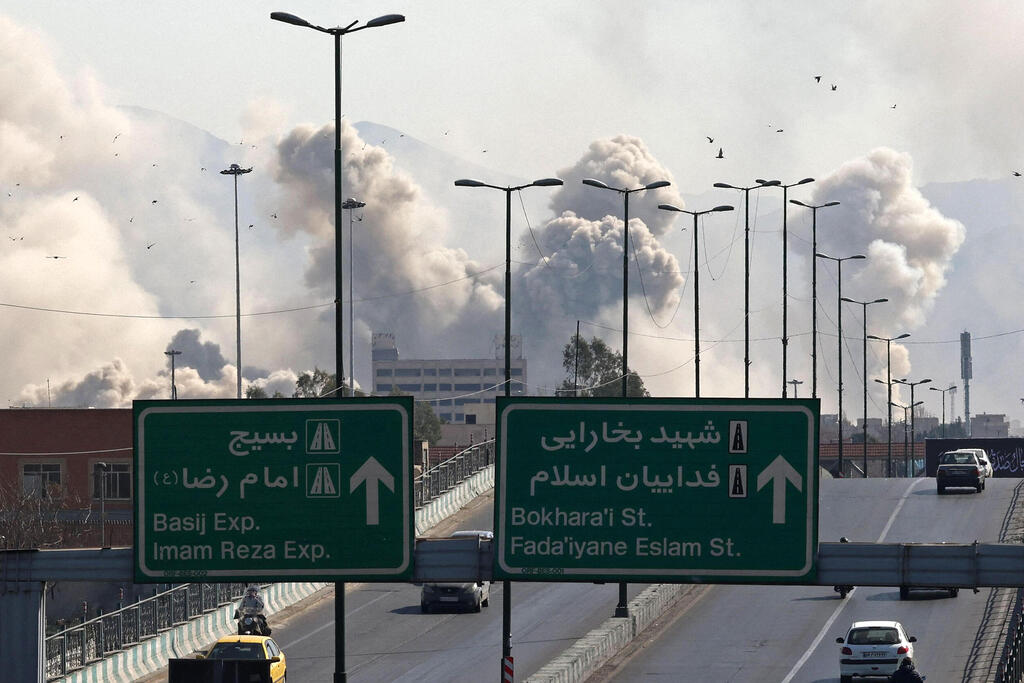
The compound contains numerous buildings and entrances used by senior members of Iran’s political and security establishment. Beneath it, the military says, was a bunker designed to serve as a secure emergency headquarters from which the country’s leadership could manage military operations during wartime.
“The underground bunker was built beneath the compound and was a secure emergency asset for managing the war,” the military said in a statement.
But according to the IDF, the facility was never used for that purpose. Khamenei was killed in an Israeli strike on Saturday before he could relocate there, the military said.
Even after the death of Iran’s supreme leader, the compound remained active. Israeli officials say senior members of the Iranian regime continued to use the site in the days following the assassination, prompting the latest strike.
The operation was the culmination of years of intelligence work. Israel’s Military Intelligence Directorate mapped the underground facility through a prolonged effort involving two elite intelligence units: Unit 8200, responsible for signals intelligence, and Unit 9900, which specializes in visual and geospatial intelligence. According to the military, that work made it possible to identify the bunker’s structure and conduct what it described as a “precise” attack.
The bunker strike is the latest in a series of Israeli operations targeting the same complex during the current conflict.
In the opening strike of the war, Israel hit the compound and killed Khamenei himself. A subsequent strike on a nearby building killed eight senior Iranian officials, according to the military. Earlier this week, Israeli forces also attacked additional sites inside the complex, including Iran’s presidential bureau and the headquarters of the Supreme National Security.
At the same time, Israeli and American officials say Iran’s retaliatory missile campaign has slowed markedly since the first days of the war.
On the first day of the conflict, following the initial Israeli and American strikes, about 90 ballistic missiles were fired toward Israel. The next day the number fell to around 60. Since then, daily launches have dropped to roughly 20 missiles per day, typically fired in several small salvos.
Iranian media claims that around 500 ballistic missiles have been launched during the conflict, many of them targeting countries across the Middle East.
Israeli officials say their strikes have significantly reduced Iran’s launch capacity. According to the IDF, more than 300 Iranian ballistic missile launchers, roughly 60% of the country’s total inventory, have been destroyed.
The decline in attacks has also been noted by the United States. Adm. Brad Cooper, commander of U.S. Central Command, said Iran’s ballistic missile launches have fallen by 90% compared with the first day of the war.



