










Opinion
India and Israel: Partners in shaping the future of artificial intelligence
Google’s $15 billion investment in India, 180,000 startups, and 6 million professionals compared with 2,300 Israeli AI companies. The Indian Ambassador to Israel explains how combining India’s scale with Israeli innovation can create global AI solutions in healthcare, agriculture, and education.
India’s digital transformation took a significant leap forward with Google’s recent announcement of a US$15 billion investment to establish its first Artificial Intelligence (AI) hub in Visakhapatnam. Representing Google’s largest AI investment outside the United States, the initiative will create cutting-edge AI infrastructure, deliver gigawatt-scale computing capacity, and establish a new international subsea gateway, further cementing India’s position as a leading hub for AI innovation.
The announcement comes as India prepares to host the AI Impact Summit in February 2026—an event that is expected to shape the global dialogue on the future of AI. Against this backdrop, deeper collaboration between India and like-minded partners, particularly Israel, has never been timelier. As two innovation-driven democracies, India and Israel are uniquely placed to co-develop AI solutions that are ethical, scalable, and globally impactful.
1 View gallery
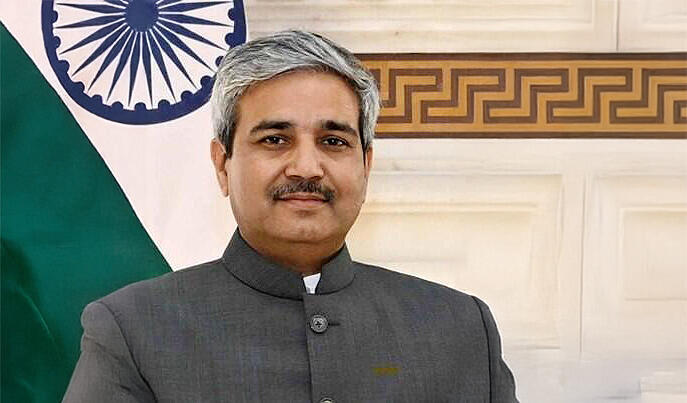
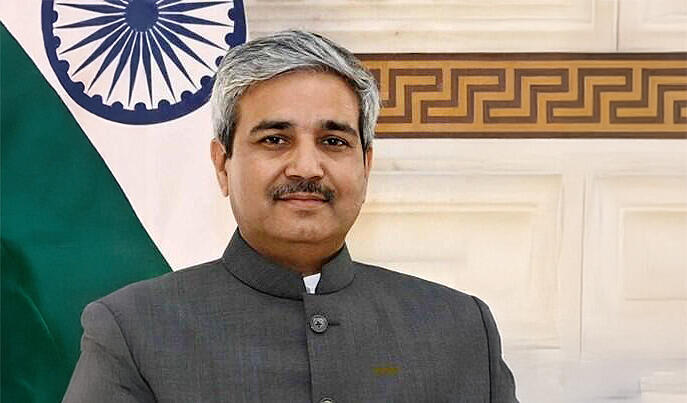
H.E. Mr. J.P. Singh, Ambassador of India to Israel.
(Photo: Embassy of India in Israel)
A Shared Vision for AI
India’s commitment to AI grew stronger with the launch of the National AI Mission in March 2024. It includes a USD 1.25 billion, five-year plan to boost AI research, infrastructure, and adoption across sectors. Similarly, Israel has recently established a dedicated AI Directorate within the Prime Minister’s Office, transitioning from the Ministry of Science and Technology, to strengthen R&D and innovation through a more coordinated AI strategy.
India is working to democratize access to AI infrastructure by developing cloud-based GPU resources and low-cost compute power, particularly for startups and researchers. India’s national compute capacity has crossed 34000 GPUs, making it one of the most extensive AI compute infrastructures globally. Israel, in parallel, is advancing its sovereign supercomputing capacity to support national R&D ambitions.
Both countries are building foundational AI models tailored to their cultural and linguistic diversity. India is focused on developing sovereign multilingual Large Language Models (LLMs), while Israel is advancing natural language processing capabilities in Hebrew and Arabic.
On the data front, India is curating open, high-quality datasets while embedding privacy and data empowerment into regulatory frameworks. Israel’s rich sectoral datasets—particularly in healthcare and agri-tech—hold great value for applied research.
Talent & Startups: Complementary Strengths
India hosts one of the world’s largest AI talent pools and is investing heavily in skilling and reskilling programs. Over 6 million people are currently employed in the tech and AI ecosystem.
Israel, while home to one of the most vibrant startup ecosystems, continues to seek specialized AI talent and faculty. This creates a natural complementarity: Indian talent can contribute to Israel’s innovation ecosystem, while Israeli mentorship and advanced R&D culture can enrich Indian AI initiatives.
India has around 180,000 startups, with 89% of new ones using AI and 26% of companies achieving AI maturity, supported by strong government initiatives. Israel, with over 9,000 startups, has around 2,300 AI-driven ventures known for depth and sophistication. Combining India’s scale with Israel’s innovation can enable co-development of scalable, globally deployable AI solutions.
Platforms for AI Collaboration
For AI startups, the US$40 million India–Israel Industrial R&D and Technological Innovation Fund (I4F), over a period of five years, offers structured support to co-develop, test, and commercialize cutting-edge technologies—including AI.
For the academic and research community, the India–Israel Joint Research Calls (IIJRC) foster research collaboration in emerging areas including AI.
AI for National Priorities & Global Good
India and Israel view AI not just as a commercial tool, but as a vehicle for social transformation. In India, the scale of challenges—from rural healthcare to food security—is vast. In Israel, innovation is quick, solution-focused, and often cutting-edge. This diversity of context presents an opportunity to co-create solutions of global relevance in areas such as smart irrigation, predictive healthcare, multilingual education platforms, or traffic optimization.
Both countries share a commitment to safe and responsible AI and can jointly shape global AI governance that prioritizes human dignity and shared values.
Road to AI Impact Summit
As India welcomes the world to the AI Impact Summit from 19-20 February 2026, we look forward to the active participation of Israeli AI leaders and policymakers. We also invite Israeli startups, investors, and business leaders to actively participate in the Expo and engage with India’s rapidly expanding AI ecosystem. For more details on the Summit, please visit https://impact.indiaai.gov.in/.
H.E. Mr. J.P. Singh is the Ambassador of India to Israel.



