










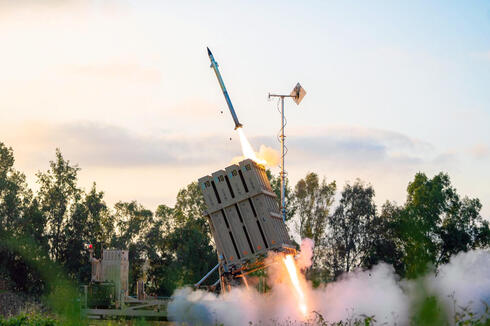
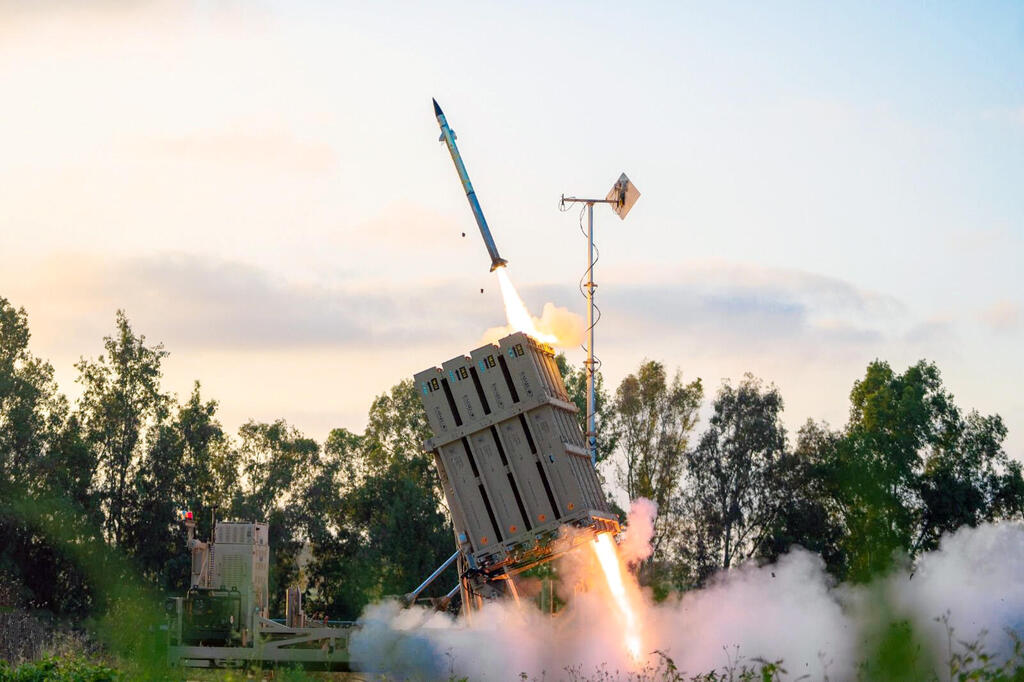
Iron Dome and Iron Beam maker Rafael at center of Israeli government clash over IPO plan
Treasury opposition to a fast-track listing leaves dividend payments frozen as tensions grow over the future of Israel’s defense industry.
The Government Companies Authority is delaying the withdrawal of dividends from defense companies Rafael and Israel Aerospace Industries (IAI) amid growing tensions with the Ministry of Finance, stemming in part from opposition to the framework it has proposed for Rafael’s IPO.
As wholly state-owned companies, IAI and Rafael are required to transfer half of their annual net profit to the state, subject to their boards of directors declaring a dividend distribution. In 2025, IAI reported net profit of $712 million from its domestic and international operations, while Rafael posted net profit of NIS 1.35 billion. Based on these results, IAI is expected to transfer at least NIS 1 billion to the state, while Rafael is expected to transfer approximately NIS 700 million. However, neither company’s board has yet approved a dividend distribution.
While those funds remain in the companies’ coffers, tensions are rising between the Government Companies Authority and the Ministry of Finance over Rafael’s planned IPO.
Under the Authority’s proposal, Rafael would conduct a partial offering outside the Tel Aviv Stock Exchange through a fast-track process in which shares would be sold directly to selected institutional investors rather than the general public. The abbreviated framework is designed to bypass some securities regulations and allow Rafael to avoid the full disclosure requirements typically associated with a public offering.
The Government Companies Authority argues that only such a framework would allow Rafael to go public alongside IAI. Rafael is concerned that if IAI proceeds with an IPO on its own, it would gain a competitive advantage through access to capital markets and greater operational flexibility resulting from reduced government-company restrictions.
According to Rafael, this could weaken its position in the defense market and make it more difficult to compete for talent, as IAI would be able to offer employees more attractive compensation packages.
IAI is widely viewed as being more prepared for a public offering. The company already has publicly traded bonds, regularly publishes financial statements, reports to the stock exchange, and received government approval for a minority-share offering as early as 2020.
The Government Companies Authority believes IAI could be valued at NIS 80-100 billion in an IPO. Discussions surrounding the offering have accelerated in recent weeks following the resolution of a prolonged dispute over the company’s chairmanship, which ended with the appointment of Boaz Levy.
To close the readiness gap between the two companies, the Authority proposes listing Rafael outside the stock exchange. The plan would allow the sale of up to 49% of Rafael’s shares at an estimated valuation of NIS 60-70 billion, in several stages and subject to approval by the Ministerial Committee for Privatization.
The Ministry of Finance, however, questions the need to take both companies public simultaneously and opposes the framework proposed for Rafael.
Among senior officials expressing reservations are Director General Israel Malachi, Accountant General Michal Abadi-Boiangiu, who previously served on Rafael’s board, and Finance Minister Bezalel Smotrich. According to Treasury officials, Smotrich has yet to hold a formal discussion on Rafael’s IPO and is seeking additional time to examine the proposal and its implications.
The prevailing view within the Finance Ministry is that each company should proceed according to its own level of readiness rather than tying one IPO to the other, a position that has frustrated Rafael Chairman Yuval Steinitz and CEO Yoav Turgeman.
“Smotrich talks about privatizations and IPOs, but little actually moves forward,” said one senior economist involved in the process. “There is a gap between the rhetoric and the execution.”
Advancing the privatization of defense companies is one of the flagship objectives of Government Companies Authority General Manager Roi Kahlon, who sees public offerings as a way to help Rafael and IAI break through growth constraints amid record defense demand, rising global military spending, and expanding export opportunities.
The proposed framework for Rafael’s IPO has also drawn criticism because it would not require the company to adopt the transparency and corporate governance standards normally expected of publicly traded companies.
Some Treasury officials view the proposal as rewarding a company whose previous management oversaw Rafael’s controversial acquisition of Aeronautics together with businessman Avichai Stolero in 2019.
Recent changes within the Defense Export Controls Agency (DECA) could also complicate efforts to advance the IPO. Last week, Gil Reich replaced Yuval Shimoni as head of the agency. Although Reich was involved in discussions surrounding Rafael’s privatization in his previous role as acting head of the National Security Council, he may choose to revisit aspects of the plan.
Related articles:
- Israel’s Iron Beam laser system sits idle despite war: “Appropriate, professional steps are being taken”
- Iron Dome developer Rafael advances IPO at over $20 billion valuation, taps senior advisers
- “We delivered the Air Force the most advanced defense system in the world, but it does not become operational in one day”
Senior Finance Ministry officials view the delay in collecting dividends from the defense companies as an attempt by the Government Companies Authority to pressure the Treasury over its reluctance to support the Rafael IPO.
The Authority has countered that the state itself owes the defense companies substantial sums. According to officials, the government owes Rafael nearly NIS 9 billion and IAI approximately NIS 5 billion, for a combined debt of around NIS 14 billion.
The Ministry of Defense’s debt to Elbit Systems amounts to an additional NIS 1.5 billion.
These obligations continue to grow as the Ministry of Defense places new production orders while struggling to secure additional budget allocations amid an ongoing dispute with the Treasury over defense spending.
Industry officials describe these debts as effectively guaranteed and expect them to be repaid once the budget dispute is resolved. In practice, they amount to interest-free credit provided by defense contractors to the state.
According to economic sources, efforts by IAI and Rafael to revise their contracts with the Ministry of Defense to include interest payments on overdue balances have so far been unsuccessful.



