










Israel’s defense buildup faces months of paralysis amid political deadlock and budget chaos
The defense establishment fears that a prolonged standoff could disrupt military procurement and operations just as Israel prepares for another possible confrontation with Iran and a transition away from U.S. military aid.
The political deadlock is further complicating an already chaotic security and budgetary situation, threatening to delay the military’s force-buildup plans by many months. With further challenges looming, the defense establishment is growing increasingly concerned.
The United States will hold its midterm elections on Tuesday. A Democratic victory in either chamber of Congress could expose Israel to an unprecedented wave of restrictions and sanctions, potentially exacting a price for the outgoing government’s failure to address settler violence in the territories, settlement expansion and the harm inflicted on civilians during the protracted war in Gaza.
Against this backdrop, members of the House of Representatives, including Ro Khanna, one of Israel’s most vocal critics in the Democratic Party, are pushing to cancel a planned expansion of defense and technological cooperation between the two countries, scheduled for next year. Khanna has so far secured the support of at least 30 Democratic lawmakers. The effort to collect signatures is expected to continue through the end of this week, ahead of his planned appeal to the House Armed Services Committee.
1 View gallery
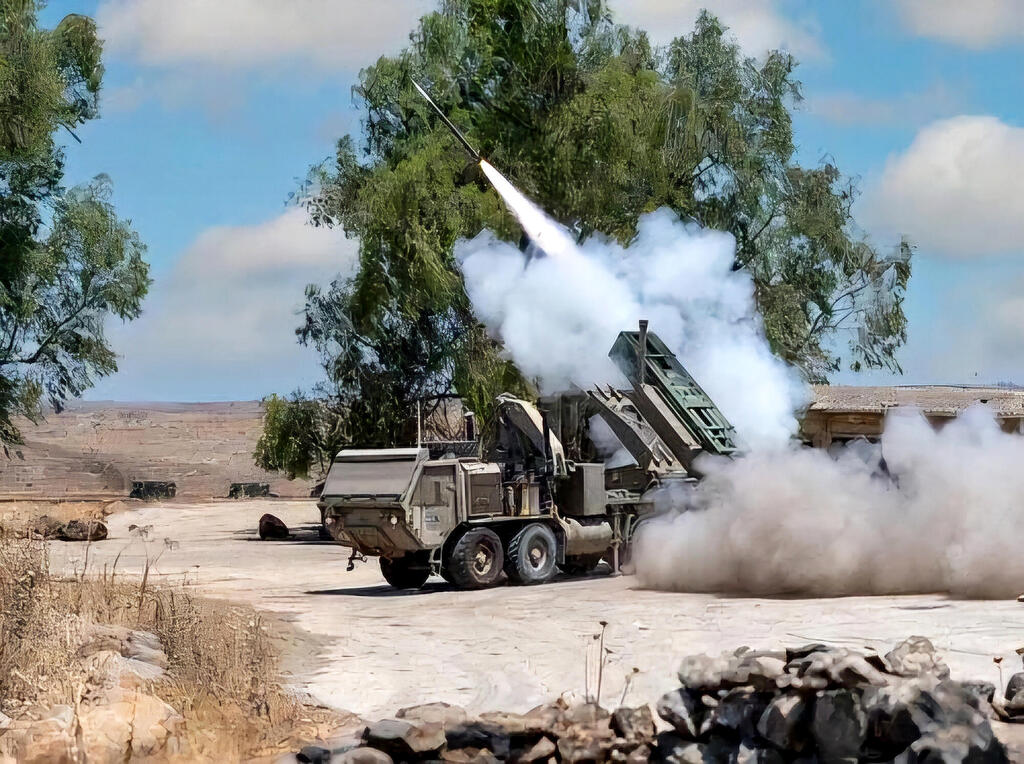
The Bar rocket, a product of the Tomer military industry company.
(Tomer military industry company)
Beyond the potential blows from Washington, other countries are also pushing for tough economic and security measures against Israel, including restrictions on arms supplies and components used in their manufacture. In recent weeks, the period following the U.S. midterm elections has also been identified as a potential window for President Donald Trump to reignite joint U.S.-Israeli military action against Iran.
If fighting resumes, it would mark Israel’s third war with Iran in less than a year and a half. The previous two conflicts have already cost Israel tens of billions of shekels, yet have failed to achieve their stated objectives. The ballistic missile threat to the Israeli home front remains, Iran’s nuclear weapons program has not been dismantled, and the regime has not been toppled.
As a third round of hostilities looms, Prime Minister Benjamin Netanyahu’s eagerness to resume the fighting may clash with reservations within the defense establishment. Officials there are questioning whether Israel’s objectives are attainable at all, particularly given Trump’s stated intention to bring an intense conflict with Iran to an end within just three to four days. One of Israel’s main concerns is that, after a brief but highly intense campaign, the U.S. president could impose a ceasefire and rush to sign an agreement with Iran, one designed primarily to ensure freedom of navigation through the Strait of Hormuz.
In such a scenario, Trump could effectively reset the clock, paving the way for another costly confrontation with Iran, this time with Israel potentially forced to act alone. Alternatively, the United States and Israel could lose control over how the fighting ends, with Iran potentially drawing them into a protracted campaign.
While Israel prepares for another possible confrontation, budget officials at the Ministry of Defense and the IDF have little idea how they will close out the current year. Securing the additional NIS 25 billion requested for the defense budget many months ago is likely to require another round of intense negotiations and bitter infighting with the Ministry of Finance. Senior Finance Ministry officials accuse the Ministry of Defense and the IDF of squandering public funds, while defense officials fear that the political deadlock will further deepen the chaos surrounding the defense budget.
“The situation is bad,” one defense official remarked grimly.
Days before the Israeli elections held last week, Prime Minister Benjamin Netanyahu, Defense Minister Israel Katz and Finance Minister Bezalel Smotrich agreed that, immediately after the vote, they would submit an urgent memorandum to update the “numerator” mechanism. The move is intended to enable a breach of the state budget and allow several billion additional shekels to be transferred to the defense establishment without delay. If the initiative moves forward, parties in the “change bloc” are likely to weigh in, potentially demanding that the money come from coalition funds.
The defense establishment fears that Israel’s political deadlock could lead to paralysis lasting at least seven to eight months. Beginning next year, IDF operations will be financed through a provisional budget based on one-twelfth of the previous year’s annual allocation. According to calculations at the Kirya, the IDF headquarters, this arrangement would be sufficient to sustain routine operations for approximately six months, excluding any additional costs arising from a new security flare-up.
Such constraints would severely hamper the IDF’s multi-year procurement plans, which depend on long-term agreements with foreign suppliers and orders placed with Israel’s domestic defense industries.
Meanwhile, the Ministry of Defense’s debt to the country’s major defense companies, Rafael, Israel Aerospace Industries (IAI) and Elbit Systems, is estimated at more than NIS 17 billion. Even if the Ministry of Finance were to meet the defense establishment’s demands and approve an additional NIS 25 billion before the end of the year, bringing the total defense budget to NIS 183 billion, finance executives at these companies could still be disappointed. For now, settling the massive outstanding debts is not part of the Ministry of Defense’s plans.
A senior defense official recently described growing frustration among executives at the companies over the lack of progress by the Finance and Defense ministries in addressing the mounting debt, or at least having the state cover the financing costs associated with it.
At the end of 2028, the current U.S. security assistance agreement, under which Israel receives $3.8 billion annually to procure American weapons, is due to expire. Discussions between the two countries began in recent months but have yet to produce a new framework. Whatever arrangement eventually emerges is expected to differ from its predecessors, with a greater focus on research and technological cooperation between Israeli and American defense companies.
In Israel, the coming transition is being described as a “gradual weaning off American funds.” It is taking place just as the country faces enormous projected defense expenditures, as it seeks to expand and upgrade its military capabilities in preparation for future wars and threats.
Once the political deadlock and the disorder surrounding the defense budget begin to ease, the Ministry of Finance will have to identify funding sources to cover these additional costs, which could run into billions of shekels every year.



