









Mobileye’s next CEO inherits a $900 million question: What to do with Mentee?
The robotics startup could become a new growth engine built on Mobileye’s AI expertise, or a business that management decides is too far from its core mission.
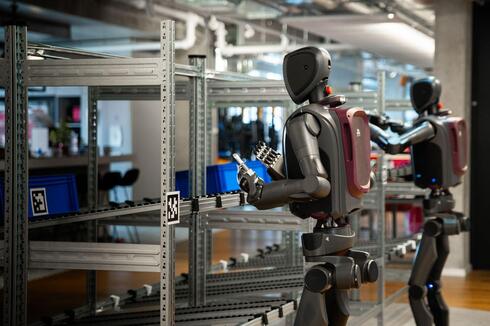
The retirement of Amnon Shashua from Mobileye has reopened one of the biggest strategic questions facing the autonomous driving company: What will happen to Mentee Robotics, the humanoid robotics startup it acquired for around $900 million earlier this year?
The acquisition, completed in January, reflected Shashua’s broader vision of expanding Mobileye’s artificial intelligence and perception technologies beyond vehicles and into the physical world. But following his departure, investors and analysts are now debating whether Mentee represents a natural extension of Mobileye’s capabilities, or an expensive distraction from the company’s core automotive business.
The question comes as Mobileye prepares for a leadership transition and faces pressure from investors to improve profitability, expand commercial adoption of autonomous driving technologies and compete in an increasingly crowded market.
Some analysts argue that Mentee was closely tied to Shashua’s personal technological vision and entrepreneurial ambitions. From this perspective, Mobileye’s primary challenge remains strengthening its automotive business, including advanced driver assistance systems (ADAS), autonomous driving platforms and emerging robotaxi programs.
Humanoid robotics, they argue, represents a fundamentally different market that requires significant long-term investment, carries substantial technological uncertainty and could divert management attention and financial resources away from Mobileye’s core operations.
Others see a stronger strategic connection between the two companies. Over the past decade, Mobileye has developed advanced capabilities in computer vision, artificial intelligence, real-time processing and specialized chips, technologies that could serve as the foundation for robots operating in complex physical environments.
From that perspective, Mentee is not a departure from Mobileye’s strategy but rather an opportunity to extend the company’s existing “eyes and brain” technology into new applications beyond the automotive industry.
The debate over Mentee’s future has drawn comparisons to Mobileye’s separation from Intel, but analysts note that the situations are fundamentally different.
When Intel decided to take Mobileye public in 2022, the move was designed to unlock value from a mature technology company that had become one of the leaders in autonomous driving while remaining undervalued inside a much larger semiconductor company.
Mentee presents the opposite challenge. It is an early-stage company that requires significant investment in research and development and is unlikely to generate meaningful revenue in the near term.
A new Mobileye CEO could therefore conclude that separating Mentee, through a spin-off, a partial sale or an independent fundraising round, would allow the company to focus Wall Street’s attention on its automotive business and improve its financial profile.
Such a move could also reduce the burden of funding a capital-intensive robotics venture while allowing Mobileye to maintain a strategic relationship with Mentee and retain exposure to future upside.
Beyond the financial considerations, the debate reflects a broader shift in Mobileye’s corporate culture.
Shashua built Mobileye around a long-term technology vision, investing heavily in emerging areas that could reshape transportation and computing. A successor focused on stabilizing the company and delivering stronger financial performance may take a more cautious approach toward high-risk projects.
Separating Mentee would send a clear message to investors that new management is prioritizing profitability, operational discipline and execution in Mobileye’s core markets.
The autonomous driving sector remains highly competitive, with companies racing to advance driver assistance systems, self-driving platforms and robotaxi technology. Maintaining leadership in those areas requires significant investment and management focus.
The most likely outcome, if Mobileye does decide to separate Mentee, may not be a complete break. Instead, the company could reduce its ownership while maintaining a strategic partnership, allowing it to benefit from Mentee’s technology without carrying the full financial burden of developing a humanoid robotics company.
For now, Mentee remains one of the clearest tests of whether Mobileye under new leadership will continue pursuing Shashua’s broader vision, or return to a more focused automotive strategy.



