








Shashua on $900 million Mentee deal: “Robots are Mobileye’s new additional growth engine”
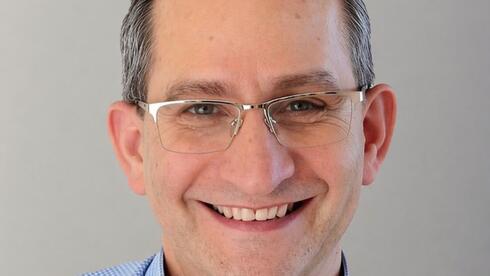
“The only question that needs to be asked is whether the deal to acquire Mentee Robotics is good for Mobileye. The fact that I am making money along the way is not what is interesting or important,” noted Amnon Shashua, CEO of Mobileye.
“The only question that needs to be asked is whether the deal to acquire Mentee Robotics is good for Mobileye. The fact that I am making money along the way is not what is interesting or important. Someone has to make a profit in deals like this,” said Amnon Shashua, CEO of Mobileye and chairman of Mentee Robotics, in an interview with Calcalist following the transaction announced on Tuesday.
Under the terms of the deal, Mobileye will pay $900 million in cash and shares for the four-year-old robotics startup, which has no reported revenue and was founded by Shashua. It is a significant related-party transaction, one that will yield hundreds of millions of dollars for Shashua as one of Mentee’s largest shareholders. To date, Mentee, founded by Shashua together with Prof. Lior Wolf and Prof. Shai Shalev-Shwartz, has raised less than $40 million, making the return on investment unusually high.
Shashua holds 37.8% of Mentee’s shares, worth approximately $341 million in the deal. For him, the proceeds represent an almost pure profit, having invested just over $10 million in the company.
Investors reacted enthusiastically. Mobileye’s shares, which had already risen 6% earlier in the day following announcements at the CES technology conference in Las Vegas, climbed a further 8% in late trading. The market appeared to respond positively to Shashua’s vision of “Mobileye 3.0,” a strategy that would expand the company beyond autonomous driving into what he describes as “physical AI.”
Under this approach, Mobileye would enter the robotics sector, one of the most closely watched areas in artificial intelligence, alongside companies backed by figures such as Nvidia CEO Jensen Huang and Tesla founder Elon Musk.
“Jensen did a great service to all of us when he brought these fields together under the title ‘physical AI,’” Shashua said. “For Mobileye as an AI company, it is only natural to enter the humanoid robotics field. There is very strong technological and operational synergy, shared AI infrastructure, production capabilities, and even customers.”
According to Shashua, car manufacturers and automotive suppliers face acute labor shortages, creating demand for industrial robots. “In the future, there will be millions of robots doing this work. People have talked about it for years, but now it is starting to happen,” he said.
He noted that while autonomous vehicles and humanoid robots operate in different environments, the underlying challenges overlap. Roads, he said, are highly structured, while robots typically operate in unstructured environments such as homes. “At the industrial level, however, the environments are more similar, which creates overlap.”
Asked whether Mobileye plans to sell robots in addition to vehicle systems, Shashua replied: “Definitely. Robots are Mobileye’s new additional growth engine. I estimate that by 2028 we will be selling humanoids for industrial use. Production costs have already fallen to about $20,000 per unit, and we will be able to sell them through leasing and maintenance models as well as direct sales. Robots for home use are a more distant prospect.”
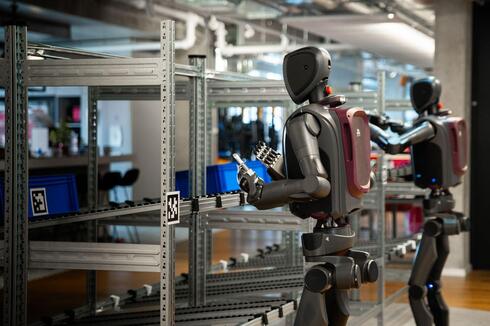
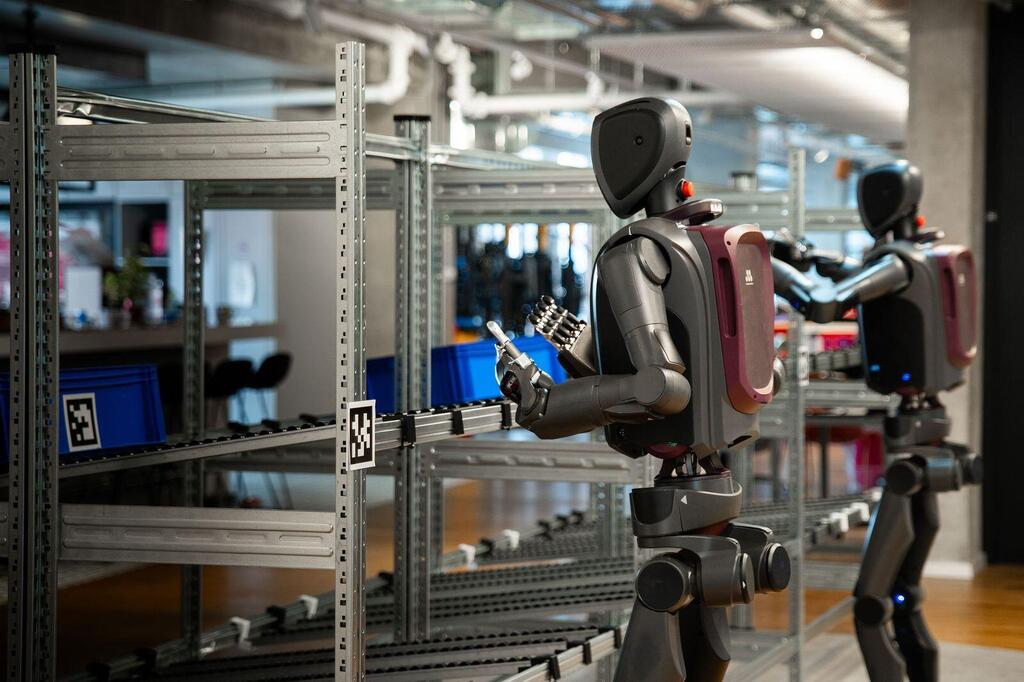
The humanoid robotics field is becoming increasingly competitive. Companies such as Figure AI have reached multibillion-dollar valuations, recently raising $1 billion at a reported valuation of $39 billion. Shashua argued that Mentee’s advantage lies in its use of artificial intelligence that allows robots to learn tasks autonomously by observing humans, rather than being remotely operated.
“In many demonstrations in this field, there is still a human behind the scenes controlling the robot,” he said.
As for hardware integration, Shashua said there are no immediate plans to replace Mentee’s use of Nvidia chips. “The synergy today is at the software and infrastructure level, not necessarily at the hardware level,” he said.



