










Lendbuzz eyes Tel Aviv after Nasdaq ambitions lose momentum
The fintech lender is preparing a Hebrew prospectus as changing investor priorities make Wall Street a tougher destination for companies outside the AI elite.
For the first time, a company that had made significant progress toward an initial public offering on Nasdaq is changing course and turning to the Tel Aviv Stock Exchange instead.
Calcalist has learned that U.S. fintech company Lendbuzz, which last year filed a prospectus for a Nasdaq IPO and conducted an investor roadshow, is close to abandoning its Wall Street listing plans and is instead pursuing an IPO on the Tel Aviv Stock Exchange (TASE).
If the move goes ahead, it would mark the first known case of a company reversing course after actively pursuing a Nasdaq listing in favor of Tel Aviv. For years, Nasdaq has been considered the natural destination for Israeli and international technology companies seeking to raise capital, while TASE has largely been viewed as an alternative for smaller businesses. Now, changes in the U.S. IPO market appear to be challenging that long-held assumption.
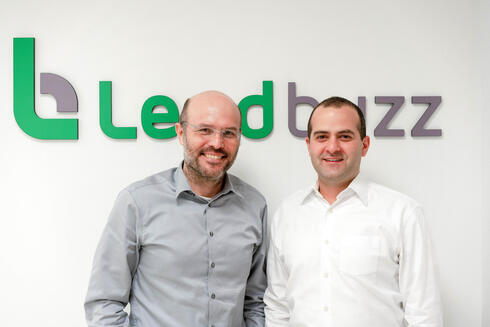
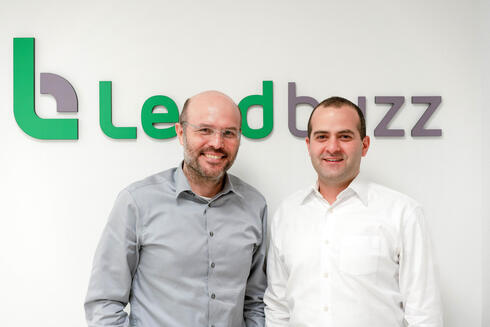
Founded in Boston in 2015 by Israeli entrepreneurs Amitay Kalmar, who serves as CEO, and Dr. Dan Raviv, the company's CTO, Lendbuzz has developed a digital platform that finances vehicle purchases in the United States. The company specializes in lending to consumers who often struggle to obtain attractive financing from the traditional banking system.
In September 2025, Lendbuzz filed a prospectus for a Nasdaq IPO at a valuation of up to $1.5 billion and subsequently embarked on a roadshow with investors. According to market estimates, however, the company received indications that it would struggle to complete the offering at its target valuation.
The reason lies largely in the dramatic shift in the U.S. IPO market. Investor attention has increasingly focused on companies in artificial intelligence, semiconductors and digital infrastructure, leaving little appetite for technology companies valued at only a few billion dollars.
In an interview with Calcalist last month, Barclays Israel CEO Ilan Paz described the shift.
"The threshold investors want to see before investing in a company has risen significantly. When companies like Anthropic and SpaceX are preparing IPOs valued at hundreds of billions of dollars, they capture all the attention. Large institutional investors tell banks: 'Stop bringing us companies worth $1 billion or even $5 billion. We're focused on the mega-companies.' The U.S. public market has moved away from these companies and is unlikely to be a realistic option over the next year or two. If companies are looking to create liquidity for shareholders, we recommend they consider the Israeli stock exchange."
The numbers illustrate the trend. The median valuation of companies going public on Nasdaq is now around $6 billion, compared with roughly $1 billion on the Tel Aviv Stock Exchange. That gap makes TASE increasingly relevant for mid-sized technology companies, too large to sell, yet too small to compete for investors' attention alongside the AI giants dominating Wall Street.
From Lendbuzz's perspective, moving to Tel Aviv does not necessarily make the IPO easier.
The company is still seeking a valuation of around $1.5 billion, similar to what it had targeted on Nasdaq. However, market participants believe Israeli institutional investors are likely to demand a significant discount, potentially valuing the company closer to $1 billion or even less.
The challenge is compounded by the fact that Israel's IPO market has also cooled. Several companies have recently postponed listings, lowered their target valuations or withdrawn offerings altogether. Negotiations over Lendbuzz's valuation are therefore expected to be intensive.
According to sources familiar with the process, the company's legal advisers are currently preparing a Hebrew-language prospectus incorporating updated financial results. If the process moves forward as planned, Lendbuzz could complete its IPO in Tel Aviv within the coming months.
Lendbuzz operates in the U.S. vehicle financing market through a proprietary digital lending platform.
Rather than relying primarily on traditional credit scores, the company's underwriting models incorporate artificial intelligence and alternative data to assess borrowers' risk profiles. These models analyze a wide range of variables, including employment stability, education, income, the type of vehicle being purchased and its affordability relative to the customer's financial circumstances.
According to the company, this approach allows it to price risk more accurately and extend competitive financing to customers who are underserved by conventional lenders.
According to the prospectus filed for its planned Nasdaq IPO, as of the first half of 2025 Lendbuzz worked with 2,164 car dealerships across the United States.
The company partners with U.S. banks that provide the underlying loan capital, while Lendbuzz performs underwriting, risk assessment and operates the technology platform. Its revenue is generated primarily from financing activities, alongside software and service fees associated with originating loans.
Lendbuzz employs approximately 475 people, including 430 in the United States. It is headquartered in Boston and also operates offices in Tel Aviv, Florida, New York and California.
Unlike many fintech companies, Lendbuzz combines rapid growth with profitability.
During the first half of 2025, revenue rose to $173 million, up from $125.4 million in the same period a year earlier. Net profit nearly doubled to $11.1 million, compared with $5.6 million in the first half of 2024.
People familiar with the company expect revenue to grow by another 10% to 20% in 2026.
Over the years, Lendbuzz has raised hundreds of millions of dollars from prominent Israeli and international investors. Its latest financing round brought total capital raised to approximately $345 million, led by U.S. insurance giant Group 1001.
Other investors include 83North, O.G. Venture Partners, Arkin Group, Mivtach Shamir and HighSage Ventures.
As of the end of 2024, Mivtach Shamir owned 7.8% of the company, while Arkin Group held more than 5%.
Lendbuzz's potential IPO in Tel Aviv would represent more than a single listing.
For decades, Israeli technology companies reaching maturity have almost automatically looked to Nasdaq, attracted by higher valuations, deeper liquidity and broader institutional investor participation. Tel Aviv has generally been reserved for smaller companies or businesses unable to reach the U.S. market.
That dynamic may now be shifting.
Jefferies, which is advising Lendbuzz, believes the company is not unique. According to people familiar with its thinking, the investment bank sees other U.S.-based technology companies that are profitable, growing and operationally mature, yet still too small to command attention in today's AI-dominated U.S. IPO market.
For those companies, Tel Aviv could become a viable alternative.
If Lendbuzz successfully completes its IPO, it could establish the Tel Aviv Stock Exchange as a credible destination for foreign technology companies, including those with only limited ties to Israel.
That would represent an important strategic milestone for TASE, which has spent years trying to increase the weight of technology companies in its market. The exchange may also benefit from the fact that roughly 40% of trading volumes are generated by foreign investors, making it more internationally accessible than many assume.
Whether the listing ultimately succeeds, however, will depend on valuation. Lendbuzz must either persuade Israeli investors that it deserves a $1.5 billion valuation, or accept a lower price.



