









Opinion
The wrong AI race
Israel will never be the country with the largest number of data centers in the world. It will never have the largest number of chips either. But it can absolutely be the country where the most important AI companies are born.
Every tech revolution involves two races. The first is the one everyone sees: who will build the most powerful computer, the biggest factory, or the most advanced model. The second race, and by far the more important one, is over who creates the place where innovation happens most easily. History shows that whoever wins the second race is almost always the one who reaps the economic rewards of the entire revolution.
When it was reported that Crusoe, one of the world’s fastest-growing AI infrastructure companies, is exploring a major presence in Israel, many read it as just another successful foreign investment. But this is not simply another company coming to Israel; it’s a test of whether Israel understands which race it is actually running.
When people talk about AI, most of the conversation is about who will build the biggest model, who will buy the most GPUs, and who will build the largest data center. That is a race that countries like the United States, China, and the Gulf states can enter with hundreds of billions of dollars.
Israel cannot compete there, but it does not need to.
The real advantage in technological revolutions does not come only from scale or capital. It comes from network effects.
A network effect emerges when every new player that joins an ecosystem does not just benefit from it, but strengthens it too. Every new AI company draws in experienced employees, who go on to start more companies of their own. Investors specialize in the field and spot opportunities faster. Researchers collaborate with industry. Multinational corporations arrive because they know this is where the talent is. Universities shape their research around market needs. Every success raises the odds of the next one. It is a system that feeds itself.
That is exactly how Israel became a cybersecurity powerhouse.
We did not have more computers, money, or engineers than any other country. But at some point, Israel became the easiest place in the world to start a cybersecurity company. A new entrepreneur could find investors who understood the field, experienced employees, leading researchers, military units that trained the workforce, early customers, multinational companies, and a tight-knit professional community. Every new company strengthened all the others.
That was the network effect.
Today we have the opportunity to build that same network effect again, this time in artificial intelligence, and this is where Crusoe comes in.
Many see it as just another infrastructure company, another data center. But AI infrastructure is much more than that. It draws in model companies, software companies, researchers, startups, suppliers, investors, and customers. It turns Israel from a place that uses artificial intelligence into a place that builds the industry itself. Every significant new player makes the country more attractive to the next one.
This should be the national strategy.
Not asking how Israel can buy another few thousand GPUs, but how it can become the easiest place in the world to start an AI company.
To do that, the country needs to move on several fronts at once: attract the research labs of the world’s leading companies, make it easier for international researchers to come to Israel, open public datasets for research, encourage collaboration between the healthcare system, academia, the defense establishment, and industry, and make starting an AI company in Israel faster and simpler than anywhere else.
In other words, we need to stop thinking only about infrastructure and start thinking about ecosystem. Israel will never be the country with the largest number of data centers in the world. It will never have the largest number of chips either. But it can absolutely be the country where the most important AI companies are born, because here the best combination of researchers, entrepreneurs, investors, research institutions, infrastructure, and early customers can come together.
If Crusoe ends up being the only company that comes to Israel, we will have lost. If twenty more follow, and then dozens more building research, development, and infrastructure here, we will have won.
History shows that the great companies of every technological revolution are not born in the countries that spent the most money. They are born in the places where the strongest network effect was built.
The real race is about which country every entrepreneur, researcher, and AI company will want to work in, because that will be the best place to build the next generation of the industry. If Israel wins this race, it will not just win the AI revolution, but the one that comes after it too.
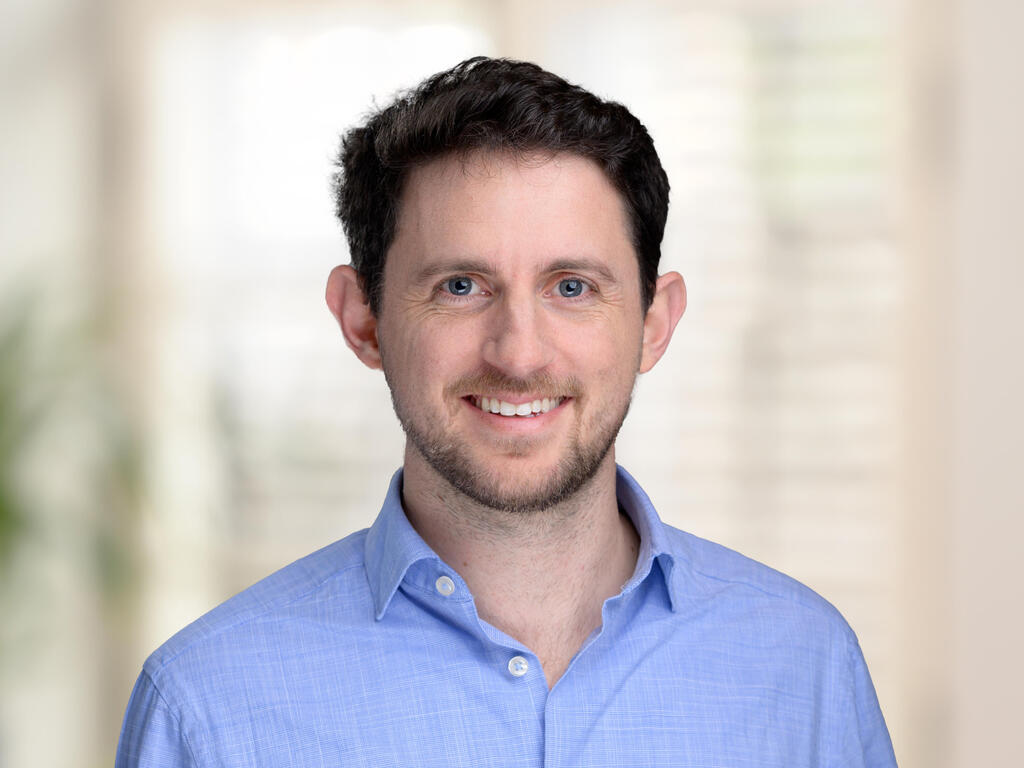
Judah Taub is a Managing Partner and Co-Founder at Hetz ventures.



