









CTalk
“Israel became a mystery why it is so attractive despite the war”
Oded Hermoni, co-founder and managing partner of J-Ventures, says valuations continue rising even amid conflict and speaks about building a cross-border investor community.
Oded Hermoni
(Tomeriko - Live Focus)


J-Ventures, according to co-founder and managing partner Oded Hermoni, was never intended to be a conventional venture capital fund. Instead, it was designed as a network to build trust between American Jewish and Israeli communities through shared investment and social ties.
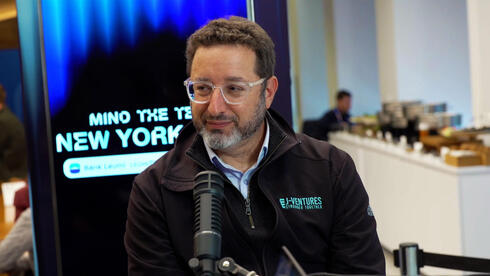
Speaking to CTech at Mind the Tech New York, organized by Calcalist and Bank Leumi, Hermoni said the group now counts roughly 500 investors across 42 Jewish communities, including venture capitalists, executives, founders, and family offices. It also includes what Hermoni described as one of the largest concentrations of venture partners in a single fund structure, with around 160 VCs involved. In total, the network includes 250 executives, 150 founders and family offices, and even rabbis.
Beyond investing, J-Ventures has positioned itself as a philanthropic platform, donating more than $1 million over the past three years to 21 NGOs in Israel and abroad, including initiatives focused on combating antisemitism and supporting kibbutzim.
Roughly 70% of its investments are in Israeli companies, with the remainder elsewhere, and the fund describes itself as a generalist investor spanning cyber, enterprise software, defence technology, semiconductors and biotech.
Hermoni said Israel’s technology sector has continued to attract capital despite the ongoing war, calling its continued strength “a mystery.” According to him, portfolio companies have still managed to grow revenues, raise larger rounds and secure higher valuations, even as roughly 10-20% of employees serve in reserve duty.
He suggested part of the resilience stems from a cultural dynamic in which Israeli employees see themselves as part of a collective system rather than purely individual actors, contrasting this with Silicon Valley norms.
At the same time, he noted new pressures in global tech markets. The Israeli shekel’s strength against the US dollar has reduced investment capacity for dollar-based investors, while shifting global labour dynamics have altered cost structures. “The same $1 million we could invest last year is now worth $700,000,” he said.
Comparing ecosystems, Hermoni described Silicon Valley as increasingly split between San Francisco, dominated by artificial intelligence and agent-driven startups, and the broader Valley, which is returning to more traditional enterprise and semiconductor activity.
He also pointed to strong demand for Israeli cyber expertise, noting that many investors in Israeli companies today are not Israeli or Jewish, reflecting the globalisation of the sector.
However, he added that costs in Israel have risen sharply, with some cases in which engineers are now more expensive than their Silicon Valley counterparts. At the same time, large US technology companies are undergoing AI-driven layoffs, while Israel has seen fewer reductions.
You can watch the full interview in the video above.



