










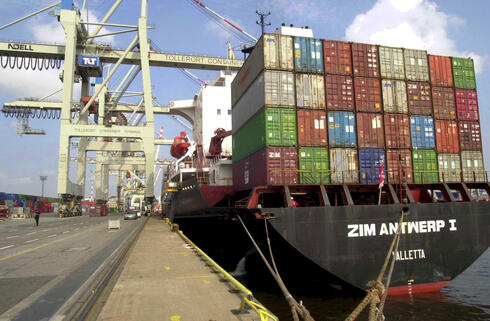
Zim workers launch immediate strike over $3.5 billion sale to Hapag-Lloyd-FIMI
According to the workers' union, the company’s management is offering to retain only 120 local employees. “It means that 880 employees are at risk of being laid off,” said union head Oren Caspi. “The loss-making activity will remain in Israel, while the profitable routes will go to Hapag-Lloyd.”
Zim workers have begun an immediate strike after Calcalist revealed on Sunday morning that the German shipping company Hapag-Lloyd and the FIMI fund won the tender to acquire Zim for more than $3.5 billion. Employees were instructed to stop working immediately and return home until further notice.
The workers’ union stated that the move follows the board of directors’ decision to approve a $3.5 billion deal, although the transaction has not yet been formally signed, without consulting employees and without securing commitments to protect their rights and jobs. “We are not playing games. This is about a thousand families and the future of all of us,” the statement to employees said.
As part of the deal, Hapag-Lloyd and the FIMI fund are expected to purchase 100% of Zim’s shares, which will then be delisted from the New York Stock Exchange (NYSE).
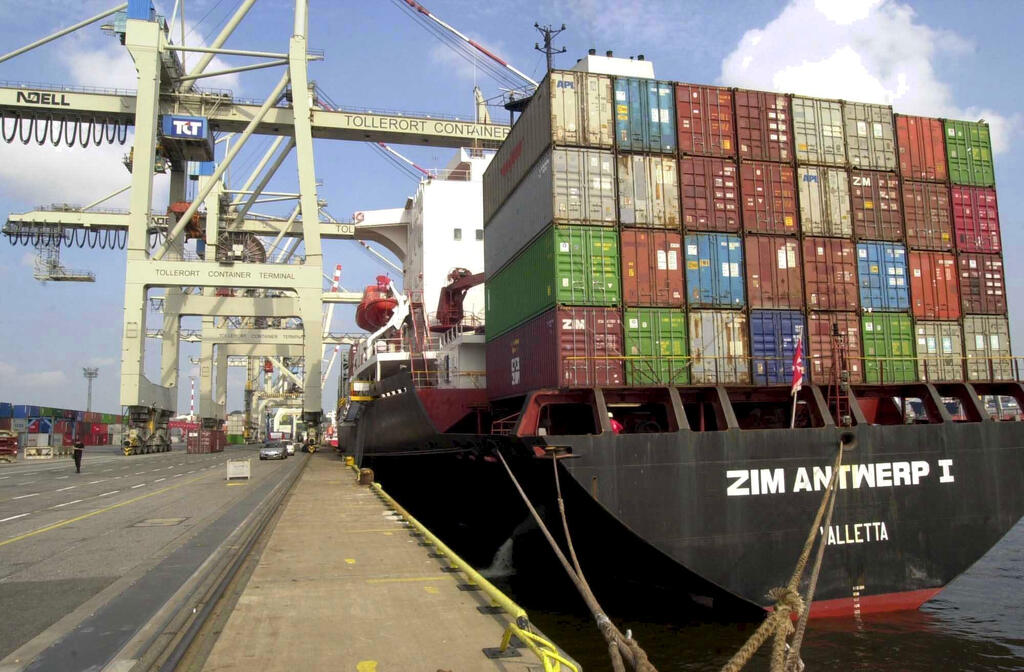
At a meeting held this morning, the workers’ union demanded that the jobs of the company’s approximately 1,000 employees in Israel be guaranteed and, above all, that they receive a grant worth tens of millions of dollars as part of the transaction.
“Following the board’s failure to seriously address our demands for employee protection, and the sale of the company behind our backs without any cooperation, we are going on strike effective immediately,” said a message sent to employees by the union, headed by Oren Caspi.
According to Caspi, board representative Nir Epstein told employees in a conversation that the company’s management is offering to retain only 120 employees under FIMI’s new company, which will consolidate the Israeli operations.
“This is a difficult development for the employees, and it means that 880 of them are at risk of being laid off,” Caspi said. “The loss-making activity will remain in Israel, while the profitable routes will go to Hapag-Lloyd.”
He added that Hapag-Lloyd may establish its own operation in Israel and potentially absorb some of the employees.
According to Caspi, the commitment to the 120 employees who would remain is limited to one year, and management is offering them four bonus salaries. “No one guarantees that they will still have a job after that,” he said.
Caspi led a fight last month against the sale of the company to foreign entities, arguing that the state must preserve Zim as an Israeli company capable of securing Israel's maritime supply lines in times of war. Zim imported wheat, ammunition, and fuel to Israel during the Swords of Iron war, when foreign shipping companies avoided sailing to the country. Zim employees are expected to work primarily under a new company that the FIMI fund will establish, which will hold the Israeli operations as part of the deal. Hapag-Lloyd is expected to take over the international routes, mainly from Asia to the United States, as well as the chartered vessels, while FIMI will take ownership of the ships.
Meanwhile, Haifa Mayor Yona Yahav is calling on the government to halt the deal. Zim's headquarters are located in the Port of Haifa, the company's home city, where the largest number of its employees are based. According to Yahav: "The shipping company Zim, headquartered in Haifa, is no longer part of the Israeli economy. This is a company of strategic importance to the economy and national security of the State of Israel, employing thousands of workers, many of whom live in Haifa. Transferring ownership to foreign hands, even if an Israeli investment fund is involved, is problematic to say the least. It harms national security and could lead to the dismissal of thousands of workers. I call on the Israeli government to stop this move and prevent the sale. It is inconceivable that the State of Israel would not have a shipping company under Israeli ownership, it is part of its economic and security foundation."



