











Assaf Rappaport invests in Guardio at $1.1 billion valuation as consumer cyber hits $150 million ARR
The Wiz co-founder joined a $40 million round in the Israeli cybersecurity company, which has surpassed one million paying customers and recorded more than 100% annual revenue growth for four consecutive years. CEO Amos Peled says AI is creating a once-in-a-generation opportunity in consumer security.
Israeli cybersecurity company Guardio has raised $40 million at a valuation of $1.1 billion, with Wiz co-founder and CEO Assaf Rappaport joining the round as an investor.
The financing was led by existing investors ION Crossover Partners, Union Tech Ventures, Vintage Investment Partners, Cerca Partners and Emerge Ventures. The latest investment brings Guardio's total funding to $167 million.
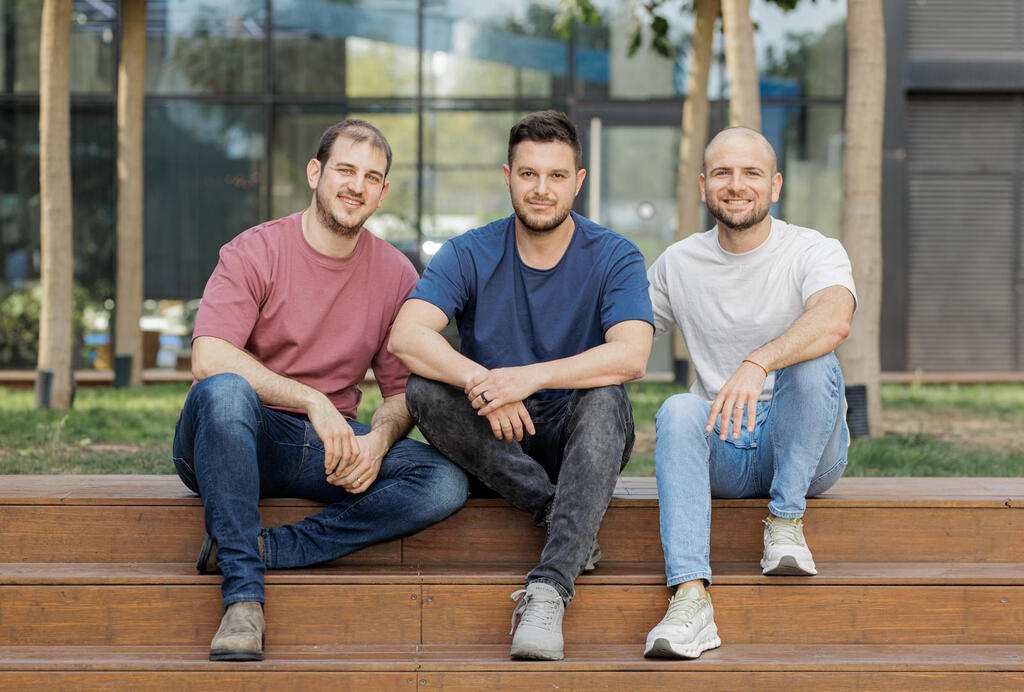
"I met Assaf Rappaport by chance and told him that we are building the largest private cybersecurity company in the world, and I would be happy if you would join us because you are associated with the most successful enterprise cybersecurity company of all," Guardio CEO and co-founder Amos Peled told Calcalist. "We are happy to be identified with the person who built the most recognized enterprise cybersecurity company in the world."
Peled said the company decided to raise a relatively limited amount because its existing investors wanted to increase their holdings and because Guardio did not need to raise more capital to fund its growth.
"Our partners wanted to increase their holdings in the company and we felt the price was fair," Peled said. "The company does not burn cash to succeed, and the money will allow us to move faster. We understand that we have a once-in-a-generation opportunity. The number of threats is exploding and we really want to take advantage of this moment. There was no need to dilute us with a larger raise, so we decided to take this amount."
Guardio has now surpassed $150 million in annual recurring revenue (ARR) and one million paying customers. The company has recorded revenue growth of more than 100% for four consecutive years.
Peled believes those figures represent only a small portion of the potential market.
"We have passed the $150 million mark and will continue to accelerate growth," he said. "When we think about the size of the market, today we are protecting one million paying users, and that is really just a comma. We believe that this is less than half of the percentage that exists today, and if we reach 5%, we will reach $1 billion in revenue."
Peled compared the current state of consumer cybersecurity to the early days of the antivirus market, when the spread of the internet created a new need for security products.
"In the early 2000s, 65% of internet users paid for antivirus because there was a real need, and this is the same point today. People need the ability to understand what is real and what is not, and whether the calls they receive are legitimate. We see people losing their life savings, while consumers still do not understand how exposed they are."
According to Peled, only around 4% of consumers currently pay for consumer cybersecurity services, a figure he expects to eventually rise into the tens of percent.
"The models allow attacks to be created without barriers and at almost zero cost, and this is an epidemic," he said. "The Trump administration already understands that there is a problem here, and there is already reported damage of billions of dollars from AI-related crimes. We are filling that void."
Guardio's growth is being driven by a shift in the nature of cybercrime, as artificial intelligence lowers the cost and technical expertise required to conduct sophisticated attacks. Mass campaigns involving personalized phishing, convincing brand impersonation and deepfake voice calls have made it increasingly difficult for consumers to distinguish legitimate communications from fraud.
According to the FBI, losses from cybercrime targeting consumers in the U.S. reached a record of more than $20 billion.
Guardio's approach is to protect the individual rather than focusing primarily on a specific device. Its system monitors messages, emails, calls and online activity to build a picture of user behavior and identify fraudulent activity, in some cases before the user clicks on a malicious link.
The company's technology is designed to identify attacks that span multiple channels and devices. For example, a phone call could lead a victim to download a malicious file onto a mobile phone or PC. Guardio aims to provide individual consumers with a level of security and visibility that has traditionally been available primarily to large enterprises.
Peled sees AI as a fundamental change in the economics of cybercrime, and therefore also in the economics of consumer cybersecurity.
"The internet was the tailwind of antivirus companies. AI will be the tailwind of companies doing consumer cybersecurity," he said. "Today, for $20, attackers get capabilities that were once only available to countries. They can counterfeit everything for everyone, without restrictions of geography, language or volume. We are here to fill the gap that has been created."
Rappaport, who co-founded Wiz and serves as its CEO, said Guardio's approach could become increasingly important as AI makes online fraud more sophisticated.
"Security systems win when they understand the context in depth. In the age of AI, fraud has become more sophisticated and personalized than ever, and Guardio brings this depth of protection to billions of people who are forced to face online threats alone," Rappaport said. "I am happy to invest in and help this company make the digital world more secure."



