









Growth+
“What worked for one person is often impossible to replicate or irrelevant to your own journey”
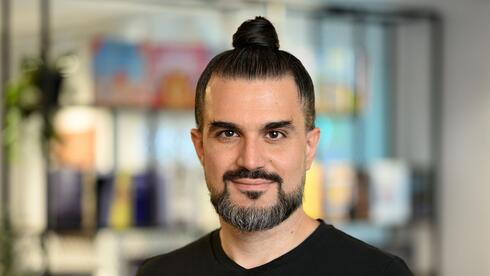
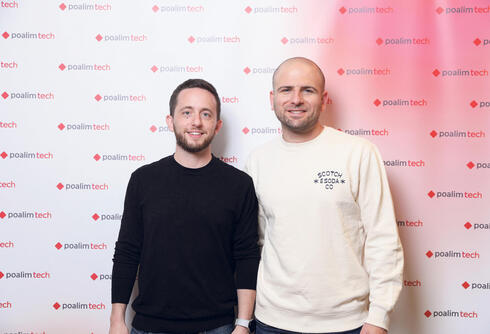
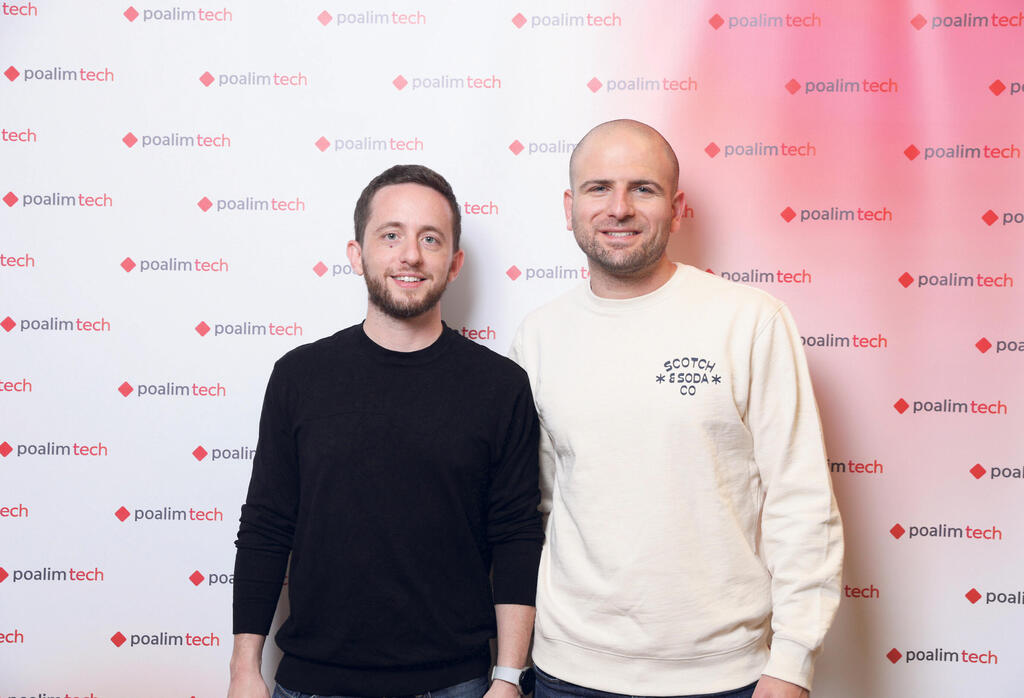
As part of the Growth+ project by Calcalist and Poalim Tech, Amos Peled, co-founder and CEO of Guardio, met with Guy Manzur, founder of Lunair: “I suddenly had to take on a lot of other responsibilities outside my field, such as marketing, sales, economics, and business.”
Amos Peled, co-founder and CEO of Guardio, met with Guy Manzur, founder of Lunair.AI, which has developed a platform that produces explainer videos and advertisements from a single prompt. The meeting took place as part of the Growth+ project by Calcalist and Poalim Tech. Growth+, now in its third year, consists of 1:1 meetings between founders of leading tech companies in Israel and entrepreneurs of promising startups, with the goal of advising, supporting, and providing tools, knowledge, and practical guidance on entrepreneurship, creativity, startup management, and building companies for growth.
Amos, tell us about a crisis or challenge you encountered early on and what you learned from it.
“There are no universal solutions. Success and growth have many forms, and what worked for one person is often impossible to replicate or irrelevant to your own journey. The best advice is to take any advice you receive with a grain of salt. Advice is always subjective, time-limited, and influenced by the experience of the person giving it. In the end, we are all the sum of our experiences and mistakes. You need to hear, see, and take in tips, but ultimately multiply them by your unique situation and understand how to adapt them to yourself.”
Guy, what’s the biggest challenge you’ve faced this year?
“My company has only been around for four months. My biggest challenge is that I’m a solo founder and do everything by myself. I built a product based on my expertise in video programming. But because the product is growing and I want it to continue growing, I suddenly have to take on a lot of other responsibilities outside my field, such as marketing, sales, economics, and business. I’m learning everything from scratch while developing the system and supporting users and customers.”
Amos, what advice did you give Guy?
“My message was that when you need funding, raising money is not always the only solution. We live in a post-AI era. When you see one person managing to build such impressive technology in four months, make it accessible, and reach significant revenue in a very short time, the instinct is often to immediately go out and raise money. However, recent examples show that this is not necessarily the most efficient path.
“The trade-off in his case is clear: he is one person. If he spends two months raising money, he effectively stops building the business for those two months. I advised him to reconsider this instinct and explore whether he can continue generating meaningful traction without raising money right now.
“We have experience with both approaches, one company we built in bootstrap mode without raising any money at all, and another for which we raised almost $130 million. In both cases, we only raised capital when it served the business.”
What did you learn from each other?
Guy: “I came to ask Amos how to recruit and how to prepare for a hiring round, and I realized it might be worth thinking differently and possibly postponing it. Many entrepreneurs would dream of having the option to delay hiring. I realized from him that I actually have that option, and I was sent on a mission to see whether I can continue to succeed on my own in the meantime.”
Amos: “It was an amazing reminder of the power of dedication and talent. Talented individuals working alone today, with the help of powerful AI tools, can produce things that look like 30 people worked on them for three years.”
Is there anything surprising that you discovered about each other?
Amos: “I discovered that Guy once made a living as a seller on the Fiverr platform in the video space. In fact, with Lunair, he built tools and a platform that effectively made the category he once worked in redundant, replacing both him and all his competitors. He is a kind of microcosm of that shift, he left the platform and then built a platform that disrupts his entire category.”
Guy: “I discovered that Amos had a previous company I wasn’t aware of, which he and his partner founded immediately after being discharged from the army. Even though they came from a cybersecurity background, they developed algorithms for the advertising world. They built it as a technical team, fully bootstrapped, and reached $10 million in sales in the first year.”



