








Inside the Musk-OpenAI trial: Diaries, power struggles and a $150 billion claim
Court filings reveal how early fractures between Elon Musk and OpenAI’s leadership shaped today’s AI giant.
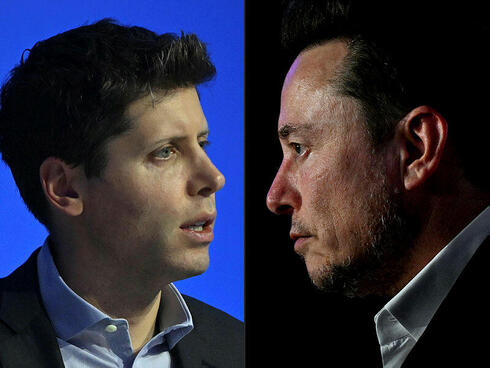
The bitter legal battle between Elon Musk and leading artificial intelligence firm OpenAI, led by Sam Altman, may ultimately hinge on a few pages from one executive’s personal diary.
“This is the only chance we have to get out from Elon,” wrote Greg Brockman, OpenAI’s president and co-founder, in the fall of 2017. “Is he the ‘glorious leader’ that I would pick?”
Brockman’s diary entry is part of thousands of pages of internal documents revealed in court since Musk, one of OpenAI’s original co-founders, filed suit in 2024 against the company, Altman, and Brockman.
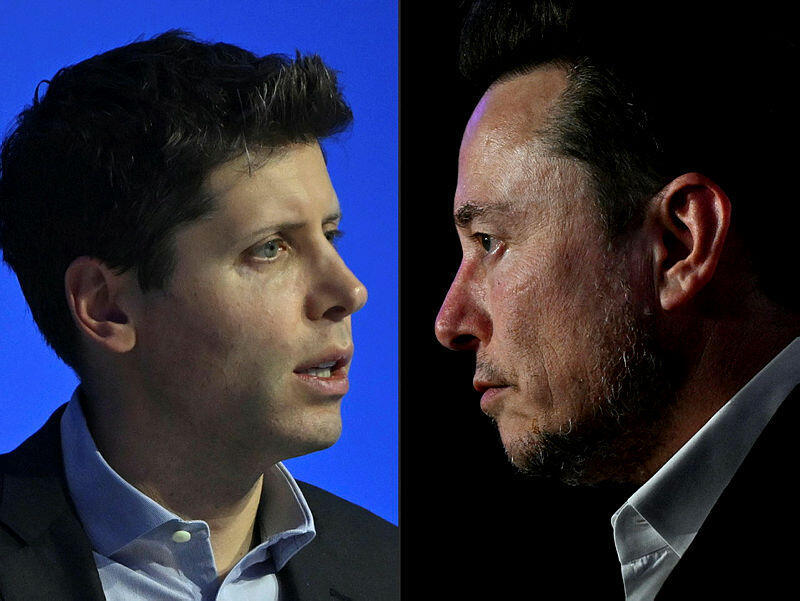
Musk is seeking $150 billion in damages from OpenAI and Microsoft, one of its largest investors, according to a person involved in the case, with any proceeds directed to OpenAI’s charitable arm.
Jury selection is scheduled for Monday in federal court in Oakland, California, with opening statements expected on Tuesday. Altman is expected to attend jury selection.
The documents offer a rare window into the egos and personalities that shaped OpenAI’s evolution, from a nonprofit research lab in Brockman’s apartment into a technology giant valued at more than $850 billion. They also shed light on how some of the most influential figures in generative AI think about the technology.
The trial could complicate OpenAI’s plans for a potential initial public offering by raising questions about its leadership. A steady stream of unflattering disclosures may also deepen growing public skepticism toward artificial intelligence.
At the heart of the case is Musk’s claim that OpenAI, Altman, and Microsoft betrayed the organization’s original nonprofit mission to benefit humanity by creating a for-profit entity in March 2019, 13 months after Musk left the board.
Musk alleges that the defendants kept him in the dark about their plans, exploited his name and financial backing to build what he describes as a “wealth machine,” and owe damages for misleading both him and the public.
He is also seeking structural changes, including reverting OpenAI to a nonprofit and removing Altman and Brockman from leadership roles.
OpenAI has countered that Musk is driven by a desire to control the company and bolster his own AI venture, xAI, which he founded in 2023 shortly after OpenAI launched ChatGPT and ignited the current AI boom.
The company maintains that Musk participated in discussions about restructuring OpenAI and even sought the CEO role, claims that Microsoft also supports, while denying any collusion.
In a post on X, OpenAI said: “The truth and the law are on our side. This lawsuit has always been a baseless and jealous bid to derail a competitor.”
Prominent figures including Musk, Altman, and Microsoft CEO Satya Nadella are expected to testify in person.
Shivon Zilis, a former OpenAI board member and the mother of four of Musk’s children, is also likely to be a key witness. OpenAI’s legal team argues that she shared internal information with Musk.
The trial comes at a sensitive moment for both sides.
OpenAI faces intensifying competition from rivals such as Anthropic and continues to spend heavily on computational infrastructure. It is also preparing for a potential IPO that could value the company at $1 trillion.
Musk’s ventures face their own pressures. His AI company xAI, now integrated into SpaceX, trails OpenAI in adoption. SpaceX is also reportedly preparing for what could be one of the largest IPOs in history.
According to court filings, Musk contributed approximately $38 million in Seed funding to OpenAI between 2016 and 2020, largely before leaving the board.
In 2019, OpenAI restructured into a capped for-profit entity governed by its nonprofit parent, allowing it to raise outside capital while maintaining its original mission.
Last fall, OpenAI transitioned again, becoming a public benefit corporation in which the nonprofit and investors, including Microsoft, hold stakes. The nonprofit retains a 26% stake, along with additional warrants tied to valuation milestones.
Musk’s legal team calculates damages based on OpenAI’s valuation and the portion of the nonprofit’s stake they argue is attributable to his contributions, estimated at between 50% and 75%.
A ‘Manhattan Project for AI’
Musk and Altman co-founded OpenAI in 2015 with the goal of developing AI to benefit humanity and compete with companies such as Google.
Altman initially pitched the idea to Musk as a “Manhattan Project for AI,” according to court documents.
Musk’s involvement helped OpenAI attract top researchers, including former chief scientist Ilya Sutskever.
By mid-2017, however, Musk had begun to question the organization’s direction. At one point, he withheld promised funding amid disagreements with Altman, Brockman, and Sutskever. Emails show that Musk pushed to become CEO, a move that unsettled other co-founders.
Around the same time, Brockman expressed frustration in his diary, weighing the trade-offs of turning OpenAI into a for-profit entity.
“Financially, what will take me to $1B?” he wrote. “Accepting Elon’s terms nukes two things: our ability to choose … and the economics.”
Musk’s lawyers cite the entry as evidence that OpenAI’s leadership was motivated by financial considerations rather than its founding mission.
By January 2018, Musk appeared to have lost confidence in the organization.
“OpenAI is on a path of certain failure relative to Google,” he wrote in an email.
Four years later, in late 2022, OpenAI released ChatGPT, an event that would transform the artificial intelligence landscape and set the stage for the current legal battle.



