








Ilya Sutskever’s OpenAI equity could be worth $100 billion, court records reveal
Newly released messages provide an unexpected financial portrait.
For years, Ilya Sutskever cultivated an image that stood in quiet contrast to Silicon Valley’s wealth-obsessed mythology. He was the elusive scientist: intense, abstracted, and publicly uninterested in status or money. But newly disclosed text messages from OpenAI’s chief operating officer, Brad Lightcap, have unexpectedly placed Sutskever at the center of one of the largest personal wealth stories in the history of the technology industry.
According to the messages, made public on Tuesday as part of Elon Musk’s lawsuit against OpenAI and Sam Altman, Sutskever held roughly $4 billion worth of vested equity in OpenAI as of November 2023, when the company was valued at $29 billion. At the time, OpenAI was already the most influential AI lab in the world, but few outside its inner circle appeared to grasp just how large Sutskever’s personal stake had become.
1 View gallery
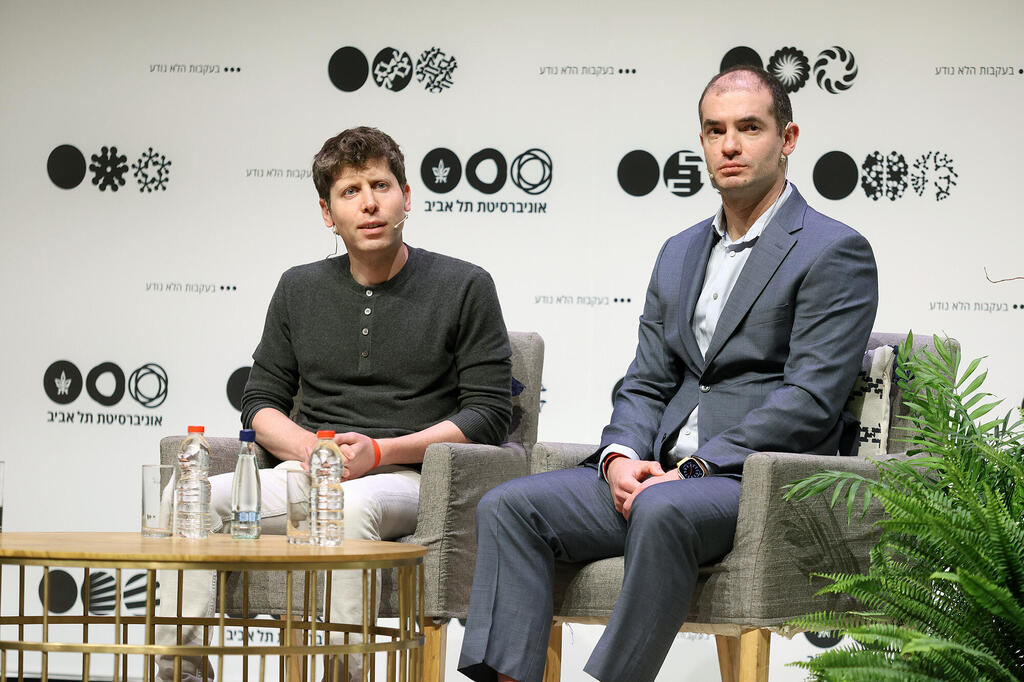
Ilya Sutskever alongside Sam Altman during a visit to Tel Aviv in 2023.
(Photo: Avigail Uzi)
If that same stake were marked to OpenAI’s current reported valuation of $850 billion, it would imply a paper value of approximately $117.2 billion. Even accounting for heavy dilution, structural complexity, and uncertainty around liquidity, the numbers suggest that Sutskever may now rank among the wealthiest individuals ever created by the technology sector.
Any such estimate must come with caveats. OpenAI has undergone multiple rounds of financing since 2023, including large secondary transactions, all of which would have diluted early equity holders. It is also unknown whether Sutskever sold any portion of his holdings in tender offers. But the picture is complicated in the other direction as well: Sutskever remained at OpenAI for an additional six months after November 2023, continuing to vest equity before departing to found a new company.
Taken together, those factors make a rough estimate of around $100 billion in OpenAI-related wealth plausible, assuming no major secondary sales. Even if the true figure is materially lower, it would still place Sutskever in a financial category that few technologists, let alone research scientists, have ever approached.
Sutskever has declined to answer questions about his financial ties to OpenAI since leaving the company.
The disclosures add a striking new dimension to Sutskever’s previously public account of his departure from OpenAI. In a deposition taken in October 2025, and later partially released, Sutskever framed his exit not as a financial calculation but as an intellectual and moral break.
“Ultimately, I had a big new vision,” he testified. “And it felt more suitable for a new company.”
That company, Safe Superintelligence (SSI), was founded in 2024 and was last valued at $32 billion after raising more than $3 billion in funding. SSI has a significant team in Israel with offices in Tel Aviv. Sutskever immigrated to Israel at the age of 5 and grew up there until he moved to Toronto for academic studies. While the exact size of Sutskever’s ownership stake has not been disclosed, he is a co-founder and serves as CEO, suggesting that a significant portion of that valuation accrues to him.
If so, SSI represents not merely a new scientific chapter but a second, parallel source of extraordinary wealth.
That contrast is particularly striking given the context in which Sutskever left OpenAI. His deposition described a breakdown of trust at the highest levels of the company, including his role in recommending the removal of Sam Altman and authoring memos accusing OpenAI’s CEO of repeated deception. The episode ended with Altman reinstated, Sutskever sidelined, and, months later, gone.
What the new financial disclosures suggest is that Sutskever exited not as a marginalized figure, but as one of the greatest beneficiaries of the AI boom OpenAI helped ignite.



