









Mind the Tech NY
Rakesh Loonkar: “We’re going to see $100 billion exits out of Israel”
The Transmit Security co-founder says AI is reshaping every corner of cybersecurity and predicts Israel will produce companies even larger than Wiz.
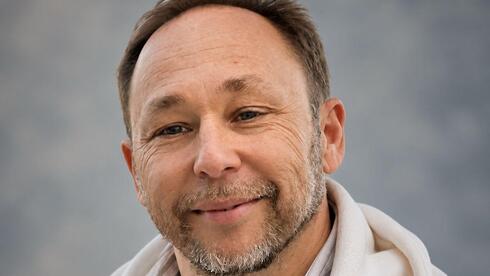
Rakesh Loonkar
(Tomeriko)


The artificial intelligence boom is not just creating new cybersecurity companies, it is threatening the foundations of the existing industry, according to Rakesh Loonkar, President and co-founder of Transmit Security.
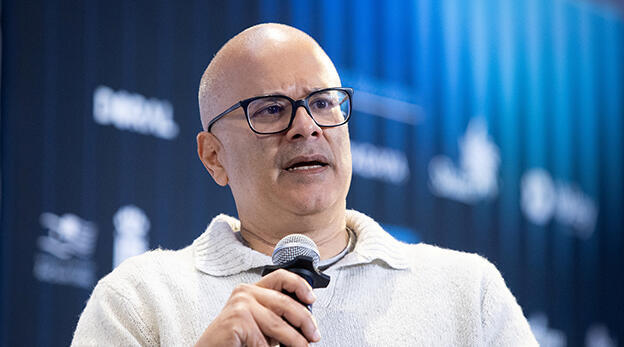
Speaking at the Mind the Tech conference about the impact of AI on cybersecurity and technology investing, Loonkar described the current moment as a sweeping technological reset that could render many existing tools obsolete while opening the door to a new generation of massive companies.
“Every single existing vendor and every single existing product category is going to be disrupted in some way by AI,” Loonkar said. “Either the segment may not exist or it has to be fundamentally rebuilt.”
Loonkar, who also serves as a partner at venture capital firm Picture Capital, argued that AI is creating opportunities not only for incremental improvements, but for entirely new market categories. In cybersecurity alone, he said, nearly every major segment, from identity and cloud security to customer protection systems, is vulnerable to transformation.
“When you think about cyber, you break it into categories like identity, network security, cloud security, device security,” he said. “Each one of those is an opportunity to build not just a $10 billion company but potentially even a $100 billion company.”
At Transmit Security, which specializes in customer identity and fraud prevention, Loonkar said the company is increasingly focused on how AI agents interact with applications, and how some “good agents” can evolve into malicious actors.
“What we look at is a new opportunity to protect applications against agents,” he said.
At the same time, as an investor, Loonkar sees a broader upheaval underway across the technology industry. “There’s this enormous market disruption,” he said. “It is the biggest opportunity we’ve ever seen in technology.”
“I would love to be 25 right now and be at the beginning of this revolution,” he added.
Loonkar drew a distinction between how his firm approaches early-stage investments and later-stage funding. In Seed investing, he said, the focus is overwhelmingly on founders themselves rather than mature business metrics.
“We’re investing in tremendous and high-potential human capital,” he said. “It might be a 22-year-old, it might be a second- or third-time entrepreneur, but it’s typically a team that has an idea, they have the ability to execute, and they resemble what founders look like.”
For later-stage investments, however, the focus shifts toward product-market fit, revenue potential, and market scale.
Despite the intense focus on AI, Loonkar suggested that personal characteristics remain decisive in determining which founders ultimately succeed.
“Being an entrepreneur takes a tremendous amount of effort,” he said. “It takes a lot of grit. It takes somebody who’s willing to do 18-hour days and fly to Europe and then come back and fly to Cleveland the next day.”
“Great entrepreneurs are driven by deep ambition,” he added.
Loonkar also spoke extensively about Israel’s technology ecosystem, where he has worked with entrepreneurs for decades.
“I grew up Indian, in New Jersey,” he said, noting that people often mistakenly assume he has Israeli roots because of his longstanding partnerships in the country’s cyber sector.
Among the entrepreneurs he highlighted were Nir Zuk, founder of Palo Alto Networks, and Mickey Boodaei, co-founder of Imperva and Transmit Security.
According to Loonkar, Israeli founders stand out because of their product instincts and focus on building difficult-to-replicate technologies.
“You have to build a technology that no one else can build,” he said. “It has to have a technological moat.”
He also praised what he described as the trust and intensity of his relationships with Israeli business partners.
“I never had to watch my back with an Israeli business partner. Never,” he said.
Looking ahead, Loonkar predicted that the scale of Israeli technology companies will continue to grow dramatically in the AI era. Referring indirectly to the rise of companies such as Wiz, he argued that even larger outcomes are likely.
“We’re going to see $100 billion exits,” he said. “The markets are becoming loose because of this foundational disruption of AI.”
“My challenge to the ecosystem is: don’t just look for the base hits,” he added. “Look to build those companies.”
“There’s no doubt,” Loonkar said. “We will absolutely see them out of Israel.”
Watch the full interview in the video above.



