









“Iran’s attack on the Gulf states is going to be a bonanza for the Israeli defense industries”
Defense insiders say Iranian strikes on Gulf states could create a surge in demand for Israeli military technology.
In recent years, the Gulf states have invested enormous efforts and resources to build themselves into peaceful and prestigious tourist and business destinations, seemingly disconnected from the turbulent region in which they are located. But over the past week, that illusion was shattered by a barrage of missiles and drones.
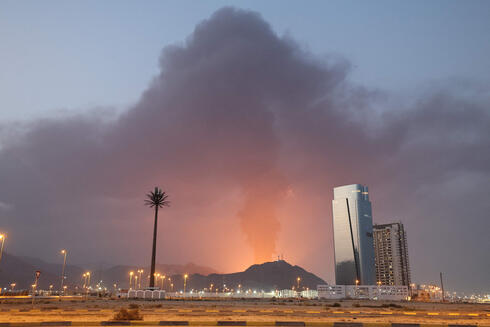
The Iranian attack targeted American bases, oil infrastructure, and Dubai International Airport. But it also triggered massive fireballs near luxury hotels, echoes of explosions in shopping malls, gunfire near data centers and infrastructure facilities, and anxiety even around the Burj Khalifa, the tallest skyscraper in the world and a symbol of the Gulf’s ambitions. Suddenly, these countries, and much of the world, realized how fragile the situation is: that at any moment a serious attack on critical targets could occur, and that a dramatic gap exists between progress, innovation and prestige on the one hand, and the lack of sufficient defense, protection and emergency preparedness on the other.
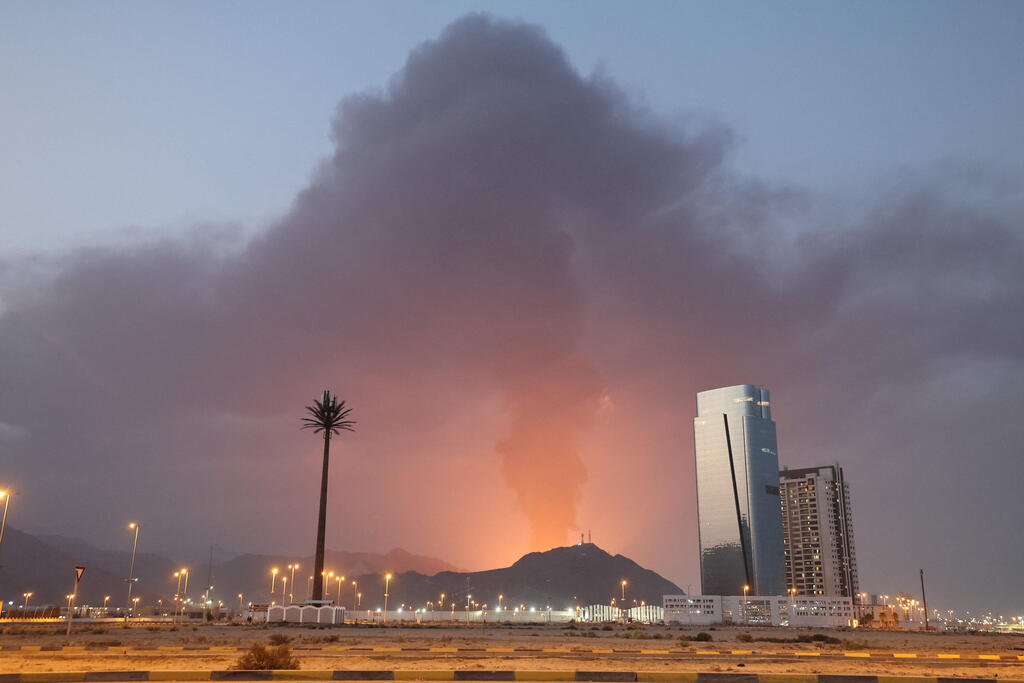
From the perspective of the Israeli defense industry, this gap represents a significant opportunity. The industry has already been expanding rapidly in recent years, Russia’s invasion of Ukraine triggered a global arms race, followed by Israel’s own wars, and now a new and well-funded market has opened up. When Iran launches missiles at the United Arab Emirates, Oman, Bahrain, Qatar, Saudi Arabia and Kuwait in an unprecedented attack of such scale, these countries understand that they need advanced defense technologies. Israeli defense systems are widely considered among the most effective in the world. Years of operational experience, constant improvements and recent battlefield demonstrations have further strengthened that reputation. Israel has something to sell, and this week wealthy countries emerged that urgently need to buy.
“We have to honestly admit that, from the narrow Israeli perspective, the situation is not bad for us right now,” a former senior defense official tells Calcalist. He estimates that he himself will likely travel to the Gulf once the war ends to offer expertise, defense systems and additional capabilities.
“These are not only the defense systems themselves that can be sold, the Arrow, David’s Sling and other systems, but also deterrence capabilities, early-warning and launch detection tools, the development of civilian defense doctrines, and infrastructure such as shelters and protected spaces,” he says. “There is a lot to work with there.”
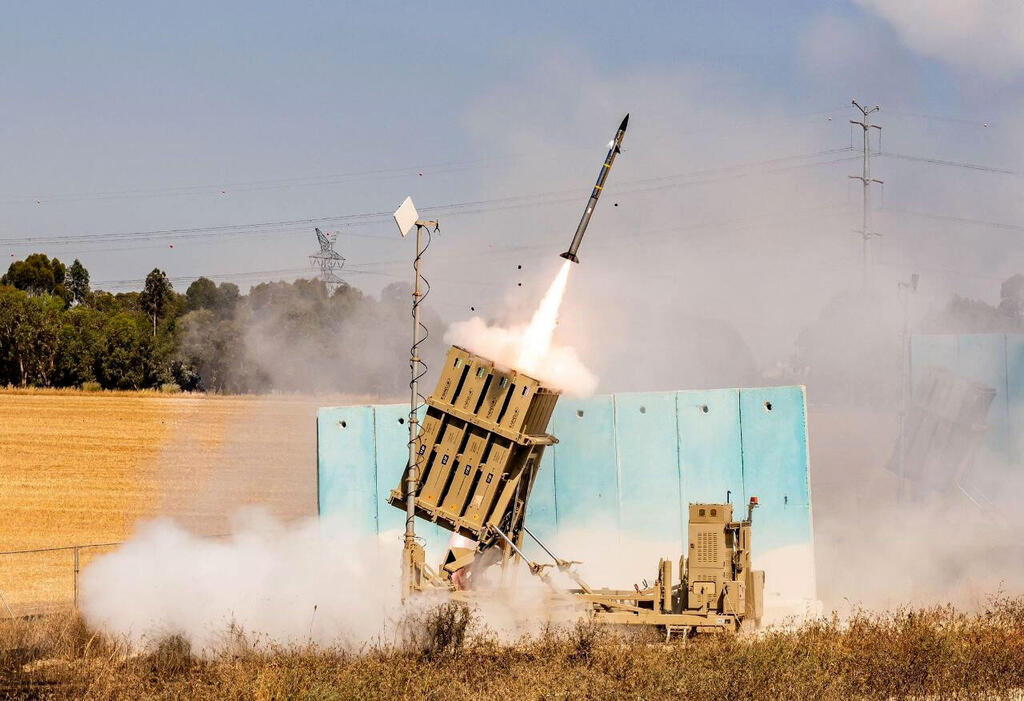
In fact, it will not begin the day after the war, it has already started. According to foreign reports, in recent years Israel Aerospace Industries (IAI) and Rafael, the main Israeli developers and manufacturers of defense systems, have already sold defense technologies to the United Arab Emirates. IAI reportedly sold batteries and interceptor missiles for the Barak MX air defense system, which is designed to intercept UAVs, missiles, rockets and aircraft at ranges of up to 150 kilometers, in a deal estimated at nearly $600 million. Rafael sold the SPYDER air defense system, based on its Python 5 and Derby air-to-air missiles.
The UAE also operates SkyKnight, a defense system developed by the Abu Dhabi-based EDGE Group in cooperation with Germany’s Rheinmetall. Qatar and several other Gulf states operate American-made systems such as Patriot and THAAD. Despite this arsenal, reports already emerged on Monday evening, just two and a half days after the start of the war, of concerns in the United Arab Emirates and Qatar about the rapid depletion of their interceptor missile stockpiles. At the current rate of fire, these inventories could be exhausted.
“It is clear that the Gulf states, which are not accustomed to war, are coping relatively well with the situation thanks to the preparations made in recent years in the field of air defense,” says Lior Segal, CEO of Third Eye System, a company that develops detection and jamming systems for drones and UAVs. “But it is certainly not sufficient against attacks on the scale we saw this week.”
Segal himself was part of these preparations. Just last month he completed a deal to sell 30% of the company’s shares to EDGE for about $10 million.
In fact, if not for October 7, the Gulf states might be better protected today. A senior defense official who served for decades in Israel’s Home Front Command says that already in early 2023 several countries approached him regarding defense projects.
“The Hamas attack on Israel on October 7 and the war that followed led to a decline in these contacts and discussions,” he says. “But I estimate that now, once they have understood the seriousness of the threat and the depth of the gaps, we will return to talks, and more intensely.”
The need for stronger defenses had already been recognized years earlier, when the Houthis began launching missiles toward the UAE. But the events of recent days have dramatically accelerated that realization. “It is going to be a bonanza for all intents and purposes,” the official says.
Not all defense deals were disrupted by the events of October 7. Since the Abraham Accords in 2020 and the normalization of relations with Bahrain, the United Arab Emirates, Morocco and Sudan, Israeli defense exports to these countries have steadily increased. In 2023, about 3% of Israeli defense exports were directed to them; a year later, the figure had climbed to 12%, contributing to a record $14.8 billion in defense sales. Industry estimates suggest that the 2025 figures will show further growth.
These numbers remain somewhat vague, as most defense deals remain confidential. At the end of last year, Elbit Systems reported that over the coming decade it would provide a foreign country with a “strategic solution” worth approximately $2.3 billion. Calcalist later revealed that the deal involved a futuristic air defense system whose details Israel has carefully avoided disclosing.
Following that report, the French intelligence website Intelligence Online claimed that the customer, whose identity Elbit and the Israeli defense establishment had tried to conceal, was in fact the United Arab Emirates.
Lior Segal believes that the secrecy surrounding such deals may also ease after the war.
“Until now, these countries maintained limited commercial cooperation with Israel and kept a low profile so as not to provoke Iran too much,” he says. “But now that the theoretical threat has materialized, demand will skyrocket.”
“In the new reality emerging after the war, these countries may realize they no longer have much to hide, they are already targets,” he adds. “With security backing from the United States, the environment for cooperation could become far more favorable.”
Such a shift could reduce the need for complex and secretive transactions conducted through foreign intermediaries. “It is always better to do business openly and efficiently, with less sensitivity and bureaucracy,” Segal says. “Perhaps the regional changes will make that possible.”
Some observers point to another way in which the attacks on the Gulf states may indirectly benefit Israel.
“The hundreds of missiles and UAVs Iran is launching at these countries are weapons that it is not launching at Israel,” the former defense official says. “Its arsenal is now divided across multiple targets throughout the Middle East.”
As a result, he says, the salvos aimed at Israel have been smaller than in previous confrontations with Iran. This reduces pressure on Israel’s air-defense systems and increases interception success rates.
In the Gulf itself, however, residents are still adjusting to the new reality.
An Israeli who has lived in Abu Dhabi for six years on a public mission says the first explosions on Saturday shattered the calm routine he had grown used to.
“I immediately switched to the alert mindset we know from Israel,” he says. “But then I realized there was no protected space nearby.”
He ran down to the parking level of his apartment building for shelter.
“What did the non-Israelis do? People didn’t really know what to do,” he says. “But there wasn’t widespread panic either. What is routine and familiar for Israelis is very new for them.”
He also believes the situation presents an opportunity.
“We will need to share with them the knowledge, experience and capabilities we have,” he says. “After the war, delegations of companies and organizations will likely arrive to help with emergency preparedness, construction standards, and the protection of hospitals and critical infrastructure.”
Still, he cautions against appearing opportunistic.
“Rushing to offer deals while missiles are still flying could look greedy,” he says. “In the Gulf, people know how to recognize those who are simply chasing money.”
Another expert familiar with the region agrees.
“There are those who believe they can demand inflated prices because Gulf countries supposedly don’t understand market rates,” he says. “Anyone hoping to get rich quickly from these countries’ hardships should think twice.
“The business leaders in the Gulf are sophisticated and experienced,” he adds. “They will listen to good offers, but they will also compare them with alternatives from around the world.”



