










Wix confirms 20% layoffs as CEO warns of AI era reset
Avishai Abrahami says restructuring is driven by AI disruption, currency pressure, and the need to “compete or risk falling behind.”
“We are reducing the Wix team size by roughly 20%,” Wix founder and CEO Avishai Abrahami told employees in a letter sent on Thursday, marking the company’s most sweeping restructuring to date and confirming earlier reports this week of mass layoffs.
“It is one of the hardest decisions I have had to make,” Abrahami wrote. “It is a very hard decision because I will be saying goodbye to many people who have worked with me for years, many whom I call friends, people I trust and respect, friends who poured their energy and talent into Wix.”
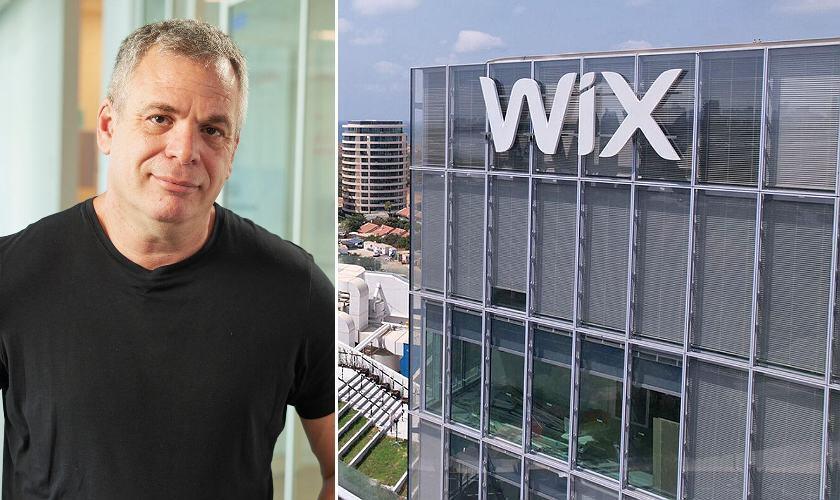
The layoffs, affecting roughly 1,000 employees, come as Wix confronts a rare convergence of pressures: a sharp deterioration in its stock price, intensifying investor skepticism over the future of software companies in the AI era, and macroeconomic strain linked to the strengthening of the shekel.
Abrahami said the decision reflects “a company-wide change, a decision that will impact the entire organization, driven by how we need to operate going forward.”
The first pressure point, he wrote, is currency-related. “The Shekel/Dollar rates… have shifted significantly as the Israeli Shekel strengthens against the US Dollar almost every day,” he said. “As the majority of our teams are Israel-based, a very meaningful portion of our costs are shekel-denominated, while our revenue is largely dollar-denominated.”
The second, and more structural force, is artificial intelligence.
“We have witnessed the most significant shift in how companies are built since the invention of modern programming languages in the 1970s,” Abrahami wrote. “This is not just about adopting new tools - it is about rewiring how companies are built, how they think, how they manage and how they operate.”
Wix, he added, is already reorganizing around that shift, including new roles such as Xengineer and Creators designed for “AI-native ways of working.” The company is also moving toward a flatter structure with fewer management layers.
“We are moving to a structure with fewer levels between any member of our leadership and the most junior person on the team,” he said. “Fewer layers means faster decisions, clearer ownership… but it also means a smaller number of people.”
In a line that captures the strategic urgency behind the cuts, Abrahami wrote: “It is clear to us that in this new era, companies need to make this change in order to lead and compete or risk falling behind. We are choosing to compete.”
He described the layoffs as painful but necessary: “It is a painful change, a change that touches the lives of many, but I truly believe we have no other choice - we must evolve.”
Employees who are leaving will be contacted individually, he said, and will receive “personally curated separation packages.” He also urged remaining staff to treat departing colleagues with respect: “How we say goodbye says as much about who we are, as anything we've ever built together.”
Beyond internal restructuring, Abrahami framed the decision within Wix’s broader responsibilities to users and investors.
“Before anything else, our commitment is to our users,” he wrote. “We work for our users. Millions of people run their businesses on Wix.”
He added that shareholders, “behind every Wix shareholder is a real person whose savings, pension, or investment is tied to how we perform,” are also part of the equation. “If we do not make this change, we will be failing our responsibility to our users, our shareholders, and our employees.”
The restructuring follows a week of reporting that Wix is preparing one of the largest layoffs in its history, amid weakening financial performance and a near 50% decline in its stock price since the start of the year. The company, once valued at around $20 billion, is now worth roughly $2 billion.
The broader context is a sector-wide reckoning. Software companies globally are under pressure from AI tools that allow non-specialists to build applications and websites at speed, raising questions about long-term demand for traditional SaaS models.
In Wix’s case, investors have grown increasingly concerned that its core business, website creation and e-commerce tools, could be partially replicated by AI systems.
At the same time, the company has attempted to reposition itself within the AI shift, including through the acquisition of Base44 and the development of AI-native development roles. However, the financial strain of that transition has been significant, with increased investment in marketing, infrastructure, and AI systems.
Despite a $1.6 billion share buyback intended to signal confidence, Wix’s stock has continued to decline, reinforcing investor skepticism about whether capital returns alone can offset structural disruption in the software industry.



