








LeumiTech CEO: "This year we reached a record number of serial Israeli entrepreneurs"
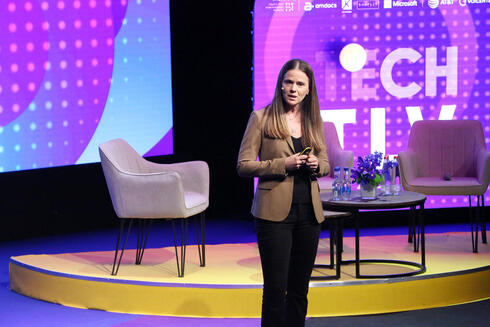
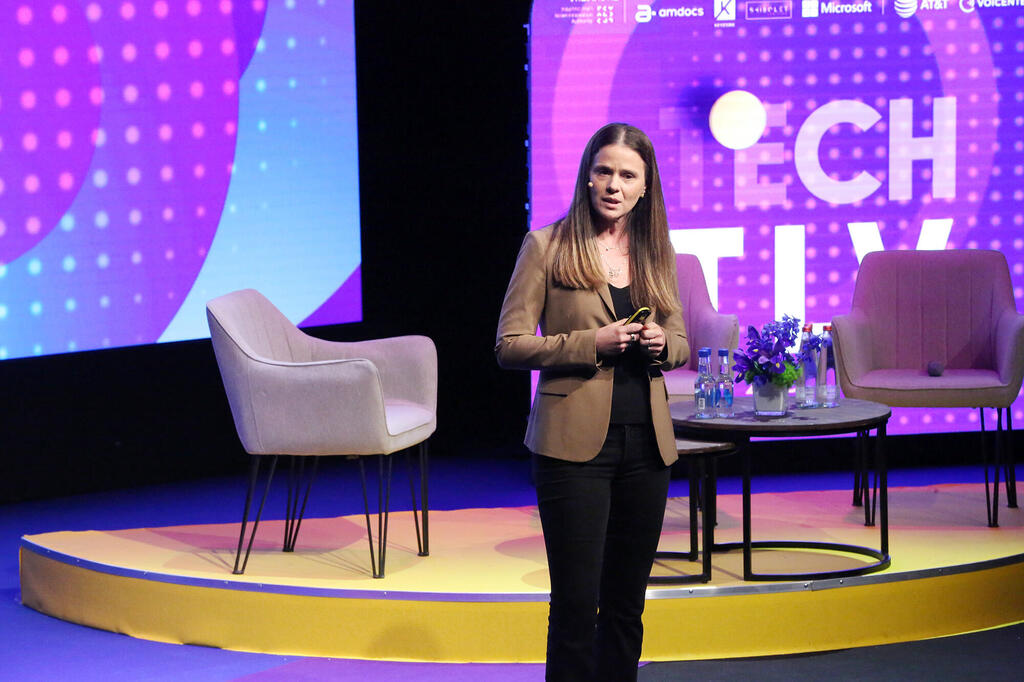
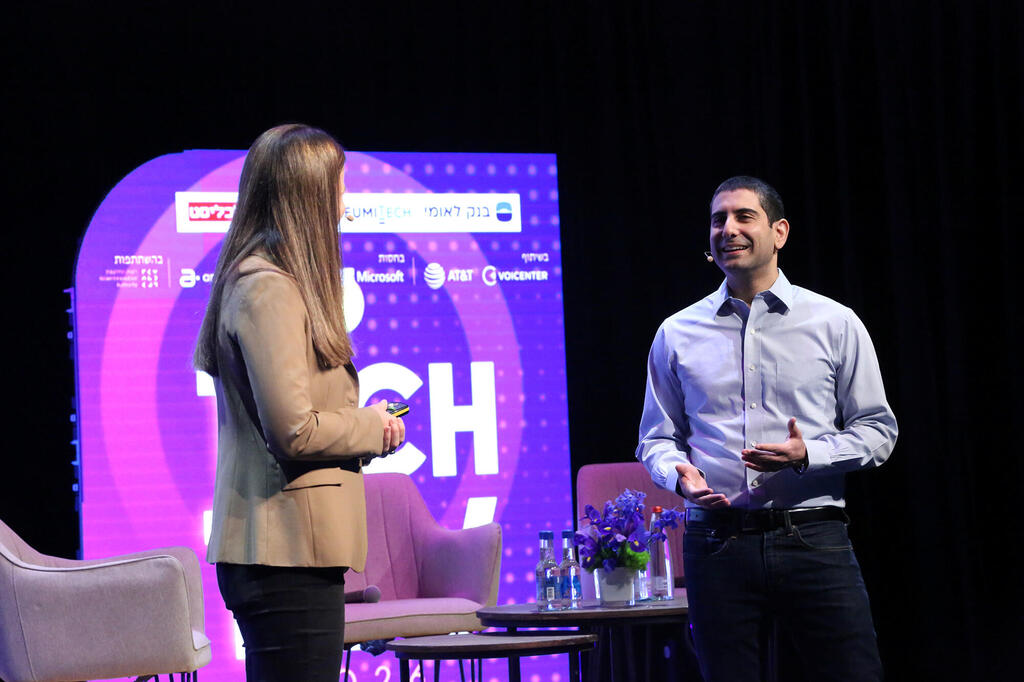
Maya Eisen-Zafrir was speaking at Calcalist's Tech TLV conference in collaboration with Bank Leumi. Ofer Ben-Noon, one of the prominent serial entrepreneurs, CTO, SASE, at Palo Alto Networks added: "Our high-tech connects to experience, deep capabilities, and talent. It will drive our ecosystem forward and push to a larger scale."
“There is no doubt that the last few years have been a crazy roller coaster. The number of challenges and threats we have encountered has been extraordinary. We usually talk about external factors such as the aftermath of the 2021 bubble burst, the impact of interest rates, currency fluctuations, and, of course, the war,” said Maya Eisen-Zafrir, CEO of LeumiTech, at Calcalist’s TechTLV conference in collaboration with Bank Leumi. “At LeumiTech, we are privileged to gain a very broad picture of the ecosystem through meetings with entrepreneurs and investors, and we see how it is maturing. It is true that there are also structural challenges, mainly around the identity of the Israeli entrepreneur, yet alongside these there are processes that are strengthening high-tech from within.”
According to Eisen-Zafrir, one group playing a crucial and growing role in the development of the Israeli ecosystem is the “second-time” entrepreneurs, some of whom also become investors. “This new generation, which we call ‘investing entrepreneurs,’ strengthens the ecosystem through the way it works with entrepreneurs and venture capital funds. It adds a layer of experience, constant learning, and a drive to reach greater scale than ever before. This is how our ecosystem builds larger Israeli companies and aspires to go bigger and farther.”
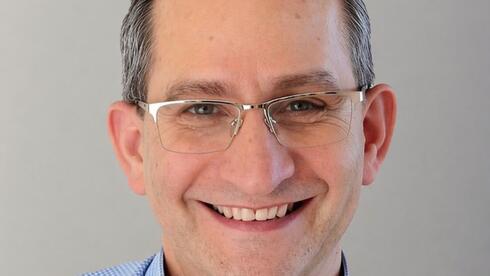
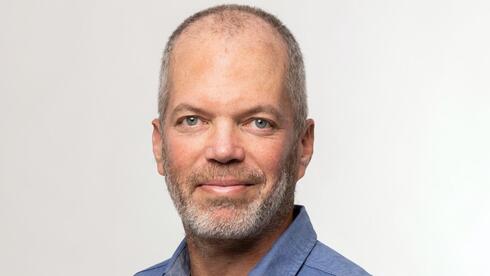
One of the most prominent entrepreneurs of recent years, who is also an entrepreneur-investor, is Ofer Ben-Noon, CTO, SASE at Palo Alto Networks. Ben-Noon co-founded Argus Cyber Security in 2017, which was acquired by Continental for approximately $450 million. He later founded Talon Cyber Security, which was acquired by Palo Alto Networks in 2023 for $650 million. Today he holds a senior position at Palo Alto while simultaneously acting as an investor, mentor, and partner to young cybersecurity companies.
Eisen-Zafrir noted that 2025 saw a record number of serial entrepreneurs, 35% of all founders, and asked Ben-Noon: “What makes entrepreneurs succeed in returning and starting from scratch?”
“I think this is perhaps the only thing we know how to do,” Ben-Noon replied. “In the end, you start a company not out of financial ambition but out of a desire to do something significant. There is the element of impact and the legacy we will leave in the world. What drives me every day is the question of whether what I have built is meaningful, and when I consider starting something new, it comes from asking how I can create the greatest impact and generate even more jobs here in Israel.”
Eisen-Zafrir added that 55% of angel investors in the United States have an entrepreneurial background. “The industry is maturing, and knowledge does not remain only with those who have already succeeded. Fortunately, a significant portion of capital and experience is returning to the early stages. These investors arrive differently, with real added value, wisdom, and values.” She asked Ben-Noon to describe the role he plays as an investor and mentor in his work with entrepreneurs and on company boards.
“One of the things I probably did best at Argus was to draw on the knowledge of experienced people,” Ben-Noon said. “One of the closest to me was Zohar Zisapel, who founded and built so many companies. My role as CEO was to understand when to ask questions rather than improvise. Looking back at Argus’s journey, I had the intuition to turn to a wise mentor who could warn me before I made mistakes. If I can help first-time entrepreneurs make fewer mistakes, that is the least I want to do. One of the things I am most proud of is the number of entrepreneurs I help, and the fact that more than 25 founders today previously worked with me in my companies.”
To conclude, Eisen-Zafrir turned to the subject of cybersecurity. “In 2025 we saw exit volume of nearly $18 billion, of which 45% came from the cyber sector. This is the main field where the phenomenon of serial entrepreneurs and investors is taking place. On the other hand, there is criticism that we may be relying too heavily on cyber,” she said, asking Ben-Noon for his perspective.
“If you look at the history of the ecosystem, there have been many waves: the networking wave, the storage wave, and then fintech. Right now, cyber is a magnet. For example, following the acquisition of CyberArk, Palo Alto Networks will become the largest cyber R&D center in Israel. There is a significant pull for talent here. The presence of Check Point and many other companies, and the potential of firms like Wiz and Google, create a concentration of talent and companies. Funds and customers want to come to Israel because they believe this is where the greatest innovation is happening. It is a wheel that feeds itself. I don’t think cyber will be the only field, but there will be a mix, some entrepreneurs will ride this wave, while others will identify the next one.”
“We see how our high-tech sector, combined with experience, deep capabilities, and the talent created here, will drive the ecosystem forward and push it to a larger scale. Returning entrepreneurs play a significant role in this,” Eisen-Zafrir concluded.



