










XTEND loses two-thirds of its value as shares hit new low despite $40.5 million U.S. drone order
The Israeli drone maker’s market capitalization fell to $495 million this week, down from roughly $1.5 billion when it began trading in New York in September.
A $40.5 million order from the U.S. military has done little to halt the slide in Israeli drone maker XTEND’s shares. A week after announcing a contract for 6,000 STRIKER systems, the company’s stock has fallen around 12% over five trading days, pushing its market capitalization to a new low of approximately $495 million.
XTEND has now lost roughly two-thirds of its market value since entering the New York Stock Exchange in September at a valuation of approximately $1.5 billion following its merger with JFB Construction Holdings. Its market capitalization fell below $500 million for the first time this week, underscoring the sharp reversal in investor sentiment toward a company whose public debut was fueled by interest in autonomous systems and defense technology.
The $40.5 million order followed XTEND’s selection as a top performer in Gauntlet II, part of the U.S. Department of War’s $1 billion Drone Dominance Program. The evaluation focused on close-quarters battle, and the company will advance directly to the next stage, Gauntlet III, in that category.
The company’s market performance suggests that securing a contract has not been enough to reassure investors. The order is meaningful relative to XTEND’s current valuation, but it does not by itself resolve questions about how quickly the company can convert demand into revenue, manufacture systems at scale and narrow its losses.
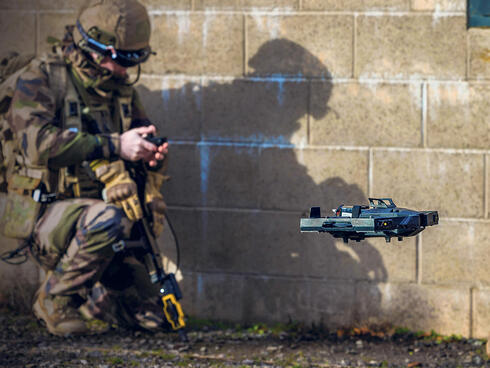
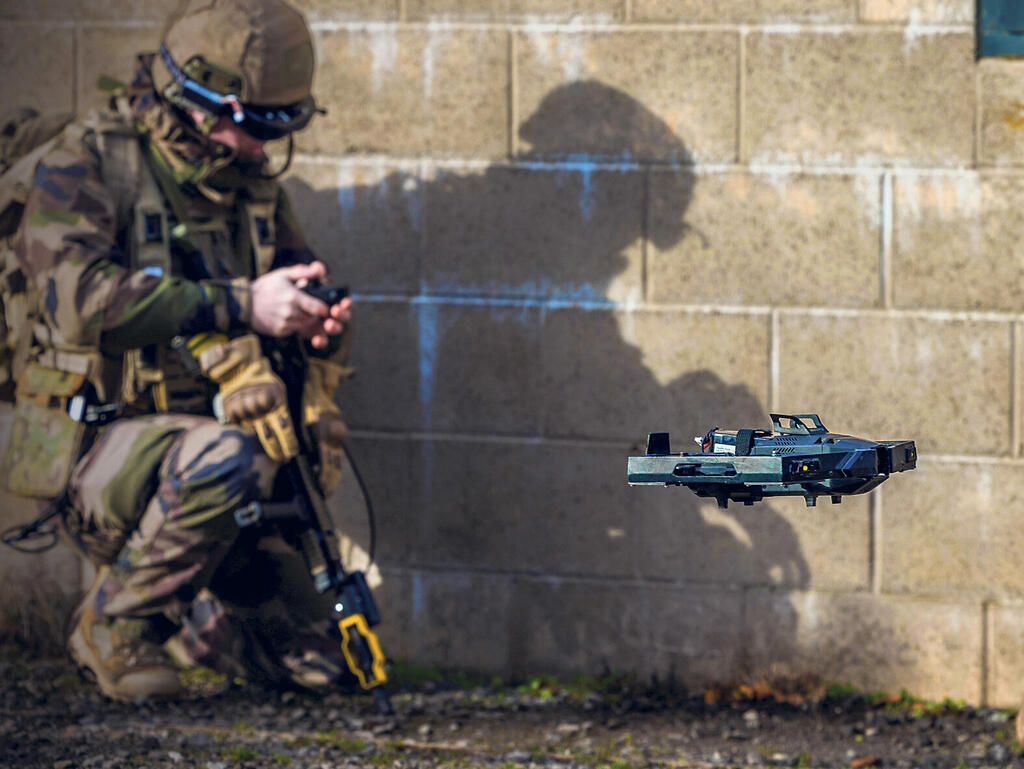
STRIKER is designed for tactical operations in confined and complex environments, including locations where satellite navigation signals are unavailable or disrupted. It runs on XTEND’s proprietary XOS operating system, which supports the control of robotic systems in demanding environments.
Further business under the Drone Dominance Program is not guaranteed. Under the program’s rules, Gauntlet II awardees must first fulfill a 400-system production order before proceeding to Gauntlet III. Performance in the next round will determine whether additional orders are placed. XTEND’s participation is also separate from a Phase III award under U.S. Special Operations Command’s Modular Kinetic Lethal Drone program, announced on September 23.
Related articles:
The order adds to XTEND’s growing defense business, which has included contracts with U.S. and European military customers. But the company’s financial results remain small relative to the expectations attached to its public-market debut.
XTEND generated approximately $20 million in revenue in 2025, up 20% from the previous year, while its net loss widened to $27 million from $17 million. In the first quarter of 2026, revenue rose 234% year over year to $5.8 million, but its net loss more than doubled to $11.5 million.
The company’s merger prospectus projected revenue of $85.6 million in 2026, $150 million in 2027 and $381 million in 2028, with profitability expected in 2027. Those projections set a high bar for a company that is still working to scale its operations. The extent to which it can deliver against those targets will depend on production, delivery schedules, customer demand and the economics of its contracts.
Founded in 2018, XTEND initially developed technology for operating drones and robots through an interface designed to make complex machines easier to control. It subsequently shifted toward defense applications as demand for autonomous systems grew.



