










"If your pitch doesn't work when you take the word AI out of it, your product isn't good"
At Calcalist and Google’s AI Week, Notch co-founder and CEO Rafael Broshi argued that the strongest AI startups will build their moats around regulation, domain expertise, and solving the “last-mile” challenges of enterprise adoption. Alta co-founder and CEO Stav Levi Neumark said: “This is both the best and the worst time to start a startup.”
"If your pitch doesn't work when you take the word AI out of it, your product isn't good," said Rafael Broshi, co-founder and CEO of Notch, during a panel on building AI-native companies held as part of Calcalist and Google's AI Week.
The panel was moderated by Elihay Vidal of CTech and also featured Stav Levi Neumark, co-founder and CEO of Alta, and Seffi Tsarfati, Head of Strategic Partnerships, VC and Startups at Google Israel.
Stav, what does the process of building an AI-native startup look like today?
Levi Neumark: "We started shortly after ChatGPT-3 was released, and then new models and agents began to emerge. The question was how to leverage as much as possible the capabilities AI can provide across different departments, and also what a product should look like in this new era."
According to her, Alta builds agents for go-to-market teams. "It's a platform that helps go-to-market organizations by combining a company's knowledge base with agents that support every team, from BDRs and salespeople to account managers."
1 View gallery
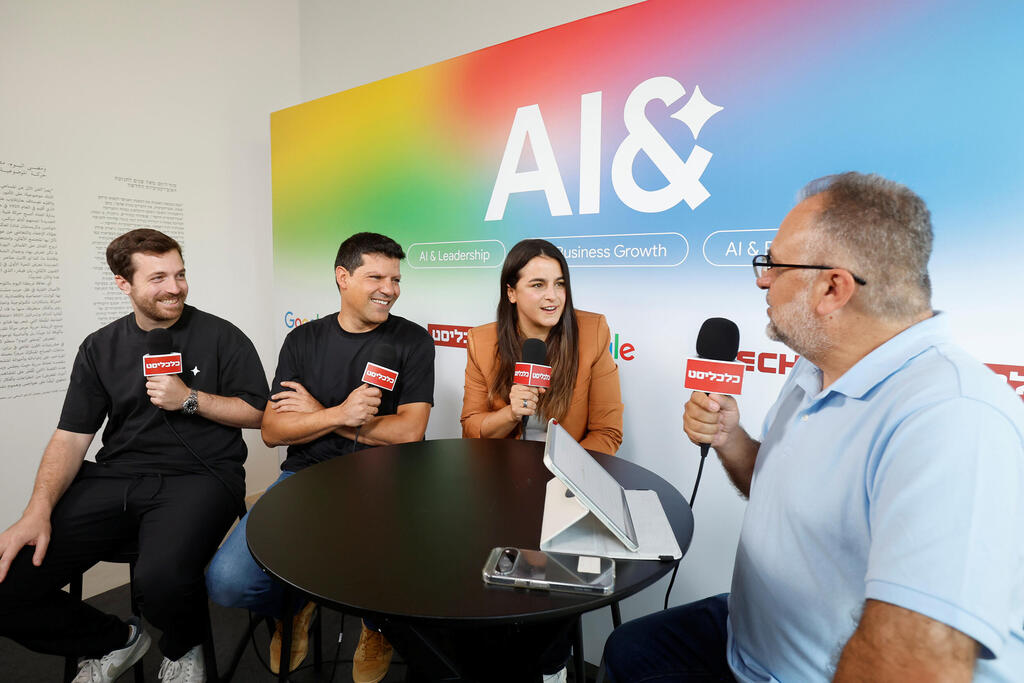
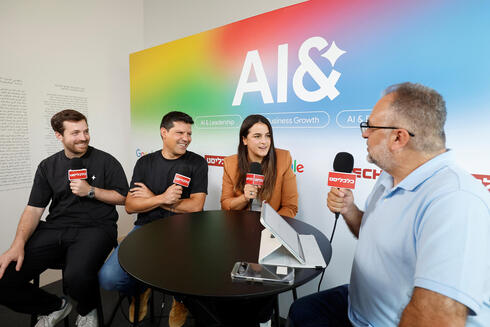
AI Week panel (from left) Seffi Tsarfati, Rafael Broshi, Stav Levi Neumark with Elihay Vidal.
(Photo: Nimrod Glickman)
Broshi: "Notch is a platform for building agents for operations and customer service. We focus on highly complex processes where the cost of error is significant. Many companies operate in these areas, but we specialize in organizations working under strict regulatory requirements, primarily financial institutions and telecommunications companies."
According to him, the company initially operated in the insurance sector. "We built an insurance product that had nothing to do with AI, and through that we learned what it's like to operate in a highly regulated environment. When ChatGPT-3.5 was released in November 2022, we built an internal product to help us handle customer service for policyholders in the United States. After a few months, we saw the opportunity, shut down the insurance product, turned the internal tool into a product, and started selling it to companies."
You both talk about agents. Where do you draw the line between what an AI agent should do and when it should hand off work to a human?
Levi Neumark: "It depends on the type of company, and on how comfortable and confident that company feels about transferring processes from humans to agents. Ultimately, it's a question of where the potential return outweighs the risk."
Part of Alta's work, she says, involves helping companies identify the right use cases. "We help organizations understand which use cases are safer and which can generate the greatest value if moved to AI. Customers today are much more willing to experiment and understand how and where to leverage AI. Companies that come with that mindset are already seeing immediate performance improvements."
Seffi, how do you fit into this ecosystem?
Tsarfati: "At Google for Startups, we see and support many startups, including companies like Alta and Notch. What we're seeing is a growing process of trust in AI models and solutions."
According to him, the market understands that falling behind is not an option. "There's enormous demand because the buzz around AI is unprecedented, and companies understand they have to adopt new processes. We help connect startups with large enterprises and support the trust-building process, helping tailor products to enterprise needs so organizations can move forward with greater confidence and adaptability."
Rafael, as someone who built companies before and after the AI era began, do you see a difference in a startup's ability to build a moat today compared to three years ago?
Broshi: "The places where you can build a moat in the AI era are either highly regulated industries, like the insurance market where we started, or areas where proprietary knowledge accumulates over time, such as the go-to-market world or our work with specific customers."
According to him, the primary challenge is "the last-mile problem."
"How do you connect today's incredible technology to a company's business processes and organizational structure? How do you influence operations inside a company with tens of thousands of employees? In my opinion, that's the main challenge. Everything is changing. The pace of progress is extraordinary, and capabilities evolve constantly. If you build a product that is too rigid, you'll quickly fall behind. You need to build the core of the product in a way that can continuously adapt rather than locking yourself into a specific approach."
Seffi, this technology is evolving every month or two. How do you help startups keep up?
Tsarfati: "The name of the game today is specialization. The more a startup focuses on a specific niche, domain, segment, or vertical, the harder it becomes to replace and compete with. Customers recognize expertise. They see that the solution is tailored specifically to their needs, and adoption becomes much faster."
Levi Neumark reinforced Tsarfati's point.
"In our world, it comes down to maintaining a sharp focus on the product we deliver to customers. That focus allows us to develop real specialization. At the end of the day, technology is simply a tool for delivering the outcome the customer wants. Because technology evolves so quickly, you need a product that is flexible enough to absorb those changes and make them accessible to the people working across the go-to-market organization."
In conclusion, what is the most important thing founders can do to build a product that won't become irrelevant a few months after launch?
Levi Neumark: "I think this is both the best and the most challenging time to start a company. The way to think about it isn't which technology you want to leverage, but which problem you want to solve. That's why this is such an exciting moment. If you focus on a real problem, there are now incredible tools available to solve it, and there's also tremendous demand from companies looking to understand how they can leverage these technologies."
Tsarfati: "This is a period of extraordinary opportunity and transformation. There is room for almost everyone. Today, companies can build businesses around niches that once seemed too small to matter. Many of those niches represent enormous market opportunities where startups can establish themselves, develop specialized solutions, and build meaningful companies."
According to him, startups must also stay close to the underlying technology.
"It's critical to remain highly technical and agile in the early stages so you can adapt to new solutions as they emerge. Customers are also building solutions internally, so you need to stay ahead of the curve and continuously deliver the best product available."
Broshi: "Solve a problem that is close to your heart and that you understand deeply. And if your pitch doesn't work when you take the word AI out of it, your product isn't good."



