









Hebrew University turns to oral exams as AI challenges traditional grading
A university committee recommends requiring students to present seminar papers and introducing more oral examinations to verify their understanding. It warns that take-home assignments and unsupervised exams can no longer reliably measure academic performance.
A Hebrew University committee has concluded that take-home assignments and exams can no longer be considered reliable methods of academic assessment in the age of artificial intelligence, given how easily students can use AI tools to complete them. The committee, which includes senior academic and teaching officials, recommends supplementing traditional exams with oral examinations and requiring students to present their seminar papers in person. It also calls for a significant reduction in unsupervised take-home assignments.
Under the recommendations, every lecturer and academic department will be required to reassess its methods of evaluating students. The proposals were adopted earlier this week by the university's Standing Committee, which includes the president, rector and deans.
The committee was appointed by Hebrew University Rector Prof. Oron Shagrir and chaired by Vice-Rector for Academic Affairs Prof. Lilach Sagiv. Its report illustrates how one of Israel's leading universities is grappling with the global challenge of assessing academic performance in the age of AI.
1 View gallery
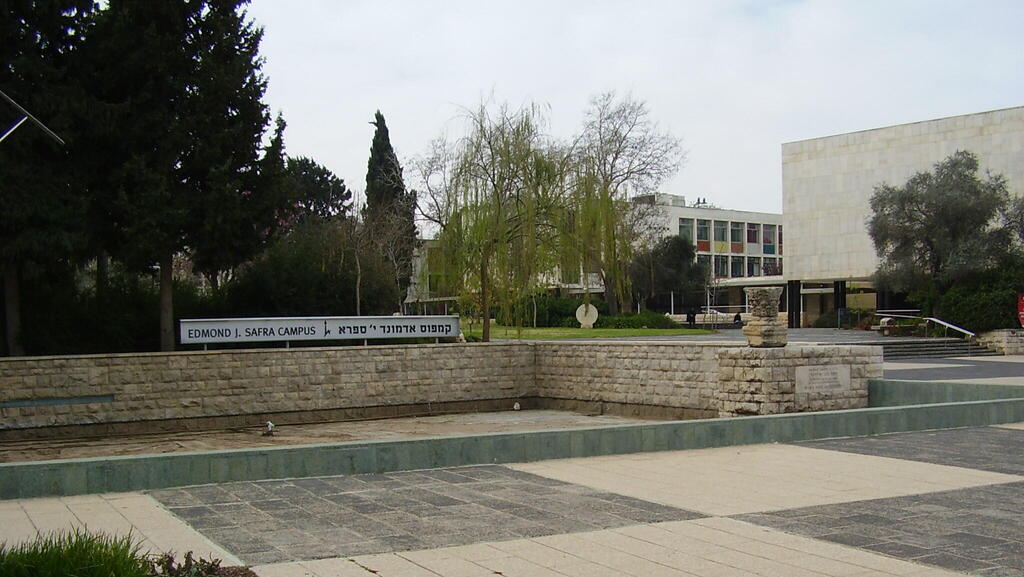
The Hebrew University campus at Givat Ram in Jerusalem
(Dr. Avishai Teicher, Wikimedia)
A survey conducted by the university's Student Union in January found that 87% of students use artificial intelligence frequently. Of those surveyed, 38% said they use it to complete assignments and coursework, while 43% believe AI is being used in ways that violate academic institutions' policies.
"There is broad consensus within the academic system regarding the difficulties of conducting valid assessments in the age of artificial intelligence," the committee wrote. "Committee members agreed that unsupervised assessments, such as reading assignments, take-home exams and homework, are susceptible to the use of artificial intelligence, which renders the assessment invalid."
The report warns that the response to this challenge has often been a return to traditional, supervised exams, but that this approach comes at an academic cost. "This choice carries an academic cost, as exams limit the ability to evaluate the important skills that academic courses aim to impart," the committee said. It therefore calls for a shift toward supervised assessment, while emphasizing that this does not necessarily mean returning to conventional examinations.
The committee also stresses the need to distinguish between using AI to improve the thinking process and the quality of one's work, and submitting work written entirely by AI, which it considers tantamount to plagiarism.
Among the alternatives proposed is requiring students to present their assignments in class. Such presentations, the committee argues, "could significantly limit students' ability to delegate the entire writing process to AI," particularly when followed by a question-and-answer session. It also suggests inviting panels of experts to attend presentations and establishing clear criteria for evaluating students' work.
Rather than limiting presentations to completed seminar papers, the committee recommends that students also present their research and progress throughout the course.
Oral examinations are another central recommendation. "Oral examinations were rarely used as an assessment method at the university until recently. In the age of AI, however, the oral exam emerges as a controlled and effective assessment tool," the committee wrote.
It cautioned, however, that oral examinations have significant limitations. The difficulty of creating standardized tests could undermine the fairness and validity of the assessment. The committee also warned that students whose mother tongue is not Hebrew, those with speech difficulties and even particularly shy students could be disadvantaged by this format.
Other suggestions include holding more tests and exercises in class and assigning grades for classroom participation.
Implementing these changes will require academic departments to rethink not only how they assess students but also how they prepare lecturers to use alternative methods. The committee says universities must provide instructors with the knowledge, skills and practical ideas needed to develop appropriate assessments. While some lecturers have already acquired these capabilities independently, others will need institutional support.
Each academic unit is therefore being asked to review its entire curriculum and ensure that its assessment methods reflect the realities of the AI era while supporting meaningful learning. Lecturers, in turn, will be expected to reconsider the evaluation methods used in their courses and significantly reduce reliance on formats that can no longer reliably measure students' abilities.
Shagrir said the rapid development of AI requires universities to reconsider how they evaluate learning, knowledge and skills.
"The challenge is to ensure that academic assessment reflects the true abilities of students, while at the same time preparing them for a world in which the ability to use artificial intelligence is an essential skill," he said.
Shagrir added that universities cannot simply abandon written assignments, research projects and complex tasks. Instead, he said, assessment methods must adapt to the new reality by incorporating more supervised work in the classroom, presentations, discussions and individual assignments that test students' understanding, independent thinking and ability to apply knowledge. At the same time, universities must equip students with the tools to work effectively with the new technology.
Last week, Shagrir circulated a set of guidelines on the use of artificial intelligence to university employees. Among other things, the document states that "artificial intelligence tools do not replace professional judgment." It adds that users remain responsible for the output generated by AI tools and must verify its reliability, including checking facts, sources, code and results before submitting or publishing their work.



