










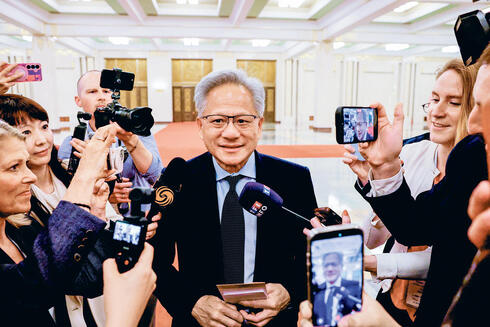
The Jensen Huang crisis is a black swan for the AI industry
Nvidia's CEO has become so central to the company's identity and the AI investment boom that his potential removal could trigger consequences far beyond its headquarters. The board must weigh corporate governance concerns against the risks of destabilizing an industry built around Nvidia's chips and capital.
Although it is clearly in the best interests of almost all stakeholders, with the exception of China, for Jensen Huang to remain CEO of Nvidia, it is difficult to see how that outcome can be guaranteed. In today's corporate America, a CEO might conceivably survive a romantic relationship with someone suspected of espionage. But when that relationship involves an employee who reports directly to the CEO, corporate conduct policies leave far less room for maneuver. That applies even to a figure of Huang's stature, often described as the "god" of artificial intelligence, and even with a board of directors that is favorably disposed toward him, including members who have been by his side since Nvidia's founding in 1993.
Yet corporate America has never faced a situation quite like this. When Steve Jobs became ill and eventually stepped down as Apple's CEO, the drama was immense. But his departure did not pose a systemic risk to a technological revolution, the companies driving it or, by extension, the stock market as a whole. Jobs was a visionary, but he was not as central to Apple's day-to-day management as Huang is to Nvidia. Nor did Apple directly finance such a large part of the smartphone industry's supply chain, or account for such a substantial share of the stock market's gains during that period. Indeed, the global financial crisis of 2008 sent Wall Street into a tailspin just as the iPhone was beginning to take off. A less remembered, but arguably more relevant, precedent for Nvidia is the departure of Intel CEO Brian Krzanich in 2018 following the disclosure of a relationship with an employee. In hindsight, some view the episode as a turning point in the decline of a company that had once dominated the semiconductor industry.
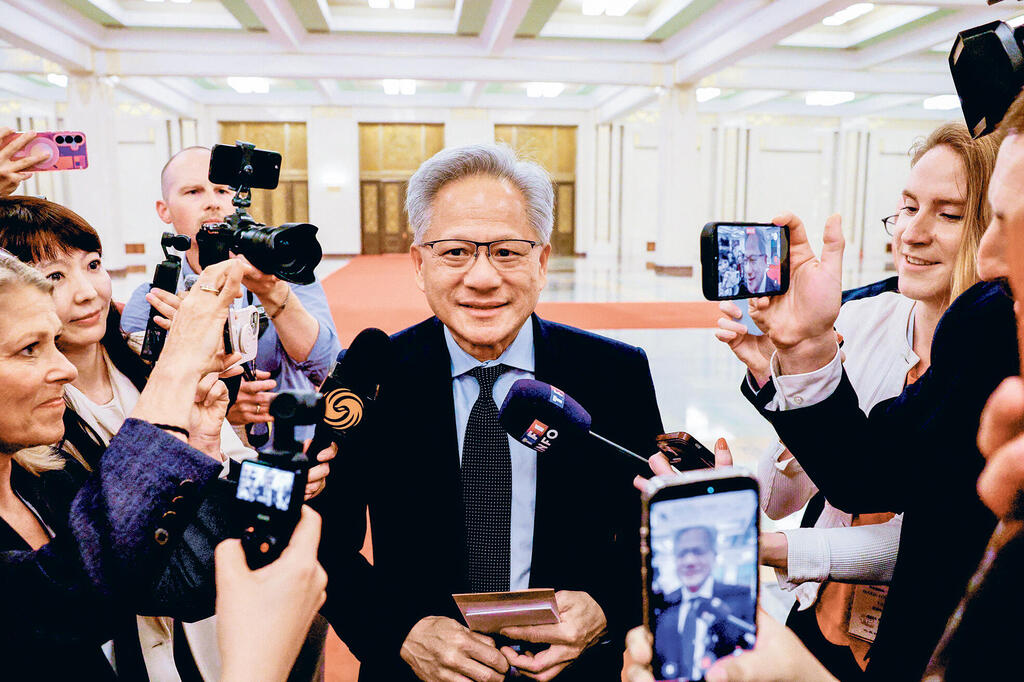
Nvidia has all the ingredients for Huang's departure to trigger a potential "black swan" event, one that could deflate the AI stock bubble and even slow the technological revolution itself. Until now, the risks facing the industry, from mounting debt among data center companies to the seemingly excessive valuation multiples commanded by chip stocks, have largely been visible and open to analysis. The situation surrounding Huang is different: an unexpected leadership crisis that could fundamentally change the landscape.
Nvidia, which accounts for 7.3% of the S&P 500 and 8.4% of the Nasdaq 100, sits at the heart of the artificial intelligence industry's financing ecosystem. Much has already been written about the fragility of this arrangement, given that many companies depend on Nvidia both to supply their chips and, increasingly, to provide them with capital. Nvidia has invested $30 billion in OpenAI and pledged an additional $100 billion; committed $10 billion to Anthropic; invested $5 billion in Intel; and put $2 billion into each of the AI-focused cloud providers Nebius and CoreWeave, alongside a further $6 billion commitment to CoreWeave. This is only a partial list.
The immediate concern is what else might emerge about Nvidia's internal dealings, and how further revelations could affect the wider AI industry. The speed with which the board has reportedly convened to discuss Huang's possible removal has added to speculation that the disclosures so far may be only the beginning. That does not, in itself, provide evidence of further misconduct. But the uncertainty is weighing heavily on the company and the market.
Just a week ago, it would have been difficult to imagine reports that the world's most prominent CEO had been involved in a relationship with a senior executive at a Singaporean firm suspected of serving as a front for procuring chips for China. The woman has also been alleged to have links to Chinese intelligence. According to reports, the firm purchased $7.5 billion worth of graphics processors and appeared to receive priority access to supply at a time when customers elsewhere were struggling with shortages. The disclosures have been compounded by a separate report alleging a relationship between Huang and an Nvidia vice president. Together, the reports raise a question that the market had not previously been asking: are there other issues inside Nvidia that investors have yet to consider?
For Nvidia's board, the continuing revelations threaten to deepen the crisis. A further question looms in the background: why has this story surfaced now, and who might benefit from bringing down Huang, potentially damaging Nvidia in the process? The two relationships reported this week are not alleged to be new. According to the accounts, they had been going on for some time. Why, then, have they come to light only now?
One theory is that China could benefit from the turmoil. The battle over artificial intelligence has become a central front in the broader strategic rivalry between the United States and China, with semiconductor chips at its core. Despite progress by domestic chipmakers such as Huawei, China is still trying to close the gap with the West. Weakening Nvidia, and the leader so closely identified with it, could potentially serve Beijing's interests. But the information made public so far provides no basis for concluding that China is behind the revelations or that they are part of a calculated effort to undermine the American AI industry from within.
The timing is particularly sensitive. The reports have emerged in the wake of the dramatic U.S. midterm elections and just ahead of Anthropic's expected IPO next week, reportedly at a valuation of $1.4 trillion. Conspiracy theories have also circulated online suggesting that Dario Amodei, Anthropic's founder and CEO, could be involved, pointing to his public disagreements with Huang over AI policy and chip exports. No evidence has been presented to support those claims either. Nvidia's own financial results, due next week, leave the board and Huang facing a tight deadline. Can the CEO appear before investors, and effectively the entire world, while these questions hang over him?
It is difficult to envy Nvidia's board members right now. Had the allegations been limited to Huang's reported relationship with the woman suspected of having ties to Chinese intelligence, the directors might have found a way to keep him in his position while an investigation was completed. But reports of a relationship with an employee under his supervision make that option considerably harder to defend and increase the pressure for decisive action.
Should Huang's continued tenure as a director be put to a shareholder vote? That is a separate question from whether he should remain CEO, but such a vote could offer an indication of the strength of investor support for him. Nvidia's stock has already fallen 10% over the past week and nearly 30% from its peak. Yet the fear that Huang's removal could deepen the decline and increase volatility across Wall Street might also work in his favor. A U.S. academic study examining 187 CEO ousters at S&P 500 companies found that, in most cases, the companies' stocks underperformed over the long term.
Another option would be to temporarily sideline Huang while the situation is investigated, leaving the door open for a possible return. But it is far from certain that he would be willing to wait. Elon Musk has already indicated that he would welcome Huang at SpaceX, and Silicon Valley venture capital firms would likely compete to offer the former Nvidia CEO billions of dollars to finance his next venture.
The conventional response in corporate America would be to remove Huang, appoint an interim CEO from the senior leadership team, perhaps the CFO, and begin searching for a permanent successor. The question is whether Huang and Nvidia are so far removed from the model of a typical CEO and company that the solution to this crisis must also break with convention.



