










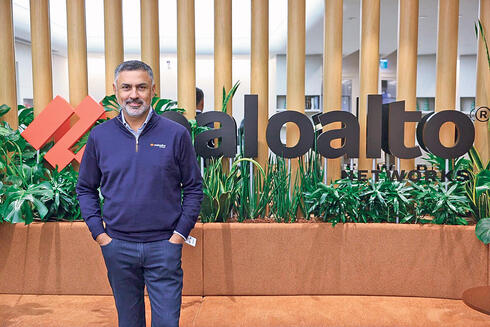
Palo Alto Networks crosses $400 as Nikesh Arora’s $10 million bet keeps paying off
The CEO bought shares when investors feared AI could disrupt cybersecurity. Six months later, the position is worth more than $27 million and the company is valued at $325 billion.
Palo Alto Networks crossed $400 a share for the first time this week, pushing the cybersecurity company’s market capitalization to a record roughly $325 billion and turning a $10 million bet by CEO Nikesh Arora in March into an unrealized gain of more than $17 million.
The stock reached an intraday high of $404.69 on Wednesday before closing at $397.31. The move marks another milestone for a company that has undergone a dramatic transformation since Arora took over as CEO in 2018.
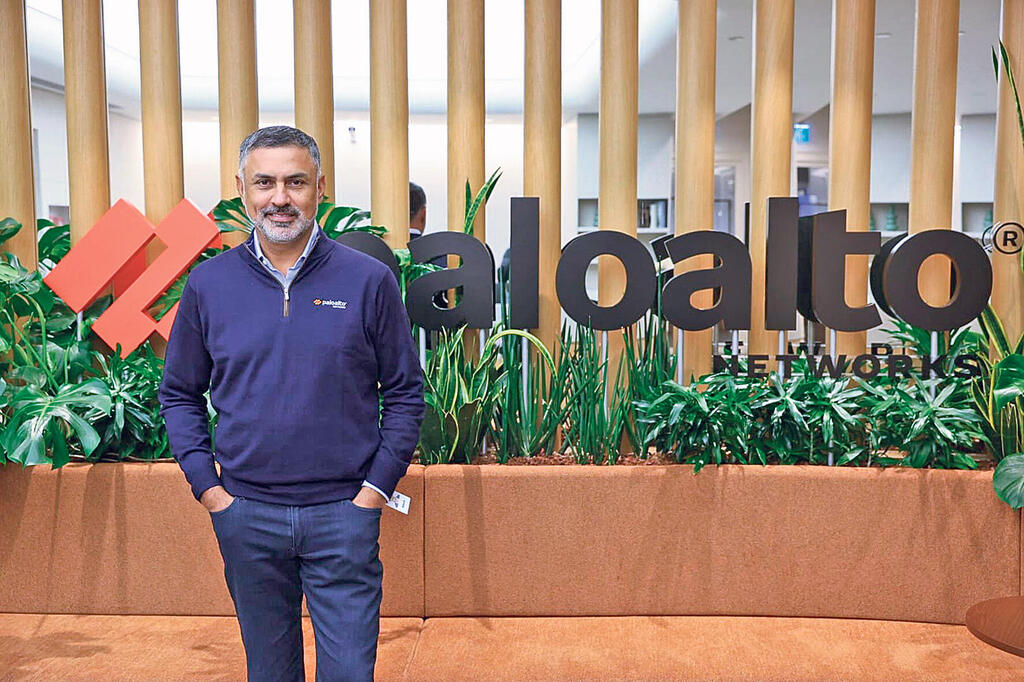
On March 27, when Palo Alto shares had fallen more than 20% since the beginning of the year and investors were questioning whether increasingly capable AI systems could undermine the cybersecurity business, Arora bought 68,085 shares at an average price of about $146.88. It was his first open-market purchase of Palo Alto stock since November 2019.
At Wednesday’s intraday high, those shares were worth approximately $27.55 million, giving Arora an unrealized gain of about $17.55 million on the position. At the closing price of $397.31, the holding was worth about $27.05 million, for an unrealized gain of roughly $17.05 million.
Palo Alto shares have continued climbing even as the questions that prompted Arora to make the purchase have become central to the future of cybersecurity.
The irony is that AI represents both sides of Palo Alto’s current story.
It is creating new risks that could make cybersecurity more difficult than ever. But it is also creating a potentially enormous new market for companies capable of defending businesses against AI-powered attacks and securing the increasingly autonomous systems that companies are deploying.
That tension was at the center of a recent Fortune interview with Arora, who described an internal test that Palo Alto conducted in April using an unreleased version of Anthropic’s Mythos model.
The company turned the model loose on its own infrastructure and asked it to look for vulnerabilities. The results alarmed Arora because of the speed and scale at which the system could identify weaknesses.
Mythos was not perfect. Arora estimated that roughly 30% of the vulnerabilities it identified were not real. But that still meant that about seven out of 10 were genuine.
“If you were a skeptic, you’d say that Mythos doesn’t get it right,” Arora said. “But the problem is getting seven out of 10 right, that’s pretty good for the attacker. It’s not good for the defender.”
That imbalance is becoming the central problem Arora sees in cybersecurity. The average window to find and fix a breach, he said, is three days, while an AI-fueled attack could unfold in 12 minutes.
“AI can keep probing cheaply, relentlessly, hour after hour at machine speed, until it finds a way in,” Arora said. “It’s like bringing a battering ram to your front door, bought from Home Depot.”
The implications extend well beyond conventional corporate networks. Arora pointed to the possibility that seemingly mundane connected devices could become attack surfaces. Even a robotic vacuum, he suggested, could potentially provide access to cameras or microphones inside a home.
The issue is not simply that AI can make existing attacks faster. The more consequential change may be that autonomous systems can increasingly discover vulnerabilities and act on them without waiting for a human operator.
Sam Altman, OpenAI’s CEO and one of the executives who has turned to Arora for advice, described the scale of the challenge in similarly stark terms.
“Just a crazy amount of work has to happen to avoid major cybersecurity problems,” Altman told Fortune. “I think it’s going to be hard to patch every bug on the internet. We need a new model of cybersecurity here.”
That emerging threat also helps explain why Palo Alto’s business has expanded so far beyond the firewall products with which it began.
When Arora joined in 2018, Palo Alto was an $18.51 billion company with $2.27 billion in annual revenue and about 5,300 employees. Its fiscal 2026 revenue reached $11.48 billion. The company joined the Fortune 500 in 2025 and is the only pure-play cybersecurity company on the list.
Its strategy under Arora has centered on turning a fragmented cybersecurity market into something closer to a single platform. Palo Alto has combined internal development with acquisitions and has completed more than 25 deals under Arora, including the $25 billion acquisition of identity-security company CyberArk this year.
The strategy reflects Arora’s belief that cybersecurity customers will increasingly favor a smaller number of companies capable of covering more of their infrastructure.
“If you look at most industries or most categories, No. 1 and No. 2 get a disproportionate share of the profit pool, and No. 3 and 4 don’t,” Arora said. “Do you know a third search engine? Do you know a third social network?”
Palo Alto’s expansion has also made Israel an important part of that strategy. The company has acquired 12 Israeli cybersecurity companies since 2014, exactly half of its 24 significant global acquisitions. Those deals include Cyvera, LightCyber, Secdo, Twistlock, PureSec, Demisto, Bridgecrew, Cider Security, Dig Security, Talon Cyber Security, CyberArk and Koi.



