









“Everything we built was no longer relevant”: Tom Livne on Verbit’s collapse from a $2 billion valuation
What drove the founder of a unicorn out of the company he created? AI, and, according to Tom Livne, above all, the board of directors. In an exclusive, unfiltered interview, the Verbit founder tells his side of one of Israeli tech's most dramatic reversals and explains why he is now teaming up with Eyal Waldman to launch a SPAC.
"I will never forget the date November 30, 2022. I sat up all night, didn't go to sleep, and just said 'fuck, fuck, fuck.' After I got a little bit of control, I started calling each of the board members to tell them that we must now think about a drastic change in the company because everything we had, the business model, the infrastructure we built, and all the people, was simply no longer relevant in the age of AI."
The day OpenAI announced the launch of its first major language model, ChatGPT, was a turning point in the life of Tom Livne, the founder and then CEO of the transcription company Verbit. However, in retrospect, it seems that the launch of the model not only threatened the business model of the company Livne founded, but also drew a thin, almost invisible line that separated two personas: "the prodigy who founded a startup that became a unicorn worth $2 billion," and "the man who founded a unicorn that almost collapsed and then found himself outside of it at the age of 35."
Livne does not care how the events that followed November 30, 2022, are described, as long as the word "failure" is not used in his context. To combat the image he fears has stuck to him, he suggested in a previous interview that "anyone who says I'm a failed high-tech person should look at my bank account," but the matter is not just financial. Livne does not perceive the sharp decline in Verbit's value as a failure, from $2 billion in 2021 to about $300 million today, according to estimates. After all, he came out of the venture with hundreds of millions of shekels, which he intends to turn into billions. According to him, all those who invested in Verbit, with the exception of Dan Loeb and Rob Schwartz's Third Point Ventures fund, which led the last round, also came out profitable.
Moreover, Verbit still exists. Although its revenue shrank from $100 million in 2022 to around $40 million today, and there isn’t much cash left in its coffers, for Livne, those who failed in the story were the directors, not him. He warned, he shouted, he proposed an urgent plan of action, but they were too relaxed, too satisfied, too calm. To this day, he hasn’t talked about everything that happened behind the scenes, from the bubble period of 2021, when money fell on him without him asking, to everything turning upside down, but now he does it almost without stopping, except for short breaks in which he sips Sprite.
“To stop bleeding, you apply a tourniquet.”
The interview before you probably wouldn't have happened either if it weren't for the use of the word "failure." A headline I published in May in Calcalist about Livne and entrepreneur Eyal Waldman raising capital for a new company, a successful event by all accounts, announced that "After the failure at Verbit, Tom Livne raised $172 million," and rewarded the writer of these lines with a shower of unpleasant and unflattering words about the quality of her journalistic work and intelligence. In response, I suggested that Livne open up in an interview to clear the table for the next chapter in his career. When he arrived at the meeting, before we even sat down, he handed me a small gray plastic bracelet with the words "Lashon Hara (evil speech) does not speak to me" stamped on it in red. Apparently, this was his way of apologizing.
Some background: Verbit was founded in November 2016 by Tom Livne, who served as CEO; Dr. Eric Shellef, who served as Chief Technology Officer (CTO); and Kobi Ben Tzvi, who served as VP of Engineering. The company developed an AI-based transcription platform that combined automated algorithms with human transcriptionist oversight. Corrections made by human transcriptionists were fed back into the system and used to train its machine-learning models, so that transcription quality improved over time.
In its early days, Verbit supported English and Spanish, and its services were primarily aimed at organizations in education, media, and law. Because the idea behind the platform was innovative and disrupted the manual transcription market it had entered, investors were enthusiastic, and in 2021 an ambitious plan was developed: to acquire 25 transcription companies within three years and transform them into technology companies with almost no human employees. The ultimate goal was to build a large, profitable company with revenues expected to reach $1 billion a year.
In the end, Verbit only managed to acquire six companies and did not realize its vision. Today, it sells advanced transcription software to the legal market, which, among other things, can detect contradictions in testimony and provide summaries of hearings.
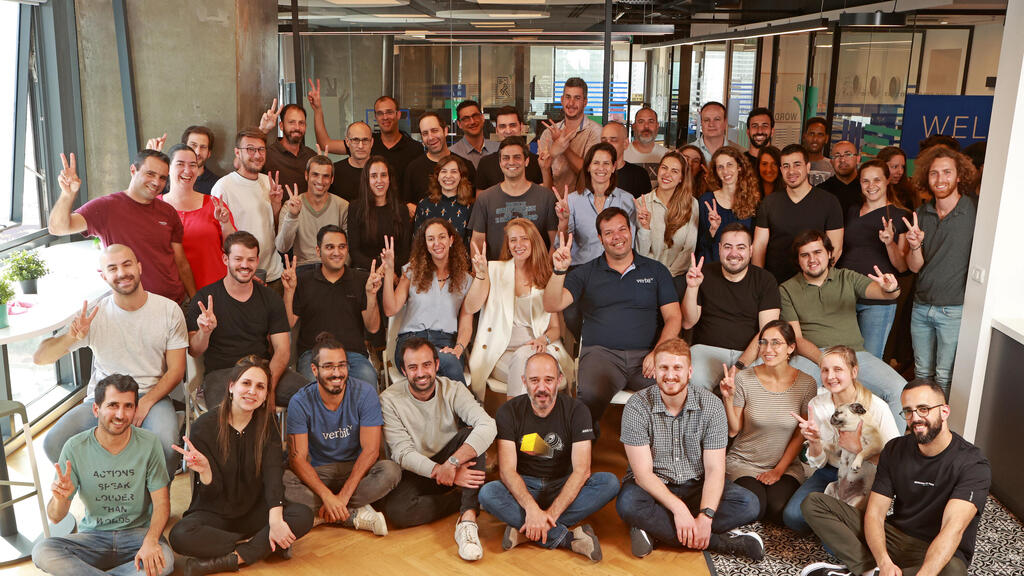
In May 2022, six months before ChatGPT arrived and disrupted its business model, the company employed about 570 employees, approximately 200 of them in Israel. In addition to its permanent workforce, it also operated about 35,000 freelance transcriptionists in 120 countries at the time.
"I understood the magnitude of the change the very night ChatGPT went live, and I said that a profound shift was necessary: to cut 50% of the company's workforce immediately and return to startup mode, in order to look for a new product that would fit the new reality," says Livne. "In the army, I wasn't in Unit 8200; I was a combat medic in a paratrooper patrol, and what I learned there was that to stop bleeding, you first need to apply a tourniquet. The problem was that the directors, every one of them, without exception, told me, 'First of all, calm down. We'll wait until the end of the quarter, see how everything develops, and then we'll make decisions.' In the last quarter of 2022, we were still meeting our goals, and the board told me, 'You see, you don't need to make rash decisions. You're just paranoid.'"
Then it turned out that the paranoid one was right.
"Yes, unfortunately. Within a few weeks I started to feel like the ship was shaking. Customers came to me and asked why they should actually pay for the service we provide when the language model now gives them these capabilities for free. In the first quarter of 2023, we already missed our forecasts by 20%-30%, and yet the board meeting was not brought forward and was held only in May."
When Livne describes the sequence of events as he experienced it, his voice booms as if it all happened yesterday. "Only six months after I said, 'Houston, we have a problem,' we started talking about the problem! And then they said, 'Okay, go make a plan,'" he complains.
Usually the board wants to save money and pushes for layoffs, while CEOs insist on keeping employees at all costs. Why was it different in the case of Verbit?
"They thought that if we got rid of half of the company, it wouldn't survive. They said, 'Let's start with 20% and see,' and when I saw that the board didn't approve my plan to lay off half of the employees in order to reset the company, I realized that I was a castrated CEO."
You say you made hundreds of millions before turning 40, and you still have your whole career ahead of you. And of course you know that most startups fail. Why is that word so hard for you?
"Because how many entrepreneurs do you know who managed to bring a company to an annual revenue run-rate of almost $100 million, raise $600 million, and reach a valuation of $2 billion in five years? I gained a lot of knowledge, built a lot of connections, learned how to raise money and hire employees, how to manage a board, and even how to contact someone like Ben Horowitz on WhatsApp (partner at Andreessen Horowitz, one of the world's largest venture capital firms). Before Verbit, I was just a mediocre lawyer, while today I still receive requests for advice about once a week. I also made some successful personal investments, including in Wiz and ironSource. How can you say I'm a failure?"
And what can be said about Verbit and its future?
"I haven't been there for two and a half years (in February 2024, Livne stepped down as CEO and was replaced by Yair Amsterdam — SS). And what has happened since then? When I left, they had $150 million in cash in the bank and almost $100 million in revenue. Today, $50 million remains in the bank and revenue is barely $40 million. This is a serious destruction of value. The one who failed is the board, whose central role is to hire and fire the CEO, and it failed to find a new CEO."
"My role as CEO was to bring in more money"
Livne's anger toward the company he founded reached a peak around his departure. Although both sides insisted that Livne was not ousted but left of his own accord, the board refused to allow him to be involved in appointing his replacement. According to Livne, the move that excluded him from the process was primarily initiated by Rob Schwartz of TPV, which was the last to invest in Verbit and became the only investor to lose money on it. What Livne saw as an orderly process ended in an explosion, and the anger and frustration have not subsided even three years later.
"2021 was the best year of my life," he says. "My first daughter was born, Maccabi Haifa won the championship, Verbit reached a value of $2 billion, I did a great secondary, and I became a very wealthy person. Then fast forward two years: I was getting divorced, my father got cancer, and society was grappling with AI. The life of an entrepreneur is a crazy roller coaster, but behind the headlines about 'failure' and 'success' you don't see that," Livne returns to the sensitive point.
Beyond the specific case of Verbit and Livne himself, the conversation with him sheds light on the conduct of the high-tech industry in the bubble conditions that prevailed in the Israeli market just a few years ago, and provides entrepreneurs and investors with a flashing warning signal for the future. In November 2021, just five months after a fundraising that valued Verbit at $1 billion and generated flattering media headlines, and a year before the collapse in question, the company managed to raise additional capital, this time at a valuation of $2 billion. Most of the capital in that round came from Dan Loeb and Rob Schwartz's fund. $150 million went into the company, and another $100 million went into a secondary transaction in which investors and longtime employees sold shares and became very wealthy. Livne himself did not sell shares at the time because he had already realized a large amount in the previous round and expected the company's valuation to continue rising.
"I met Dan Loeb during the pandemic when he arrived in Israel on his private plane. We met for breakfast at the Norman Hotel in Tel Aviv. I told him about Verbit and he immediately said he wanted to invest $60 million, but we were already closing the round and I told him there was no room. After checking with the board, we agreed that he could invest $20 million," Livne describes the atmosphere at the time in the hotel, which was known as one of the favorite meeting places for foreign investment funds in Tel Aviv.
"Four months later, I saw Loeb calling me while I was in a management meeting. I left the meeting and we started talking, and I could hear that he was overjoyed. He told me: 'Tom, we had a very successful IPO of SentinelOne, and now, for tax planning reasons, I have to make investments of a billion dollars by the end of the year. That's why I want to quadruple my holdings in Verbit.' I'll never forget that word in English, quadruple. I asked him what amount he had in mind, and he replied, '$250 million.' I took a moment to breathe and told him that would be at a valuation of $2 billion. The next day I received the investment agreement from TPV."
Why didn't you say you wanted a valuation of $4 billion? From your description, it sounds like that would have worked.
"After all, this is a hedge fund and they are good at numbers, but we both knew in that conversation that Verbit wasn't even worth $2 billion. It was 2021, and I did my job as CEO, to bring in more money and increase the value of the stock, because that's what's expected of me."
In retrospect, you can understand TPV. They were losing money on their investment in Verbit almost from the very beginning.
"80% of the investors in Verbit made money, and there are funds that made three times their investment. TPV hasn't actually lost either because they haven't exited and they have preferred shares. I think Verbit is still worth $200-300 million today, so if they sell, they will get their money back. I, on the other hand, will no longer receive anything for my 7%."
How do you explain the fact that the entire board held the same opinion and only you saw reality differently?
"The problem is that they are a bunch of cowards. As soon as Rob Schwartz joined the board, everyone else aligned because he is a player of a different order of magnitude and also became the largest shareholder with 13%. When he came in, all the previous investors were already after large realizations."
The board says: "He is not a wartime CEO"
Livne was born into a Haifa family of lawyers. After being discharged from the army, he studied law, interned, and seemed on his way to becoming an ordinary lawyer, but he says he quickly became bored with the gray routine of work. The idea of founding Verbit came to him during that period, when he encountered the need for endless transcriptions of legal hearings and began wondering how the process could be automated.
Almost from the first moment he broke into the Israeli high-tech scene, it was clear that he was an extraordinary personality. The ecosystem, as the local high-tech scene is called, is indeed full of egotistical entrepreneurs, but Livne was very honest, direct, and above all extremely self-confident. For example, when in early 2023 a Silicon Valley bank collapsed, in which quite a few Israeli tech companies had deposited their money, Livne refused to be alarmed. His "associates" told "Globes" at the time that "CEO Livne is the Israeli Elon Musk, and he has now begun exploring the purchase of the bank for billions of dollars together with a group of investors." This was, of course, not a statement that Verbit’s shareholders appreciated.
Naturally, the directors from the various funds remember many of the events Livne describes quite differently. "AI is not what brought down Verbit, and it is also clear that no one really understood anything the day ChatGPT came into the world," they say. "The story is that the company already had other problems after it made a series of acquisitions but did not really know how to integrate them or leverage what it bought. Things were not working operationally and strategically even before AI entered the scene. Tom is a great storyteller, especially when the story is not complex. He knew how to bring very good people into the company, but he is not a detail-oriented person and therefore not a CEO for wartime, which is what was required of him in those years. He told himself one story, and it is not surprising because he also had megalomaniac episodes, such as when he called himself the 'Israeli Elon Musk.' But the truth is that in the end, the board of directors showed him the door. We did want him to remain as chairman of Verbit, but it no longer worked with his personality."
Another board member says that Verbit was founded on the premise that advances in artificial intelligence would fundamentally transform the transcription industry, and that this vision had been presented to investors from the very beginning, not only after the launch of ChatGPT.
He adds: "The company's board included veteran technology investors with years of experience investing in artificial intelligence companies, and many of them invested in Verbit because they believed it was well positioned to benefit from advances in the field."
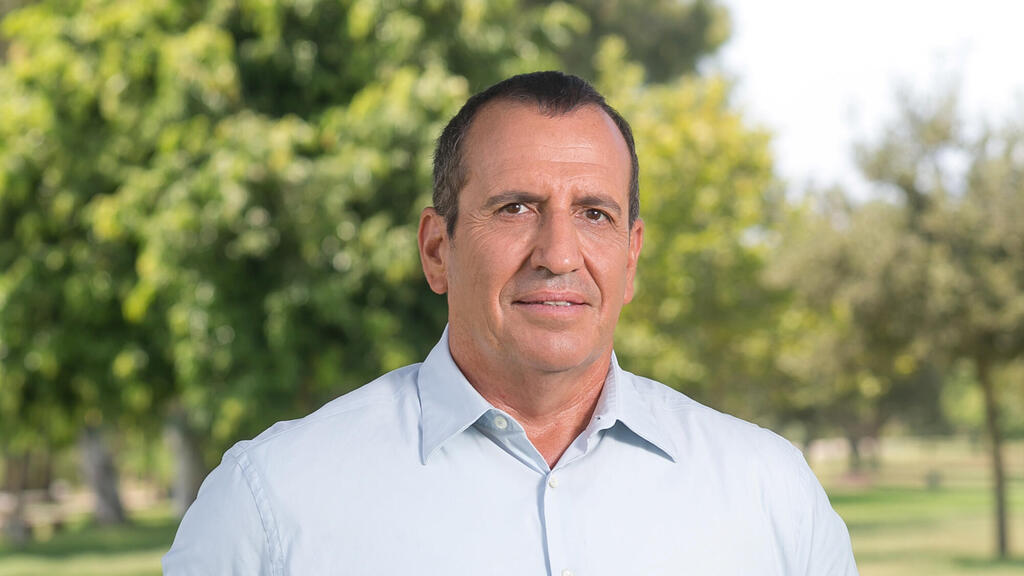
"I have a sense of mission. The meaning of the name Tom is offerings and tithes."
Livne's personality remains turbulent. After October 7, he tried unsuccessfully to enlist in reserve service, but the army, he says, made it clear to him that he would be more useful donating equipment to a paratrooper unit than entering Gaza. Since then, he also says he has become closer to religion and proudly notes that he even added a middle name for himself - Yaakov.
"The story about adding the name is even more interesting in my opinion than the story of Verbit," Livne declares. "After the divorce, I went to the Western Wall to pray, and that night I had a very clear dream from which I understood that I needed to add 'Yaakov' as a middle name. In the morning, when I went downstairs, I checked the mail and saw what I received." Livne pulls out a Maccabi Health Services card from his pocket on which the name "Tom Yaakov Livne" is printed. The ID number on the card belongs to someone else and had accidentally arrived in his mailbox, but Livne saw it as a sign and went to a synagogue, likely for the first time since his Bar Mitzvah.
"The first thing the rabbi, whom I met for the first time in my life, said to me was, 'I knew you would come,'" he says excitedly. "He said that I have a 'spark of Jacob our forefather' in me and therefore also an important role in the redemption of Israel. I don't know what he meant, maybe because I pay a lot of taxes to the state, but I was called to the Torah and added the name Yaakov. I did not become religious, but I contribute to the kollel that Yitzhak Mirilashvili also supports, and I have had quite a few conversations with him."
At that time, you were part of the high-tech protest against the judicial reform, and Mirilashvili owns Channel 14. How did that work?
"I asked him about the channel, and he said he gives them a free hand and does not interfere with the content, and that there is content he connects with more and content he connects with less."
When you were interviewed at the time, you presented yourself as a wealthy man who was about to leave Israel.
"I felt I had to express a public position as an entrepreneur, and I did it before many other high-tech figures. I did not mean to threaten leaving, but rather to present a possible reality that would come true if there were no democracy here. I did not say I was stopping paying taxes, which is how it was presented. Immediately after the interview was published, I received a call from Dan Loeb, who asked why I had been interviewed and how it helped him as a shareholder in Verbit. I replied that before being a founder and CEO, I was a citizen and resident of the country, and this was something my inner voice told me to do."
So what's next? You're 40 and find yourself in some kind of retirement?
"I can't afford to be retired. Ben-Gurion spoke about making the desert bloom, and I am also doing that through Israeli high-tech. I really have a sense of mission and a need to give back. The meaning of my name, Tom, is offerings and tithes."
As mentioned, after feeling his situation had stabilized, Livne recently joined Waldman to raise $172 million for a SPAC company called Iron Dome. The name, by the way, will have to be changed following a complaint from Rafael, the developer of the Iron Dome system.
You want to clean up your image, so why enter the SPAC sector, which has a problematic reputation, hollow companies with no activity that raise money in order to merge with existing companies and take them public? To date, most Israeli SPAC listings have ended in disappointment, valuations have fallen, and the moves have not served them well commercially.
"It is true that this instrument was misused in 2021, but several fundamental changes have been made in SPACs that address the problematic aspects. I have assembled a team of killers, all-stars: in addition to me and Eyal Waldman, there is also Hagi Schwartz from Insight Partners. We have built a list of all Israeli companies with revenues of more than $100 million per year, and we are already in serious talks with ten of them. Such companies cannot go public on Nasdaq today until they reach revenues of more than half a billion dollars. I want to do at least ten such deals in the next decade and reach a situation where every CEO in Israel considering an IPO will come to consult with me."
Do you take into account that it could fail?
"Yes, anything can fail, but if we make good deals, I will prove that the perception of SPACs is no longer true."



