










The résumé isn’t dead, but AI has rewritten its role
From Leonardo da Vinci to ChatGPT, hiring shifts from words to proof.
When he was 30, Leonardo da Vinci was looking for work. Around 500 years ago, in an effort to secure a position as a military engineer for the ruler of Milan, he drafted, some believe with the help of a professional writer, a letter detailing his skills: building bridges, designing weapons, and draining canals. Only toward the end did he casually mention his artistic abilities.
The letter worked. Da Vinci was hired, and about a decade later, the same ruler, Ludovico Sforza, commissioned him to paint The Last Supper. In a sense, the modern résumé was born around 1482, and it has changed remarkably little since.
Today, however, the résumé is facing its most significant challenge yet.
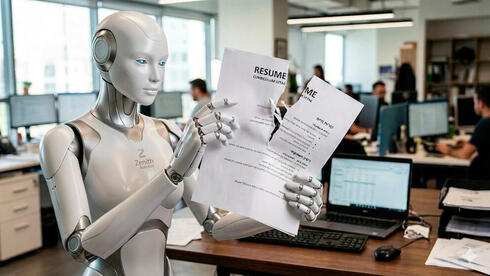
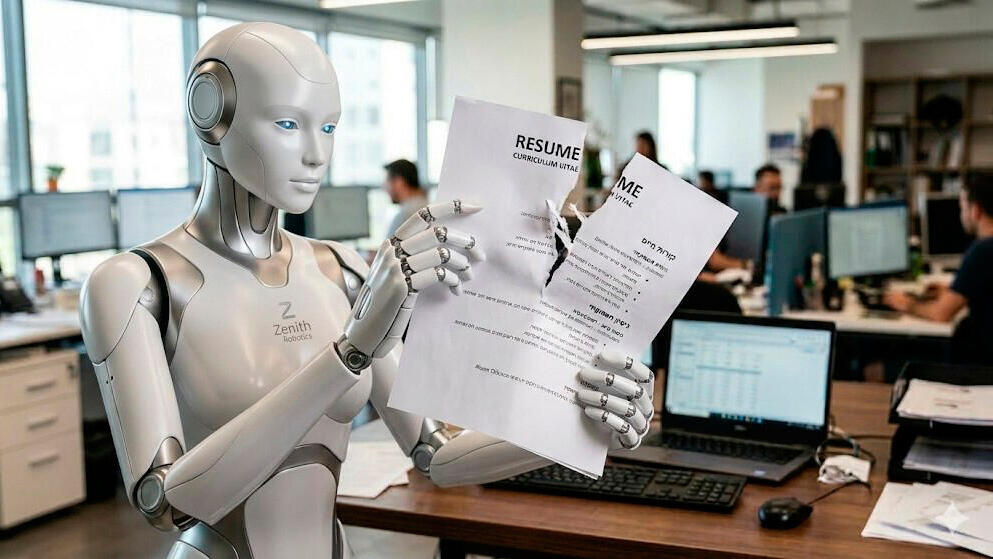
With artificial intelligence tools such as ChatGPT, Gemini, and Claude capable of generating tailored résumés and cover letters in seconds, optimized for the keyword-scanning systems used by employers, it has become increasingly difficult to distinguish between polished exaggeration and genuine capability.
As a result, some technology companies are beginning to move away from traditional résumés altogether.
Expensify, for example, replaces résumés with a series of questions designed to assess motivation and ambition. “We don’t focus on your background, academic degree, or years of experience, we focus on where you want to go, not where you’ve already been,” the company explains on its careers page.
Others are adapting rather than abandoning. Automattic still requests résumés, but asks candidates to answer additional questions without using AI tools. “We will try to understand the unique way you communicate and collaborate,” the company notes. “This means AI tools should not be used to generate answers.”
“Since the widespread adoption of AI tools, résumés have lost some of their value as an authentic indication of a candidate’s abilities,” says Dr. Hila Peretz, a human capital researcher. “Almost any candidate can produce an impressive, job-appropriate document in minutes, so employers are no longer impressed by polished wording alone.”
Instead, recruiters are increasingly cross-checking information, looking for consistency, specificity, and depth, and often supplementing résumés with targeted questions or short tasks.
Despite predictions of its demise, the résumé remains deeply embedded in hiring processes.
Most job postings still require one. Candidates referred through personal networks are typically expected to submit one. Recruiters often spend just six to eight seconds scanning a résumé initially, and less than a minute deciding whether to proceed. Around 70% of large companies and roughly 30% of small and medium-sized firms use applicant tracking systems (ATS) to screen candidates.
Ironically, the process has become circular: AI systems now scan résumés written by AI.
“In an era where everyone can produce an excellent résumé, it hasn’t lost its relevance, but it has lost its exclusivity,” says Lital Veksler Avitan, VP of Human Resources at ONE Group. “It’s no longer a standalone screening tool, but a starting point.”
Rina Serlin, VP of HR at Lightrun, agrees. “These tools don’t create real experience or depth. A résumé and LinkedIn profile still provide a starting point, but they require more critical reading.”
As AI-generated documents become increasingly uniform, recruiters are shifting focus. “We are less impressed by wording and more focused on substance,” says Adi Shemesh Amikam of Zenity. “The résumé is just the first filter. Real understanding comes later.”
The importance of the document also varies by role. For entry-level positions, its relevance is diminishing. “In some cases, candidates simply leave their name and phone number,” says Einat Benjamini of Concentrix. For senior roles, however, résumés remain a critical filtering and discussion tool.
The broader shift underway is toward competency-based hiring.
Rather than relying on credentials or years of experience, employers are increasingly focused on what candidates can actually do. According to the National Association of Colleges and Employers, 70% of employers now prioritize practical skills over formal qualifications.
“We are moving from ‘self-report’ screening to ‘evidence-based’ screening,” says Arina Iyar Belozor of ServiceNow. Hiring decisions are increasingly based on skills tests, simulations, and real-world performance.
Companies are also integrating AI into the evaluation process itself. At ONE Group, candidates are encouraged to use AI tools during assessments. “What matters is how well they use the tool, how deeply they understand the solution, and whether they can handle edge cases,” says Veksler Avitan.
Similarly, companies like Zenity and Navina incorporate exercises that simulate real work scenarios, analyzing problems, explaining decisions, and demonstrating independent thinking.
As résumés evolve, so too does recruitment itself.
Traditional job postings are becoming less central, particularly for entry-level roles. Companies increasingly rely on social media and direct sourcing, actively identifying and approaching candidates.
“Most potential candidates are already online, and companies target them directly,” says Benjamini. Platforms such as LinkedIn, Instagram, TikTok, and Facebook have become central to recruitment strategies.
The flood of AI-generated applications has further accelerated this shift. Instead of relying on inbound résumés, employers are increasingly “hunting” for candidates through networks and recommendations.
For job seekers, the implications are clear.
A polished résumé is no longer enough. Employers are looking for visible proof of skills, through projects, online presence, and community engagement.
“Organizations are looking for practical validation of abilities,” says Iyar Belozor. “Candidates need to demonstrate continuous learning and adaptability.”
Not everyone needs to become a content creator, but visibility matters. Sharing work, contributing to discussions, and building a professional reputation can significantly increase opportunities.
The résumé is not disappearing. But its role is changing.
Candidates will still be asked to submit one, and using AI to optimize it is now standard practice. Yet the document itself is no longer the centerpiece of the hiring process.
It is, increasingly, just the beginning.



